



Sunscreen for Dark Spots: SPF, Tint and How to Choose
For dark spots, choose a broad-spectrum sunscreen with SPF 30 or higher that you can apply generously and reapply as directed. Sun protection helps prevent further darkening. For melasma and some forms of hyperpigmentation, dermatologists also recommend a tinted sunscreen containing iron oxides to help protect against visible light. A non-tinted mineral sunscreen does not automatically provide that extra visible-light protection.
Why sunscreen matters for discoloration
UV exposure can worsen many dark marks, and visible light can contribute to certain pigmentation concerns, particularly melasma. Dark spots can also follow acne or inflammation; they do not all originate from the sun. The American Academy of Dermatology says sunscreen is a starting point for fading dark spots.
What to check on the label
- Broad-spectrum and SPF 30 or higher: Check the actual label and follow its directions.
- Tint and iron oxides: For visible-light concerns, look for a tinted formula that actually lists iron oxides. The AAD explains this distinction.
- Skin comfort: Choose a texture and fragrance level you tolerate so you will use enough consistently.
- Water resistance: If swimming or sweating, read the labeled water-resistance claim and reapplication directions rather than assuming every SPF product is water resistant.
Where Glimmer Goddess fits
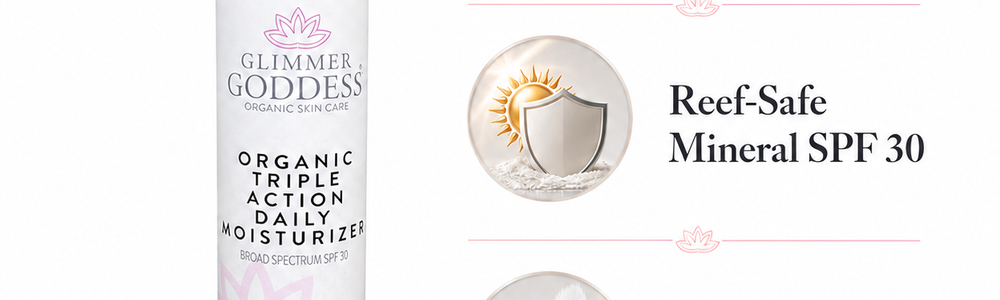
Triple Action Daily Moisturizer SPF 30 is a verified facial SPF moisturizer, offered in scented and unscented variants. It can be an option for daily UV protection when applied according to its actual labeling. We do not claim that it is tinted with iron oxides or independently rank it above all other sunscreens for melasma. Check the specific current variant before ordering.
How to make the routine work
- Apply sunscreen to all exposed areas using the amount on the label.
- Reapply as directed, especially after sweating, swimming, or towel drying when relevant to the product's label.
- Combine sunscreen with shade, hats, and protective clothing.
- Seek a dermatologist's advice for a new or changing spot, or pigmentation that does not improve with an appropriate plan.
See the AAD's sunscreen application guidance for practical use.
Frequently asked questions
Will sunscreen erase existing dark spots?
It helps prevent further darkening and supports a broader routine, but a spot's cause may require other care.
Is mineral sunscreen always best for melasma?
Mineral versus chemical UV filters alone do not answer the visible-light question. For visible-light protection, check for tint and iron oxides as well as appropriate SPF and broad-spectrum labeling.
Is an SPF moisturizer enough?
It can provide labeled protection if used in the directed amount and reapplied appropriately. Applying only a thin cosmetic layer may deliver less protection than expected.