
Dark Spot Creams vs. Serums: What to Choose in 2026
A dark spot cream and a dark spot serum can target the same cosmetic concern, but they do not feel or layer the same way. The better choice depends on your skin type, the active ingredients in the formula, and whether you need extra moisture along with brightening support.
What is the difference between a cream and a serum?
Serums are typically lighter and designed to deliver concentrated cosmetic ingredients before moisturizer. Creams usually contain more emollient and occlusive ingredients, making them useful when dryness is also a concern.
Neither format is inherently “stronger.” The ingredient list and formulation matter more than whether the label says cream or serum.
Choose a serum if...
- You prefer lightweight layers.
- You already have a moisturizer you like.
- You want a targeted brightening step before cream or sunscreen.
- Your skin tends to feel oily with richer formulas.
Choose a cream if...
- Your skin is dry and you want brightening ingredients in a more moisturizing base.
- You prefer fewer separate routine steps.
- Your skin feels uncomfortable with lightweight serums alone.
Ingredients matter more than texture
Look beyond marketing terms and check the actual formula. Vitamin C, niacinamide, alpha arbutin, azelaic acid, and Vitamin A derivatives are examples of ingredients that may appear in tone-focused skincare. Their roles and tolerability differ.
Why sunscreen belongs in either routine
The American Academy of Dermatology recommends sun protection as part of care for hyperpigmentation. UV and visible light can deepen discoloration, so a dark-spot product without consistent sun protection is an incomplete strategy.
See the AAD's guidance on dark spots and sunscreen.
Where the Glimmer Goddess Dark Spot Serum fits
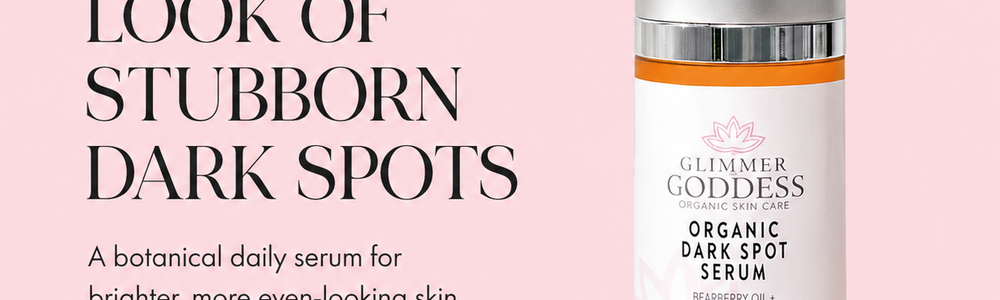
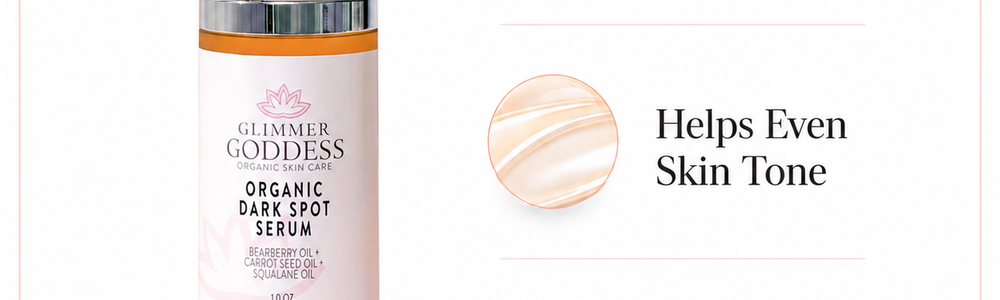
The Organic Dark Spot Serum – Fade Hyperpigmentation & Even Skin Tone is a serum, not a cream. It contains alpha arbutin, plant-based Vitamin C, niacinamide, and botanical brightening ingredients in a hydroquinone-free formula.
Use it as the targeted serum step in a routine, then follow with an appropriate moisturizer and daytime SPF. It should not be ranked as a “topical cream” simply to force it into a comparison category.
What about prescription lightening creams?
Prescription treatments belong in a different category from over-the-counter cosmetic skincare. They can have different indications, side effects, and monitoring requirements. If you need prescription-strength treatment for melasma or persistent hyperpigmentation, work with a dermatologist rather than choosing from a cosmetic ranking table.
How to layer a serum and moisturizer
- Cleanse.
- Apply your targeted serum according to directions.
- Follow with moisturizer.
- Finish the morning routine with broad-spectrum SPF 30 or higher.
You do not need to wait an arbitrary number of minutes between every step unless the product directions specify it.
Related Glimmer Goddess guides
Compare ingredients in our dark spot corrector guide, build the full routine with our skincare for dark spots guide, or review serum-specific criteria in our dark spot serum guide. For additional tone-focused skincare, browse the Organic Skin Care for Glowing, Radiant Skin collection.
Frequently Asked Questions
Are creams better for mature or dry skin?
They can be more comfortable because richer formulas provide more emollient support, but a serum followed by a moisturizer can achieve a similar layering effect.
Can oily skin use a dark spot cream?
Yes, if the texture feels comfortable and the formula suits your skin. Product format is a preference, not a strict skin-type rule.
Can I use a serum and a dark spot cream together?
You can, but doubling up on active ingredients may add irritation without adding meaningful benefit. Check the formulas before layering.
Should I change products if spots do not fade quickly?
Not necessarily. Pigmentation can take months to improve, and deeper discoloration may take longer. Persistent or uncertain pigmentation is a good reason to consult a dermatologist.
The Bottom Line
Choose a cream for richer moisture, a serum for lighter targeted layering, and judge both by verified ingredients and sensible claims. The format itself does not determine effectiveness.