



Whipped Shea Body Butter: Benefits for Dry Skin & Texture
Whipped shea body butter is loved for one simple reason: it makes rich, oil-based moisture easier and more enjoyable to spread over dry skin. Shea butter itself is an emollient rich in fatty components that help soften rough-feeling skin, while the whipped texture changes the application experience—not the basic biology of the ingredient.
What Is Shea Butter?
Shea butter is a plant-derived fat obtained from the kernels of the shea tree. In skincare, it is used primarily as an emollient: it helps fill in the spaces between dry surface skin cells, improves softness and supports a smoother feel.
What Does Shea Butter Do for Dry Skin?
Dry skin develops when the outer layer of skin loses too much water and its protective lipid structure is not doing an ideal job of slowing that loss. Rich emollients and occlusive moisturizers can help by softening the surface and reducing moisture escape.
The American Academy of Dermatology lists shea butter among ingredients that can be useful in creams and ointments for dry skin. That makes shea especially appealing for body areas that tend to feel rough or tight, such as elbows, knees, hands, feet and legs.
Does Shea Butter “Heal” or “Regenerate” Skin?
It is better to keep expectations cosmetic and realistic. Shea butter can support softness and comfort by moisturizing the outer skin layers, but a body butter should not be described as curing eczema, healing wounds, regenerating tissue or reversing skin aging.
Why Whip Shea Butter?
Whipping incorporates air and changes the physical texture. The result can feel lighter, fluffier and easier to scoop than a dense block of butter. Whipping does not prove deeper penetration or stronger biological activity; it mainly changes spreadability and sensory experience.
Whipped Body Butter vs. Lotion
Body butter is typically richer and more oil-forward than lotion. Lotion contains a water phase and generally feels lighter, while body butter provides a more substantial layer on the skin. Neither format is universally better.
- Choose body butter when skin feels very dry, rough or tight and you enjoy a richer finish.
- Choose lotion when you prefer a lighter texture or want something that spreads quickly over larger areas.
- Layer strategically if needed: a lighter moisturizer first, followed by a richer butter on the driest areas.
When Is the Best Time to Apply Body Butter?
One of the most useful times is shortly after bathing, while skin is still slightly damp. Dermatologists recommend applying moisturizer after washing because it helps trap water in the skin rather than allowing it to evaporate.
- Take a short warm—not hot—shower or bath.
- Gently pat skin so it is no longer dripping but still slightly damp.
- Warm a small amount of body butter between your hands.
- Massage it over dry areas without aggressive rubbing.
- Add a little more only where you need it.
How Much Do You Need?
More is not always better. Start with a small amount and build. A rich body butter should leave skin comfortable, not coated with a thick layer that transfers to clothing.
What About Sensitive Skin?
Sensitive skin can react to any cosmetic ingredient, including botanicals and essential oils. If fragrance is a concern, an unscented option can simplify the routine. Patch testing a new formula on a small area first is reasonable if your skin is reactive.
Try Glimmer Goddess® Whipped Body Butter
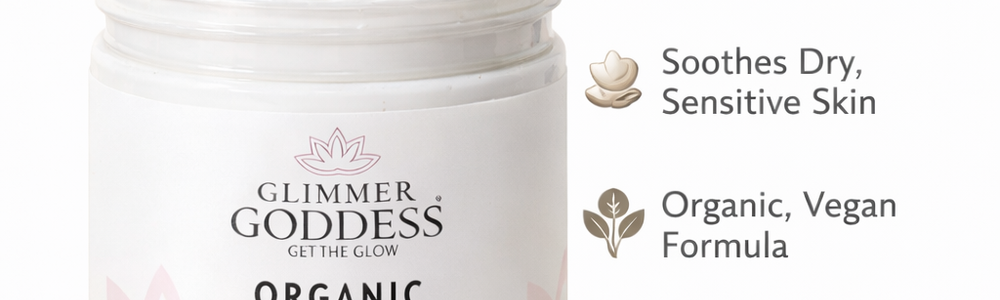
For a rich body moisturizer, explore Glimmer Goddess® Organic Whipped Body Butter for Extremely Dry Skin. The current formula is designed for a fluffy, creamy texture that spreads easily and gives dry body skin a more cushioned, moisturized feel.
Frequently Asked Questions
Does whipped shea butter absorb better than solid shea butter?
Whipping makes the product easier to scoop and spread, but there is no good reason to assume that adding air makes shea butter penetrate more deeply.
Can I use body butter every day?
Yes, if your skin likes the texture. Many people use it after bathing or whenever dry areas feel tight.
Is shea butter only for winter?
No. Dryness can happen year-round. You may simply prefer a smaller amount or use it only on dry areas during warmer months.
Can body butter replace sunscreen?
No. Body butter is a moisturizer, not sun protection. Use a broad-spectrum sunscreen with SPF 30 or higher on exposed skin.
The Bottom Line
Whipped shea body butter is best understood as a rich moisturizer with a more airy, spreadable texture. Its strength is comfort: softening dry-feeling skin, reducing that tight post-shower feeling and making intensive body moisture feel luxurious without turning cosmetic hydration into a medical claim.
Source: American Academy of Dermatology: Tips for relieving dry skin.