



DIY Body Scrub for Dry Skin: Safer Sugar Scrub Tips
A homemade sugar scrub can make rough body skin feel smoother, but dry skin usually needs less scrubbing—not more. The safest DIY approach is to keep the formula simple, use it only on intact body skin and follow immediately with moisturizer.
What Does a Body Scrub Actually Do?
A physical scrub removes some loose surface skin cells through friction. That can temporarily make skin feel smoother and help rough areas look more polished. It does not permanently tighten skin, erase cellulite, rebuild collagen or treat a skin disease.
Dry Skin Needs a Gentle Approach
When skin is already dry, its protective barrier can be more vulnerable to irritation. The American Academy of Dermatology cautions against over-exfoliating dry winter skin because stripping away more surface material can worsen dryness and discomfort.
That means a body scrub should be an occasional texture step—not the centerpiece of a dry-skin routine.
A Simple DIY Sugar Scrub
For intact body skin, a basic scrub can be as simple as:
- 2 tablespoons fine-grain sugar
- 1 tablespoon of a plain cosmetic-friendly oil such as coconut, sunflower or sweet almond oil
Mix only enough for immediate use. The goal is a soft paste, not a gritty mixture that requires hard pressure.
How to Use It Without Overdoing It
- Wet the body area with warm water.
- Apply a small amount of scrub.
- Massage very lightly for 10–20 seconds.
- Rinse thoroughly.
- Pat dry rather than rubbing.
- Apply moisturizer while the skin is still slightly damp.
Where Should You Use a Sugar Scrub?
Keep coarse physical scrubs to thicker body skin such as arms, legs, elbows and knees. We would not use a body sugar scrub around the eyes, on irritated facial skin or on delicate areas.
When Should You Skip Scrubbing?
Do not scrub skin that is sunburned, cracked, bleeding, freshly shaved and irritated, actively inflamed, infected or healing from a wound. If a scrub stings or leaves persistent redness, stop using it.
Ingredients We Would Leave Out
- Lemon or lime juice: unnecessary acidity can irritate skin.
- Undiluted essential oils: concentrated fragrance components can trigger irritation or sensitization.
- Cinnamon: too irritating for many people in leave-on or scrub mixtures.
- Large salt crystals on very dry skin: these can feel harsher than fine sugar.
- Water, tea, milk or aloe juice in a stored DIY jar: adding water changes the preservation requirements and can create a microbial-safety problem.
Does Coffee Scrub Get Rid of Cellulite?
No body scrub has been shown to permanently remove cellulite. Massage and exfoliation can temporarily make skin feel smoother, and caffeine-containing products may create short-lived cosmetic effects, but that is not the same as changing the underlying structure that creates cellulite.
How Often Should You Exfoliate Dry Body Skin?
There is no universal number. Start less often—such as once weekly or even less—and let your skin decide. If dryness, tightness, stinging or redness increases, reduce or stop exfoliation and focus on moisturizing instead.
DIY vs. a Finished Sugar Scrub
DIY can be useful when you want a one-time, very simple formula. A finished product offers a consistent texture and a formula developed for storage and repeated use.
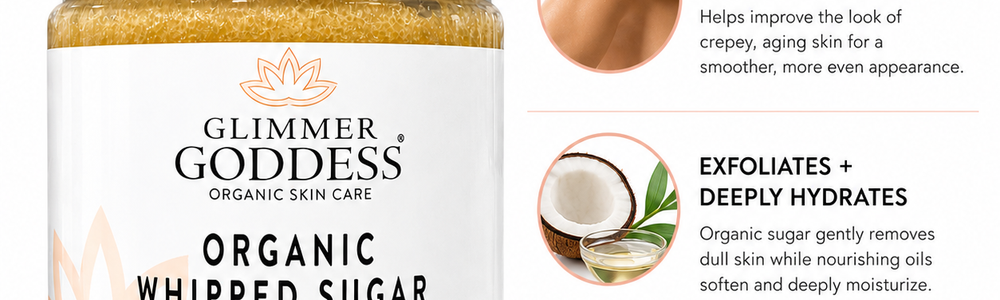
For an easy ready-to-use option, see the current Glimmer Goddess® Organic Whipped Sugar Body Scrub. We recommend thinking of it as a body exfoliator for smoother-feeling skin—not as a treatment that can reverse crepey skin or rebuild collagen.
What Should You Apply After a Scrub?
Moisturizer matters more than another active. Apply a body lotion, cream or butter to slightly damp skin. If your skin is especially dry, a richer cream or body butter may feel more comfortable than a light lotion.
Frequently Asked Questions
Can I use a sugar scrub on my face?
A body sugar scrub is generally too coarse for facial skin. Choose a product specifically formulated for the face if you want facial exfoliation.
Can I scrub flaky skin every day?
Usually not a good idea. Flaking is often a sign that skin needs moisture and barrier support. Daily friction can make the cycle worse.
Does sugar dissolve enough to be gentle?
Fine sugar can soften with water, but technique still matters. Light pressure is more important than trying to “scrub away” dryness.
The Bottom Line
A DIY sugar body scrub can be a simple occasional step for rough, intact body skin. Keep the recipe minimal, use gentle pressure, skip irritating add-ins and follow with moisturizer. When skin is very dry, the most effective move may be to scrub less and moisturize more.
Sources: American Academy of Dermatology: Choosing a moisturizer; FDA: Microbiological safety and cosmetics.