




Aloe Vera Around the Eyes: Skin Benefits, Safety & What Not to Put in Your Eyes
Aloe vera is common in soothing skincare, but the skin around your eyes and the eye itself are very different tissues. A cosmetic containing aloe may help moisturize or soothe the surrounding skin, but raw aloe or cosmetic gel should not be put into the eye, and aloe has not been proven to improve eyesight or treat eye disease.
What Does “Around the Eyes” Mean?
The periocular area includes the thin skin around the eyes. Products designed for this area are cosmetics applied to skin—not ophthalmic products intended for the eyeball, tear film or inside the eyelids.
What Can Aloe Do for the Skin?
Aloe-containing skincare can provide a lightweight, soothing feel and support hydration depending on the complete formula. Those cosmetic benefits do not establish that aloe changes vision, treats dry eye disease, heals glaucoma or prevents cataracts.
Do Not Put Raw Aloe in Your Eyes
Fresh aloe leaf, kitchen-made aloe mixtures and ordinary cosmetic aloe gels are not sterile ophthalmic preparations. Putting them directly into the eye can introduce irritants or contamination. If a product is meant for the eye itself, it should be specifically formulated and labeled for ophthalmic use.
Why Eye-Area Skin Needs Extra Care
The skin around the eyes is thin and can react to fragrance, essential oils and highly active formulas. Use products according to directions, avoid the lash line unless the label permits it and stop if burning, swelling or persistent irritation develops.
Can Aloe Reduce Puffiness or Dark Circles?
Hydration and a cooling cosmetic texture can temporarily make the eye area feel more comfortable or look refreshed, but puffiness and dark circles have many causes—including genetics, anatomy, allergies, sleep, pigmentation and vascular visibility. No single botanical ingredient can address every cause.
Current Glimmer Goddess® Eye-Area Options
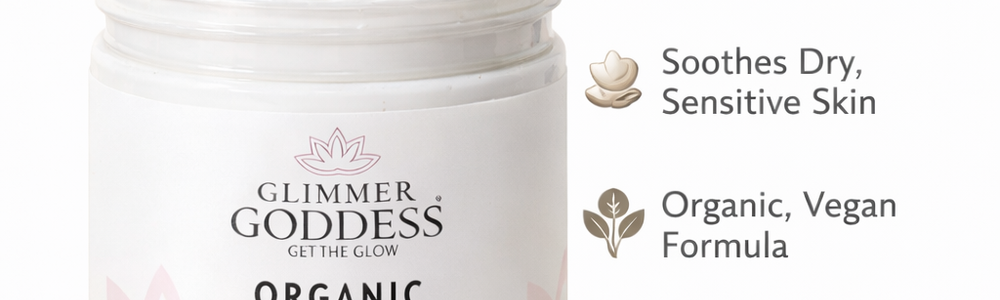
For cosmetic concerns such as tired-looking eyes, puffiness and dark circles, Glimmer Goddess® offers the active Cooling Eye Roller for Puffiness, Dark Circles & Tired-Looking Eyes. Our Organic Vitamin C Eye Serum – Peptide Treatment for Dark Circles is another current option for the surrounding eye area. Use both only as directed and keep cosmetic products out of the eyes.
What Should You Avoid Near the Eyes?
- Undiluted essential oils.
- Fresh citrus juice or other acidic kitchen ingredients.
- Unpreserved DIY mixtures stored for repeated use.
- Products that cause stinging but are left on because the sensation is assumed to mean they are “working.”
When to See an Eye-Care Professional
Eye pain, significant redness, light sensitivity, discharge, injury, sudden floaters or flashes, or any change in vision should be evaluated by an eye-care professional. Cosmetics are not the right tool for diagnosing or treating ocular disease.
The Bottom Line
Aloe can be a pleasant supporting ingredient in skincare used around the eyes, but it should stay on the skin and out of the eye unless it is part of a product specifically made for ophthalmic use. Treat appearance concerns cosmetically and vision or eye-health concerns medically.
Source: FDA: Using Cosmetics Safely.