

Clean Body Butter: What “Clean Beauty” Means & How to Choose
“Clean body butter” can sound like a formal safety category, but clean beauty does not have one universal regulatory definition. The most useful way to choose a body butter is to look at the complete ingredient list, texture, fragrance level, skin compatibility and the claims the finished product can actually support.
What Does “Clean Beauty” Mean?
There is no single U.S. federal definition that turns “clean” into a standardized cosmetic safety certification. Brands and retailers may create their own ingredient standards, so the term can mean different things in different places.
Does Clean Mean Chemical-Free?
No. Everything in a body butter—including water, plant oils, vitamins and naturally derived ingredients—is made of chemicals. “Chemical-free” is not a scientifically useful safety claim. A better question is whether the ingredients are appropriate for their intended cosmetic use and whether the finished formula suits your skin.
Are Natural or Organic Ingredients Automatically Safer?
No. FDA notes that an ingredient’s source does not determine its safety. Natural ingredients can cause irritation or allergic reactions, and synthetic ingredients are not automatically harsh. Glimmer Goddess® uses the more precise phrase “Made with Certified Organic Ingredients” where appropriate rather than suggesting every finished product is certified organic.
What Makes Body Butter Different From Lotion?
Body butter is generally richer and more occlusive than a lightweight body lotion. That makes it especially useful for areas that feel very dry, rough or tight. The richer texture helps reduce moisture loss and leaves a more cushioned finish on the skin.
What Ingredients Matter Most?
Look for emollients and occlusives that help soften skin and reduce moisture loss. Shea butter, cocoa butter, coconut-derived lipids and plant oils are common choices. The best blend depends on texture preference and skin tolerance—not on whether an ingredient sounds more “natural.”
Do You Need to Avoid Preservatives?
No. In formulas that contain water, an effective preservative system helps protect against microbial contamination. “Preservative-free” is not automatically safer. Product design, manufacturing controls and proper preservation all matter to cosmetic safety.
What About Essential Oils and Fragrance?
Some shoppers enjoy scented body care, while others prefer fragrance-free formulas. Essential oils can also irritate sensitive skin, so they should not be treated as universally gentler just because they are botanical. If you are reactive to fragrance, choose an unscented option when available.
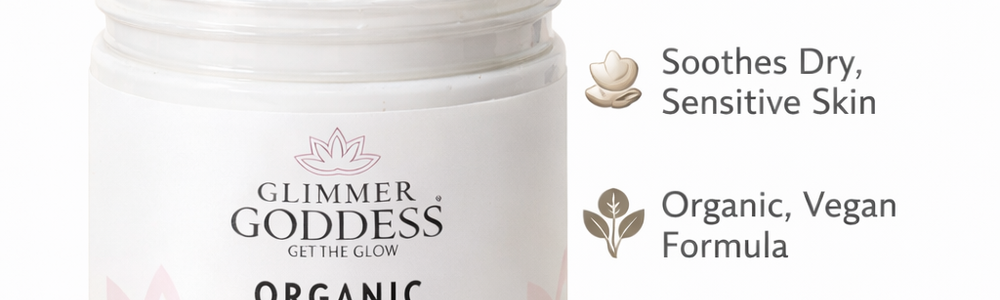
Glimmer Goddess® Whipped Body Butter
Glimmer Goddess® Organic Whipped Body Butter for Extremely Dry Skin 8 oz. is a rich body moisturizer designed to soften and moisturize dry-feeling skin. Although the product title uses “organic,” the more precise brand standard is that our formulas are Made with Certified Organic Ingredients where applicable.
How to Use Body Butter
- Apply after bathing while skin is still slightly damp.
- Warm a small amount between your hands.
- Massage over dry areas such as arms, legs, elbows and knees.
- Add more only where needed; richer formulas usually require less product than lotion.
Can Body Butter Treat Eczema, Stretch Marks or Wrinkles?
A cosmetic body butter can moisturize, soften and improve the appearance of dry surface texture. It should not be promised to treat eczema, rebuild collagen, remove stretch marks or reverse skin aging. Those are different claims with different evidence and regulatory implications.
The Bottom Line
Choose body butter for the formula and experience—not because “clean” sounds like a regulated safety seal. A transparent ingredient list, realistic claims, appropriate preservation and a texture that works for your skin are more meaningful than broad clean-beauty language.
Source: FDA: Using Cosmetics Safely.