



Vitamin C Serum + Eye Serum: How to Layer Them Without Overdoing It
A vitamin C face serum and a separate eye serum can fit in the same routine, but they do not need to overlap or be layered aggressively. The simplest approach is to keep each product in its intended area, use thin layers and let sunscreen finish the morning routine.
What Goes First: Face Serum or Eye Serum?
After cleansing, apply your face serum to the areas it is intended for. Then apply a small amount of eye serum around the orbital area according to the product directions. Follow with moisturizer, and use broad-spectrum sunscreen in the morning.
Do You Need Vitamin C Around the Eyes?
Not necessarily. Facial vitamin C formulas are not automatically designed for the thinner, more reactive skin close to the eyes. If a product does not specifically direct use around the eye area, keep it away from the eyelids and lash line.
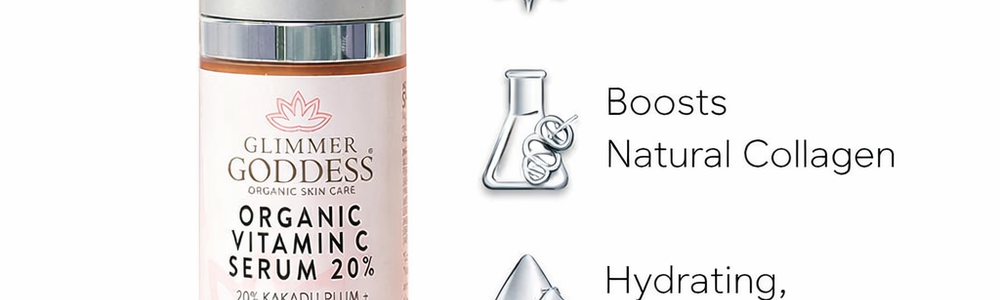
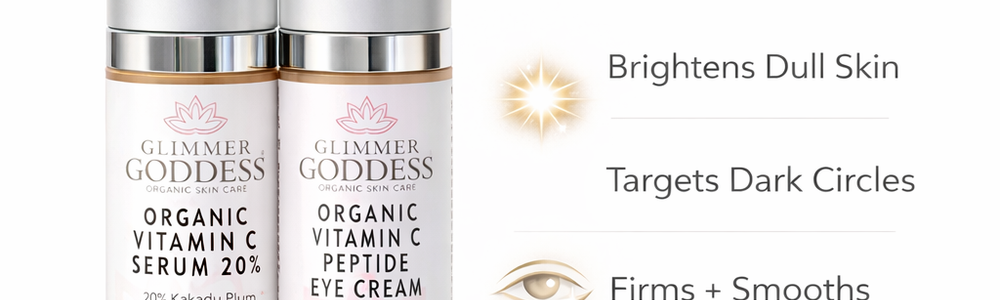
The current Glimmer Goddess® Organic Vitamin C Glow Duo – 20% Vitamin C + Peptide Eye Serum pairs two separate products so each can be used in its intended area.
A Simple Morning Order
- Gentle cleanser.
- Vitamin C face serum.
- Eye serum, if you use one.
- Moisturizer.
- Broad-spectrum sunscreen.
For a broader vitamin C timing guide, see Vitamin C Serum Routine: When to Apply It & What to Expect.
A Simple Evening Order
If you prefer vitamin C at night, use the same basic order—cleanser, face serum, eye serum, moisturizer—unless your other nighttime actives make the combination irritating.
What If You Also Use Acids or Vitamin A?
You do not need to force every active into the same routine. If combining products leads to persistent stinging, redness or peeling, separate them by time of day or alternate use based on product directions and tolerance.
How Much Product Should You Use?
More is not automatically better. Use enough to spread a thin, even layer over the intended area. Applying extra product does not guarantee faster results and can increase the chance of irritation.
What Vitamin C Can Realistically Do
Topical vitamin C has evidence supporting antioxidant activity and improvements in the appearance of some signs of photoaging and uneven pigmentation. Results depend on formulation, stability and consistent use, and vitamin C does not replace sunscreen.
What an Eye Serum Can Realistically Do
An eye serum can hydrate and improve the look of dryness or fine surface lines. Dark circles can have multiple causes—including pigmentation, shadowing, visible vessels and anatomy—so no cosmetic eye serum can guarantee to remove them completely.
Signs You May Be Overdoing It
- Persistent burning rather than brief mild tingling.
- Increasing redness.
- Peeling or raw-feeling skin.
- Swelling around the eyes.
If these occur, stop the irritating product and simplify the routine.
Frequently Asked Questions
Can I use vitamin C serum and eye serum at the same time?
Yes, if both products are tolerated and used in their intended areas.
Should eye serum go before face serum?
Either can work, but using face serum first and then a small amount of eye serum keeps the routine simple and minimizes overlap.
Can vitamin C serum replace sunscreen?
No. Antioxidants complement sun protection; they do not replace sunscreen.
Do I need both products?
No. Use both only if they address goals you care about and your skin tolerates them.
The Bottom Line
Layer a vitamin C face serum and eye serum by keeping each product where it belongs, using modest amounts and finishing the morning routine with sunscreen. A simpler routine is often easier to tolerate than stacking multiple actives in the same areas.
Sources: PubMed: Topical vitamin C and the skin; PubMed: Vitamin C in dermatology.