

Face Mask Ingredients Explained: Clay, AHA, Hyaluronic Acid & More
A face mask is a delivery format, not a single type of treatment. What matters most is the formula: clay can absorb surface oil, humectants can add hydration, and alpha hydroxy acids can exfoliate. Choosing by ingredient role is more useful than choosing by hype.
Clay: For Surface Oil and a Clean Feel
Clay masks can absorb oil from the skin’s surface and may feel useful for oily areas. They do not “detox” the body or permanently shrink pores.
The current Organic Dead Sea Mud Mask – Exfoliate & Rejuvenate is a current clay/mud option for shoppers who prefer this mask type.
Alpha Hydroxy Acids: For Exfoliation
AHAs loosen surface buildup and can improve the appearance of rough texture. FDA notes that AHAs may increase sun sensitivity, so use them according to directions and maintain sun protection.
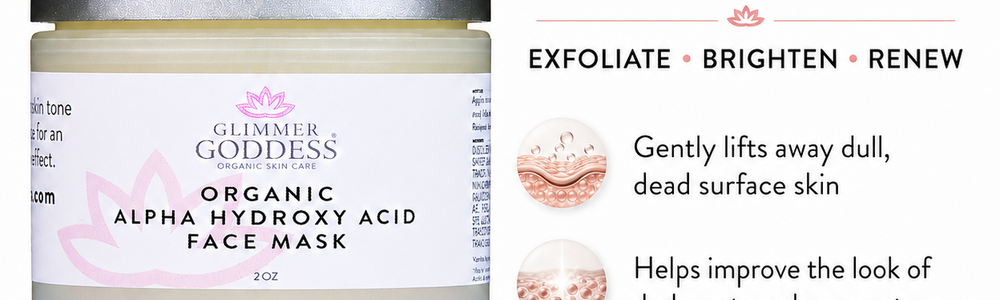
The current Organic AHA Face Mask – Renewing Treatment for Exfoliation & Glow is an exfoliating option. Avoid stacking it with multiple other strong exfoliants in the same routine if your skin becomes irritated.
Hyaluronic Acid and Glycerin: For Hydration
These are humectants that help bind water in the outer layers of skin. In a mask, they can temporarily improve softness and plump-looking hydration. They do not permanently change skin structure.
Soothing Ingredients: Helpful, but Formula Matters
Ingredients such as colloidal oatmeal, aloe and green tea are often used in soothing formulas, but “natural” does not mean reaction-free. Sensitive skin should still patch test unfamiliar products.
Fragrance and Essential Oils
Fragrance is a preference, not a performance requirement. If your skin is reactive or you know fragrance bothers you, choose accordingly. A pleasant scent does not prove a mask is more effective.
What a Face Mask Cannot Do
- Permanently close pores.
- Replace treatment for acne, eczema, rosacea or another skin disease.
- Reverse deep scars.
- Produce a permanent lifting effect.
- Make aggressive over-exfoliation safer simply because it is used as a mask.
How to Choose by Skin Goal
- Oiliness: consider clay or a lightweight mask.
- Dryness: look for humectants and emollients.
- Rough texture: consider an exfoliating mask if your skin tolerates acids.
- Sensitivity: keep the formula simple and avoid ingredients you know trigger you.
For a broader mask-selection guide, see How to Choose a Face Mask for Your Skin Type & Concerns.
Frequently Asked Questions
Should a clay mask dry completely?
Follow the product directions. Leaving any mask on longer than instructed can increase dryness or irritation.
Can I use an AHA mask and scrub together?
Using multiple exfoliation methods at once can increase irritation. Keep the routine simple unless your skin clearly tolerates the combination and the product directions support it.
Are masks necessary?
No. A mask can supplement a routine, but cleanser, moisturizer and sunscreen remain more foundational.
The Bottom Line
Choose a face mask by ingredient function and skin goal. Clay, acids and hydrators do different jobs, and none of them needs to be used simply because masks are popular.
Sources: American Academy of Dermatology: Do facial masks work?; FDA: Alpha Hydroxy Acids.