




Vitamin C for Sun-Damaged Skin: What It Can—and Can’t—Do
Vitamin C is one of the better-studied topical antioxidants in skincare, but it is often asked to do more than a cosmetic can realistically deliver. It may help improve the appearance of uneven pigmentation and some signs of photoaging, yet it cannot erase past UV exposure, undo DNA mutations or replace daily sun protection.
What Does “Sun Damage” Mean?
Chronic ultraviolet exposure can contribute to wrinkles, roughness, uneven pigmentation and precancerous or cancerous skin changes. Some of those effects are cosmetic; others are medical. Skincare can improve appearance, but it cannot make prior UV exposure disappear.
Where Vitamin C May Help
Research supports topical vitamin C for antioxidant activity and potential improvement in the appearance of photodamaged skin, including some discoloration and fine lines. Results depend heavily on the formula, stability, concentration and consistent use.
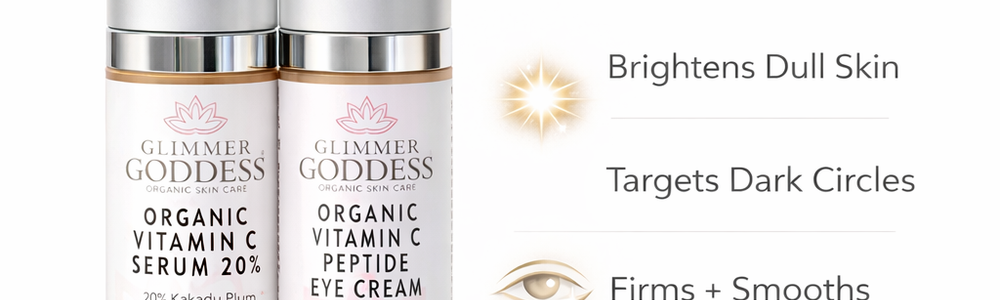
The current Glimmer Goddess® Organic Vitamin C Serum 20% – Brightening Treatment with Hyaluronic & Ferulic Acid is one current vitamin C option.
What Vitamin C Cannot Do
- It cannot erase UV-caused DNA mutations.
- It cannot remove or treat skin cancer.
- It cannot guarantee that every dark spot will fade.
- It cannot replace sunscreen, shade or protective clothing.
- It cannot permanently reverse all wrinkles or loss of elasticity.
Sunscreen Still Comes First
If your goal is to prevent sun damage from getting worse, broad-spectrum sun protection is more important than any antioxidant serum. The current Organic Vitamin C Daily Moisturizer SPF 30 – Brightening Formula is one current morning moisturizer with SPF 30.
Apply sunscreen according to the label and reapply as directed when exposed. Antioxidants can complement—not substitute for—sun protection.
What About Existing Dark Spots?
Dark spots have different causes. Some are related to sun exposure, some follow inflammation, and some may be melasma or another condition. A dermatologist can help identify persistent or changing pigmentation, especially when a spot looks different from the rest.
What About Roughness and Fine Lines?
Moisturizer, sunscreen and selected active ingredients can improve the appearance of dryness, roughness and some fine lines. Expectations should remain cosmetic: visible improvement is different from fully reversing structural UV damage.
When to See a Dermatologist
Seek professional evaluation for a spot that is new, changing, bleeding, crusting, unusually dark or otherwise concerning. Cosmetic brightening products should not delay assessment of a suspicious lesion.
Frequently Asked Questions
Can vitamin C repair sun damage?
It can support the appearance of photodamaged skin, but “repair” should not be interpreted as erasing UV-related DNA damage or medical risk.
Should I use vitamin C before or after sunscreen?
Apply skincare first, then sunscreen as the final morning skincare step unless the product directions specify otherwise.
Can I use vitamin C every day?
Many people do, but frequency should follow the product directions and your tolerance.
Will vitamin C remove every brown spot?
No. Different types of pigmentation respond differently, and some require medical diagnosis or treatment.
The Bottom Line
Vitamin C is a useful supportive ingredient for the visible signs of photoaging, especially when paired with consistent sunscreen. It should be viewed as a cosmetic tool—not as a way to erase the biological consequences of UV exposure.
Sources: PubMed: Topical vitamin C and the skin; PubMed: Vitamin C in dermatology; FDA: Sunscreen and sun protection.