



Niacinamide Serum 5%: Benefits for Pores, Tone & Aging Skin
Niacinamide is a form of vitamin B3 that has earned a strong place in modern skincare because it can support several visible skin concerns at once. At 5%, research has shown improvements in measures including fine lines, blotchiness, hyperpigmentation and skin elasticity over consistent use—but it is not a cure-all or a substitute for sunscreen.
What Is Niacinamide?
Niacinamide, also called nicotinamide, is a water-soluble form of vitamin B3 used in topical skincare. It is well studied for supporting skin barrier function and improving aspects of skin appearance.
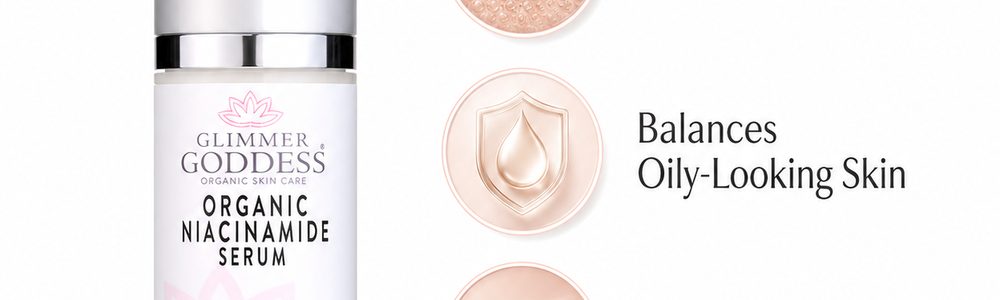
Glimmer Goddess® Organic Niacinamide Serum 5% is our current niacinamide serum. Although the product title contains legacy “pore minimizer” and “anti-aging treatment” wording, the realistic cosmetic goal is to improve the appearance of skin texture, visible pores and uneven tone—not permanently shrink pores or reverse aging.
1. Can Niacinamide Reduce the Look of Fine Lines?
A controlled clinical study of 5% niacinamide used twice daily for 12 weeks reported improvement in the appearance of fine lines and wrinkles along with other measures of facial skin appearance. That supports gradual cosmetic improvement—not instant lifting or permanent wrinkle removal.
2. What About Uneven Tone and Dark Spots?
The same 5% study found improvement in hyperpigmented spots and blotchiness. Niacinamide can therefore be a useful brightening-support ingredient in a routine, but persistent or changing pigmentation should be evaluated appropriately rather than self-diagnosed from a cosmetic blog.
3. Does Niacinamide “Shrink” Pores?
Pores do not literally open and close, and a serum cannot permanently change their anatomical size. Niacinamide may help pores look less noticeable by supporting smoother texture and helping manage surface oil in some users. “Less visible” is the more accurate expectation.
4. How Does Niacinamide Support the Skin Barrier?
Niacinamide participates in normal skin processes involved in barrier function. In practical terms, a well-tolerated niacinamide routine may help skin feel more resilient and maintain moisture more effectively, especially when paired with an appropriate moisturizer.
5. Is Niacinamide Good for Redness or Rosacea?
Niacinamide can be well tolerated by many people and may support a calmer-looking complexion, but a cosmetic serum should not be presented as a treatment for rosacea, eczema or inflammatory skin disease. If you have a diagnosed condition or persistent redness, follow medical guidance.
How to Use a 5% Niacinamide Serum
- Cleanse gently.
- Apply a small amount of serum to dry or slightly damp skin according to product directions.
- Follow with moisturizer.
- In the morning, finish with broad-spectrum sunscreen.
You do not need a complicated routine to benefit. If you are adding niacinamide alongside exfoliating acids or other intensive products, introduce changes gradually so you can identify the cause if irritation develops.
Is 5% a Reasonable Strength?
Yes. The 5% concentration has direct published clinical data behind several appearance benefits, so there is no need to assume that a dramatically higher percentage is automatically better. Skin tolerance and consistent use matter.
What About “Organic” Niacinamide Serum?
Niacinamide itself is the active cosmetic ingredient of interest here. Organic sourcing language for other agricultural ingredients in a formula does not make niacinamide more effective or automatically safer. Judge the entire finished formula rather than assuming “organic” amplifies the vitamin’s benefits.
The Bottom Line
A 5% niacinamide serum is a versatile option for shoppers concerned with the appearance of pores, uneven tone, fine lines and overall skin texture. Expect gradual cosmetic improvement with consistent use, not overnight transformation.
Source: Clinical study of topical 5% niacinamide and aging facial skin.