



Reef-Safe Sunscreen & Coral Reefs: What the Evidence Really Says
“Reef-safe” sounds like a simple label, but there is no single U.S. federal certification that guarantees a sunscreen has zero impact on marine ecosystems. Research does show that some ultraviolet-filter ingredients can affect aquatic organisms under certain conditions, so the most useful approach is to understand the evidence, read the active ingredients and keep proven sun protection at the center of your routine.
What Does “Reef-Safe” Sunscreen Mean?
“Reef-safe” and “reef-friendly” are commonly used marketing terms rather than one standardized federal category. That means two products using the same phrase may have different active ingredients. Checking the Drug Facts panel is more informative than relying on the front-label wording alone.
What Does the Research Say About Sunscreen and Coral Reefs?
NOAA notes that certain sunscreen chemicals can enter aquatic environments and that laboratory and field research has raised concerns about effects on corals and other marine life. At the same time, reef decline has many major causes—including warming oceans, pollution, disease and habitat stress—so sunscreen should not be presented as the single cause of coral damage.
Some jurisdictions have restricted ingredients such as oxybenzone and octinoxate. Environmental research continues to evolve, and real-world risk depends on concentration, exposure and local conditions.
Are Mineral Sunscreens Automatically Harmless to Reefs?
No sunscreen ingredient should be described as having zero environmental impact. Mineral filters such as zinc oxide and titanium dioxide are often chosen by reef-conscious shoppers, but particle size and formulation still matter. “Mineral” is a useful formulation description—not a guarantee of environmental neutrality.
What About Sunscreen Safety for Your Skin?
Environmental questions should not discourage sunscreen use. FDA continues to recognize the importance of broad-spectrum sun protection. Zinc oxide and titanium dioxide have longstanding use as mineral sunscreen active ingredients, and FDA’s sunscreen framework evaluates active ingredients separately from environmental marketing claims.
Glimmer Goddess® SPF 40 Options
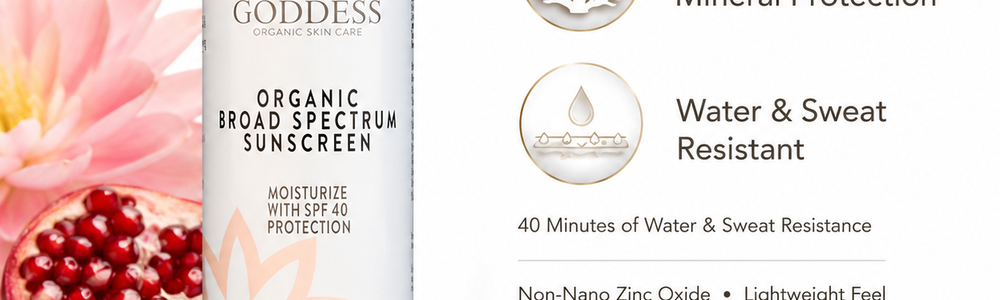
Glimmer Goddess® Organic Reef-Safe Sunscreen – Broad Spectrum SPF 40 uses a mineral sunscreen approach with non-nano zinc oxide. For shoppers who want visible radiance with labeled sun protection, Goddess Glow Shimmer Suntan Lotion SPF 40 combines broad-spectrum SPF 40 with a shimmer finish.
Use these products according to their Drug Facts directions, including reapplication and water-resistance instructions. The SPF claim comes from the tested finished sunscreen—not from botanical oils or other supporting ingredients.
Do Raspberry Seed Oil or Other Plant Oils Count as Sunscreen?
No. Do not rely on raspberry seed oil, coconut oil or another cosmetic oil as a substitute for a labeled sunscreen. Even if an ingredient has antioxidant or emollient properties, that does not establish an SPF for a finished product. Sun protection claims belong to sunscreen products tested and labeled for that purpose.
How to Reduce Sun Exposure Without Using More Sunscreen
- Seek shade, especially during strong midday sun.
- Wear hats, sunglasses and sun-protective clothing.
- Use a broad-spectrum sunscreen on exposed skin.
- Reapply according to the label, especially after swimming or sweating.
- Avoid assuming a tan—natural or cosmetic—protects against UV radiation.
The Bottom Line
“Reef-safe” is best treated as a starting point for ingredient review, not an absolute environmental guarantee. Choose a sunscreen you will use correctly, consider mineral filters if they align with your preferences, and combine sunscreen with shade and protective clothing. Protecting your skin and caring about marine ecosystems do not have to be competing goals.
Sources: NOAA: Sunscreen chemicals and coral reefs; FDA: Regulatory actions for OTC sunscreen.