

Organic Self Tanner: What the Label Means & How to Choose a Sunless Glow
“Organic self tanner” can sound like a promise of safer or gentler tanning, but organic describes ingredient sourcing—not guaranteed skin compatibility. A good self tanner should be evaluated by its complete formula, tanning system, application directions and how your own skin responds.
What Does “Organic” Mean on a Self Tanner?
The FDA does not define “organic” for cosmetics. USDA organic standards may apply to qualifying agricultural ingredients and labeling categories, but an organic claim is not proof that a finished cosmetic is safer, irritation-free or more effective.
For Glimmer Goddess®, our preferred wording is “Made with Certified Organic Ingredients” where appropriate rather than implying every finished formula is certified organic.
What Actually Creates the Tan?
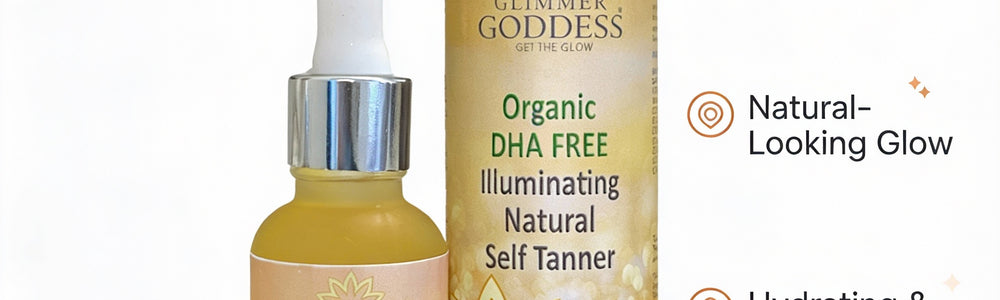
Sunless tanners use cosmetic tanning ingredients that react at the surface of the skin to create temporary color. Glimmer Goddess® currently offers a DHA-Free Self Tanner for shoppers who prefer a non-DHA tanning system.
Organic Does Not Mean “Chemical-Free”
Everything in a cosmetic formula is made of chemicals, whether an ingredient is plant-derived or made synthetically. “Natural” and “organic” also do not mean a product cannot cause irritation. What matters is the specific ingredient, concentration, finished formula and individual response.
How to Choose a Self Tanner
- Choose the tanning system you prefer. DHA-free may appeal to shoppers who want an alternative to DHA.
- Check the complete ingredient list. Do not judge the product only by front-label marketing.
- Patch test if your skin is reactive. No cosmetic is universally irritation-free.
- Start with buildable color. Thin applications are easier to control than one heavy layer.
- Keep sunscreen separate. A cosmetic tan does not provide UV protection unless the product itself is labeled with SPF.
How to Apply for a More Even Result
- Gently exfoliate rough areas in advance.
- Moisturize very dry spots such as knees, elbows and ankles.
- Apply to clean, dry skin in thin sections.
- Blend carefully around hands, feet, wrists and ankles.
- Follow the product directions for development and reapplication.
For shoppers who want both lotion and customizable drops, the current DHA-Free Self Tanner Bundle provides both formats.
Is Sunless Tanning Safer Than Tanning in UV?
Sunless tanning can create cosmetic color without intentionally exposing skin to ultraviolet radiation. That avoids purposeful UV tanning, but it does not remove the need for everyday sun protection. FDA requires tanning products without sunscreen to warn that they do not protect against sunburn.
The Bottom Line
Choose an organic self tanner because the ingredient-sourcing approach aligns with your preferences—not because the word “organic” guarantees safety. Focus on the full formula, careful application, patch testing when appropriate and continued sunscreen use outdoors.
Sources: FDA: “Organic” Cosmetics; FDA: Sunless Tanners & Bronzers.