



Skin Undertones: How to Find Yours and Match Foundation
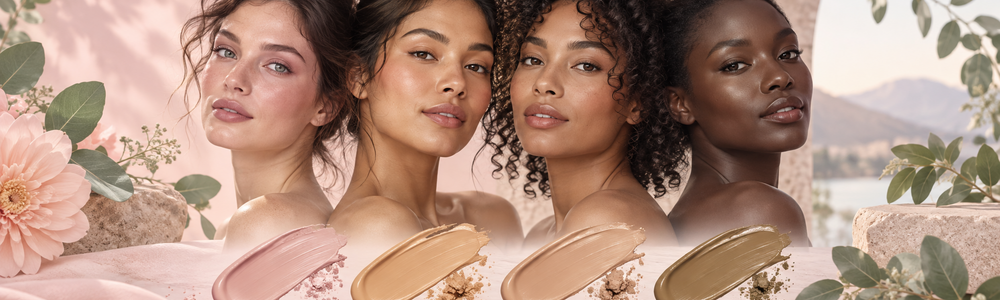
Your skin undertone is the subtle color beneath the surface of your complexion. It is commonly described as cool, warm, neutral, or olive. Undertone is different from skin depth, so fair, medium, tan, and deep skin can each have any undertone. Identifying yours helps foundation disappear into the face and neck instead of looking pink, orange, yellow, or gray.
The four common undertone groups
- Cool: pink, red, or blue-leaning undertones.
- Warm: golden, peach, or yellow-leaning undertones.
- Neutral: a balanced mix without a strong warm or cool pull.
- Olive: a muted green, golden-green, or gray-green quality that may also lean warm, cool, or neutral.
How to determine your undertone
Look in indirect daylight
Remove strongly tinted makeup and compare the face, jaw, neck, and upper chest near a window. Indoor bulbs and phone filters can distort undertones.
Observe foundation behavior
If correct-depth foundation looks pink, try warmer or olive shades. If it looks orange, try neutral, cool, or muted olive. If it looks gray, the undertone or depth may be wrong.
Use fabric and jewelry as supporting clues
Compare cream and bright white, dusty rose and coral, silver and gold, or jewel green and camel. These tests are subjective, so use them alongside daylight swatches rather than alone.
Why vein tests are unreliable
Vein appearance changes with skin depth, lighting, anatomy, and the thickness of the skin. Blue-looking veins do not conclusively prove cool undertones, and green-looking veins do not conclusively prove warm undertones.
How to match foundation
- Select two or three shades close to your skin depth.
- Swatch narrow stripes along the jaw rather than the hand.
- Let each shade dry fully; some formulas shift as they set.
- Check the match in indirect daylight.
- Choose the shade that blends into both face and neck without a visible edge.
Match blemish concealer to the skin. For under-eyes, choose only slightly lighter unless a deliberate brightening effect is wanted.
Undertone does not replace sun protection
Every complexion can experience UV damage. Follow the American Academy of Dermatology sunscreen guidance: broad-spectrum, water-resistant SPF 30 or higher, along with shade and protective clothing when practical.
Related color guides
Read how to identify olive skin, choose makeup colors for olive undertones, and build an olive-skin care and makeup routine.
FAQ
Can undertone change?
Undertone is generally stable, although tanning, redness, dryness, and seasonal depth changes can alter its appearance.
Can deep skin have cool undertones?
Yes. Undertone is independent of skin depth.
What if I am between shades?
Mix two compatible shades or choose the closest match and adjust lightly. Recheck after the formula dries.