
How to Identify Olive Skin Tone and Undertone
Olive skin has a muted green, golden-green, or gray-green undertone beneath the visible surface color. It is not limited to tan or medium complexions: olive undertones can appear in fair, light, medium, tan, and deep skin. The most reliable way to identify it is to compare foundation behavior and several areas of the face and body in natural light.
Skin depth and undertone are different
Depth describes how light or deep the complexion appears. Undertone describes the subtle color beneath it—commonly warm, cool, neutral, or olive. You can therefore be fair olive, deep olive, cool olive, warm olive, or neutral olive.
Five useful signs
- Foundation with the right depth often looks too pink, peach, orange, or bright yellow.
- The jaw, neck, or upper chest has a muted green, golden-green, or softly gray cast in indirect daylight.
- Both gold and silver jewelry may look balanced.
- You may tan readily, but tanning is not required and is not a diagnostic test.
- Muted colors often look harmonious while very icy or neon shades may overpower the complexion.
No single clue is definitive. Wrist-vein color is especially unreliable because lighting, skin depth, and vein visibility vary.
How to check at home
Use indirect daylight
Stand near a window without direct sun and remove strongly tinted makeup. Compare the face, neck, and upper chest. Indoor bulbs and phone filters can shift green, yellow, and red tones.
Test several foundation undertones
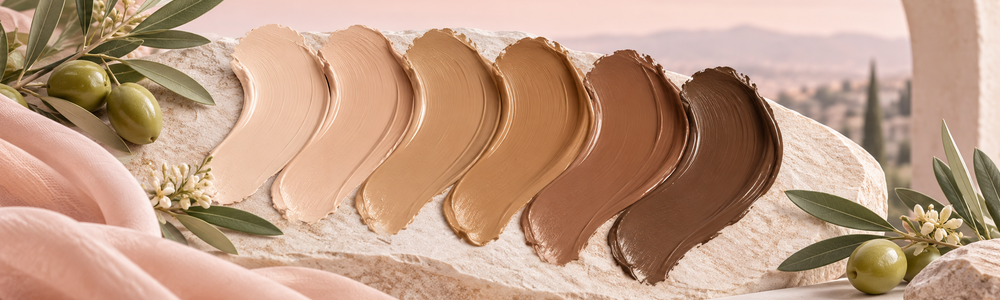
Swatch equal-depth shades labeled neutral, golden, and olive along the jaw. Let them dry fully. The best match should blend into both face and neck instead of creating a stripe.
Compare fabric, not just jewelry
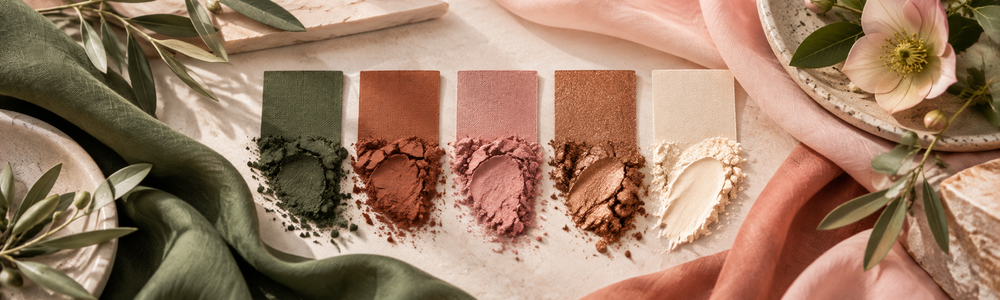
Hold cream, bright white, dusty rose, olive green, terracotta, jewel green, and cool lavender near the face. Notice which colors make the complexion look even. This is a styling tool, not a medical assessment.
Can olive skin change with the seasons?
Your undertone generally stays consistent, but surface depth, redness, dryness, and tanning can change how it appears. Recheck foundation depth after seasonal color changes without assuming the undertone changed.
Olive skin still needs sun protection
Anyone can experience UV damage regardless of skin tone. The American Academy of Dermatology recommends broad-spectrum, water-resistant SPF 30 or higher. Read the AAD sunscreen guidance. Tanning should never be used to confirm an undertone.
What to read next
Use our guides to makeup colors for olive skin, colors for olive undertones, and building an olive-skin routine.
FAQ
Is olive skin warm or cool?
It can be warm, cool, or neutral. Olive describes the muted green quality.
Can pale skin be olive?
Yes. Olive is an undertone and can appear at any depth.
Why do foundations turn orange on me?
The formula may be too warm or saturated, or it may oxidize as it dries. Compare a muted neutral-olive shade after dry-down.