


Ir al contenido

Cesta

La cesta está vacía

Artículo: Melasma vs Hyperpigmentation vs Dark Spots: How to Tell the Difference

Melasma vs Hyperpigmentation vs Dark Spots: How to Tell the Difference

Melasma vs Hyperpigmentation vs Dark Spots: How to Tell the Difference

Melasma vs Hyperpigmentation vs Dark Spots: How to Tell the Difference

If you’re dealing with uneven skin tone, dark patches, or stubborn discoloration, you’re not alone. Terms like melasma, hyperpigmentation, and dark spots are often used interchangeably—but they’re not the same condition, and they don’t respond to the same treatments.

Understanding the difference is key to choosing skincare that actually helps—especially if your skin is sensitive, pregnancy-affected, or prone to irritation.

This guide breaks down each type of discoloration, what causes it, and how to support brighter, more even-looking skin without compromising your skin barrier.


What Is Hyperpigmentation?

Hyperpigmentation is a broad term used to describe areas of skin that appear darker than the surrounding skin. It happens when excess melanin is produced in response to inflammation, sun exposure, hormones, or injury.

Common triggers include:

  • Sun exposure
  • Post-acne inflammation
  • Skin barrier damage
  • Hormonal fluctuations
  • Over-exfoliation or harsh skincare

Hyperpigmentation can appear anywhere on the face or body and may fade gradually with consistent, gentle care.


What Are Dark Spots?

Dark spots are a type of localized hyperpigmentation. They tend to be small, well-defined, and tied to a specific trigger—most commonly sun exposure or acne.

You’ll often see dark spots:

  • After acne heals (post-inflammatory hyperpigmentation)
  • On areas frequently exposed to the sun
  • As isolated marks rather than widespread patches

Dark spots usually respond well to brightening ingredients, daily sun protection, and barrier-supportive routines.

Learn more about targeted solutions here: Dark Spot & Hyperpigmentation Solutions


What Is Melasma?

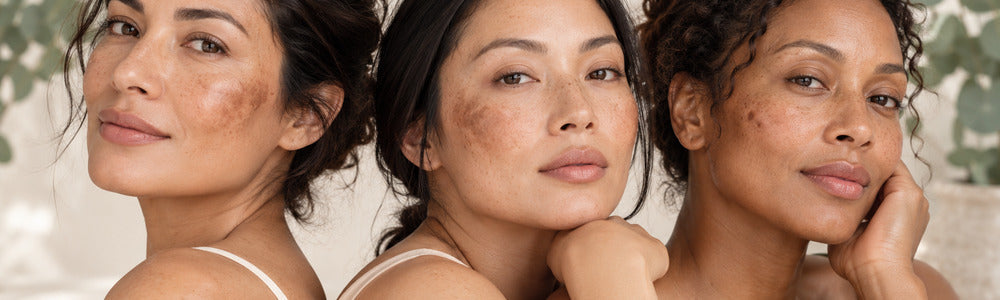
Melasma is a hormone-driven form of hyperpigmentation. It typically appears as symmetrical patches on the cheeks, forehead, upper lip, or jawline and is more common during pregnancy, postpartum, or while using hormonal birth control.

Melasma is often triggered by:

  • Pregnancy or postpartum hormone shifts
  • Estrogen and progesterone fluctuations
  • Sun exposure (even minimal)
  • Heat and inflammation

Unlike simple dark spots, melasma is deeper in the skin and tends to recur if the skin barrier is disrupted or sun protection is inconsistent.


Melasma vs Hyperpigmentation: Key Differences

  • Melasma: Hormonal, symmetrical patches, often pregnancy-related
  • Hyperpigmentation: Broad category, multiple causes
  • Dark spots: Localized marks from acne or sun exposure

Treating melasma aggressively with acids or harsh actives often makes it worse. A calm, barrier-first approach is essential.


Why Gentle Skincare Matters for Pigmentation

One of the most common reasons discoloration lingers is skin barrier damage. When the barrier is compromised, inflammation increases—and pigment-producing cells stay activated longer.

This is especially important for:

  • Sensitive skin
  • Pregnancy or postpartum skin
  • Rosacea-prone or reactive skin

If your skin stings, flushes easily, or worsens with treatments, start with barrier repair: Skin Barrier Repair Creams


Ingredient Support for Uneven Skin Tone

Rather than harsh exfoliation, focus on ingredients that brighten gently while supporting the skin barrier:

  • Fruit-derived Vitamin C for gradual brightening
  • Plant stem cells for skin renewal support
  • Aloe & squalane to calm inflammation
  • Daily mineral SPF to prevent pigment recurrence

Daily sun protection is non-negotiable for all forms of pigmentation. A gentle, reef-safe option like Vitamin C Face Cream SPF 30 helps protect against UV-triggered melanin production while supporting brightness.


Pregnancy & Hormonal Pigmentation

During pregnancy or postpartum, melasma and discoloration can intensify—even with minimal sun exposure. This is why gentle routines matter more than aggressive correction.

Pregnancy-safe strategies include:

  • Avoiding retinoids and strong acids
  • Supporting the skin barrier consistently
  • Using mineral SPF daily
  • Choosing fragrance-free or low-scent formulas

For a complete routine guide, visit: Sensitive Skin Care Routines


People Also Ask: Melasma, Hyperpigmentation & Dark Spots

What is the difference between melasma, hyperpigmentation, and dark spots?

Melasma is a hormone-driven form of hyperpigmentation that appears as symmetrical patches, often on the cheeks, forehead, or upper lip. Dark spots are localized marks caused by sun exposure or acne. Hyperpigmentation is the umbrella term that includes both conditions.

How is melasma treated differently than dark spots?

Melasma requires a gentler, long-term approach focused on sun protection, calming inflammation, and supporting the skin barrier. Dark spots often respond faster to brightening ingredients and targeted treatments, while melasma can worsen with aggressive exfoliation.

How do you treat melasma in kids?

Melasma is extremely rare in children. Any persistent pigmentation in kids should be evaluated by a pediatric dermatologist. Treatment typically focuses on sun protection and gentle skincare rather than active correction.

Can spironolactone cause melasma?

Spironolactone itself does not directly cause melasma, but hormonal shifts can influence pigment production in some individuals. If pigmentation changes occur while using hormonal medications, consult a healthcare provider for guidance.

Is azelaic acid good for melasma?

Azelaic acid is often recommended for melasma because it helps regulate pigment production and reduce inflammation. It is generally well tolerated, but those with sensitive or compromised skin barriers should introduce it slowly and prioritize hydration and barrier support.

Frequently Asked Questions

How do I know if I have melasma or regular hyperpigmentation?

Melasma appears as symmetrical patches and is often tied to hormones or pregnancy. Hyperpigmentation and dark spots are usually localized and linked to sun or inflammation.

Does repairing the skin barrier help pigmentation?

Yes. A healthy barrier reduces inflammation, which helps calm melanin overproduction and improves the effectiveness of brightening ingredients.

Can hyperpigmentation fade naturally?

Some discoloration fades over time, but consistent sun protection and gentle skincare greatly improve results and prevent recurrence.

Why do some treatments make dark spots worse?

Over-exfoliation, harsh acids, and barrier disruption can trigger more inflammation—leading to darker, longer-lasting pigmentation.


References

  • American Academy of Dermatology — Hyperpigmentation & Melasma Overview
  • Cleveland Clinic — Hormonal Skin Changes
  • DermNet — Melasma & Post-Inflammatory Hyperpigmentation
  • PubMed — Inflammation, Melanin Production & Skin Barrier Function

Handcrafted in Texas.

Leer más

Fungal Acne Explained: Causes, Triggers & Gentle Treatment
acne education

Fungal Acne Explained: Causes, Triggers & Gentle Treatment

Fungal acne is often misdiagnosed as traditional acne. This guide explains what fungal acne really is, how to tell it apart from hormonal or bacterial breakouts, common triggers, and how to calm fu...

Leer más