


Organic Hair Care Guide: Ingredients & Routine Tips
A thoughtful hair care routine should cleanse the scalp, condition the lengths and reduce avoidable damage. “Organic” can describe selected agricultural ingredients, but it does not automatically make a shampoo gentler, safer or able to regrow hair.
What makes a balanced hair routine?
- Cleanse the scalp: apply shampoo mainly at the roots rather than rubbing it through fragile ends.
- Condition the lengths: focus conditioner where hair is driest, usually from mid-length to ends.
- Detangle gently: use a wide-tooth comb and work upward from the ends.
- Protect from damage: limit excessive heat, tight styles and rough towel drying.
The American Academy of Dermatology's healthy-hair guidance similarly recommends shampooing the scalp, conditioning after washing and handling wet hair carefully.
Ingredients and product types to understand
- Surfactants lift oil and debris. Sulfate-free does not automatically mean irritation-free, but some shoppers prefer the feel of milder cleansing systems.
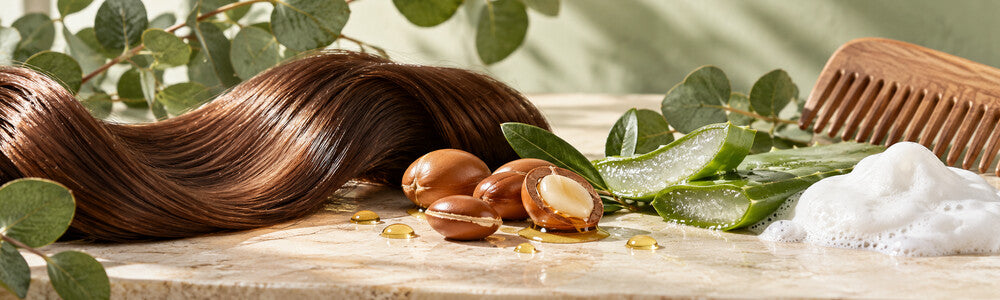
- Conditioning agents and plant oils help reduce friction and improve softness and shine.
- Humectants help attract water, although humid or very dry climates can change how a formula feels.
- Proteins may temporarily support the feel of damaged hair; too much can feel stiff on some hair types.
- Botanical extracts can contribute conditioning or antioxidant properties, but they do not guarantee hair growth.
Choose a routine by hair goal
For dry, dull or frizz-prone hair
Pair the Organic Sulfate-Free Shampoo with Argan Oil with the Organic Argan Oil Hair Conditioner. Apply conditioner primarily to the lengths and rinse thoroughly.
For lightweight finishing
A small amount of Organic Hair Shine Spray can add gloss and help smooth the look of flyaways. Begin lightly to avoid weighing down fine hair.
For thinning-hair concerns
The Organic Caffeine Hair Growth System is a cosmetic scalp-and-hair routine. Caffeine products should not be presented as a guaranteed regrowth treatment or replacement for diagnosis.
Frequently asked questions
How often should I wash my hair?
There is no universal schedule. Oil production, hair texture, exercise, styling products and scalp conditions all affect frequency.
Is organic hair care better?
Not automatically. Evaluate the complete formula, performance and your own tolerance rather than relying on one marketing word.
Can oils repair split ends?
They can smooth and reduce the appearance of fraying temporarily, but they cannot permanently fuse a split fiber.
This article provides cosmetic hair-care education, not diagnosis or treatment for hair loss or scalp disease.