



How to Choose a Clean Eye Cream for Fine Lines in 2026
The phrase “non-toxic eye cream” sounds reassuring, but it is not a standardized skincare category. A better way to choose an eye product is to look at the actual formula, your sensitivity, and the cosmetic benefit you want—hydration, smoother-looking fine lines, brightness, or a lighter texture around the eyes.
What can an eye cream realistically do?
Moisturizing can temporarily make dehydration lines look softer and smoother. Peptides, antioxidants, and Vitamin A derivatives may be included for additional cosmetic benefits, but no eye cream permanently erases wrinkles overnight.
What ingredients are worth considering?
Humectants
Ingredients such as hyaluronic acid and glycerin help attract water and support a hydrated appearance.
Peptides
Peptides are commonly included in eye products designed for smoother- and firmer-looking skin.
Vitamin C and antioxidants
Antioxidants can support brighter-looking skin and help protect formulas from oxidative stress.
Vitamin A derivatives
Vitamin A derivatives have evidence for mild fine lines, but the eye area can be sensitive. Follow the individual product directions rather than applying a strong face treatment close to the eye by default.
What does “clean” actually tell you?
Terms such as clean, natural, and non-toxic can reflect a brand philosophy, but they do not prove that a product is safer, gentler, or more effective for every person. Avoid broad claims that common preservatives, silicones, or entire ingredient classes are inherently dangerous without evidence.
A verified Glimmer Goddess option
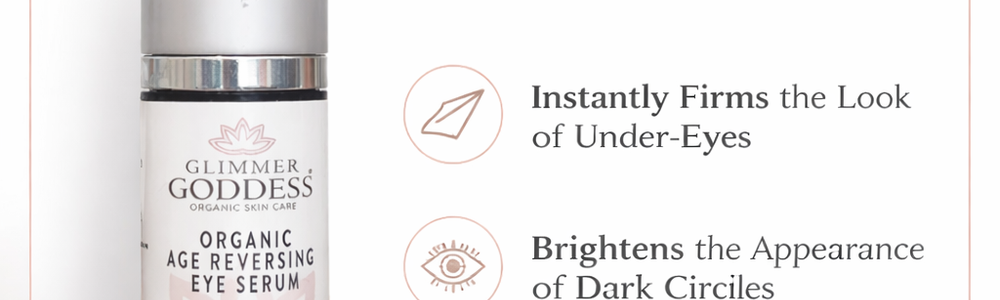
The Organic Age Reversing Eye Serum – Instant Firming Treatment is a lightweight eye serum formulated with peptides and Vitamin C. For editorial purposes, the appropriate positioning is cosmetic: it is designed to support a smoother, firmer-looking, brighter eye area.
It should not be assigned a fabricated 9.8/10 rating or compared using invented testing results.
How to apply eye products
- Use a small amount.
- Apply gently around the eye area according to the product directions.
- Avoid getting cosmetic products directly into the eye.
- Stop use if persistent irritation or swelling develops.
- Use appropriate daytime sun protection.
Do you need a separate eye cream?
Not necessarily. Some people are comfortable using a gentle facial moisturizer around the orbital area. A separate eye serum or cream can make sense when you prefer its texture or want ingredients designed specifically for that area.
Frequently Asked Questions
Are natural eye creams always gentler?
No. Botanical and naturally derived ingredients can still irritate some people. Formula quality and individual sensitivity matter more than a broad label.
Are parabens automatically “toxic” in an eye cream?
No responsible product comparison should make a blanket toxicity claim about a regulated preservative class without specific evidence and context.
How quickly should an eye cream work?
Hydration can change how fine lines look quickly, while longer-term cosmetic changes vary by formula and use. Avoid fixed timelines unless supported by product-specific testing.
When should I get medical advice?
See a healthcare professional for persistent eyelid rash, swelling, pain, vision symptoms, or ongoing irritation.
The Bottom Line
Choose an eye product by verified ingredients, comfort, and realistic benefits—not fear-based “toxin” lists or invented rankings.