



Botanical Oils for Skin: Moisture Benefits, Limits & How to Choose One
Botanical oils can be useful emollients: they soften the skin surface, add lipids and can help reduce moisture loss. But different plant oils have different fatty-acid profiles, and “natural” does not guarantee that an oil will suit every skin type. Some oils may feel rich, clog-prone or irritating for certain people, while others work beautifully on dry body skin.
What Botanical Oils Do on Skin
Plant oils are mixtures of triglycerides, fatty acids and smaller bioactive compounds. Their most reliable cosmetic role is emollience: helping the skin feel smoother and more supple.
Research reviews also show that some oils can support skin-barrier function, while others—depending on composition and concentration—may disrupt it. That is one reason it is misleading to describe every botanical oil as equally “healing” or barrier-repairing.
Oil Is Not the Same as Hydration
An oil can help reduce water loss, but it does not supply water to the skin the way a water-based lotion or humectant serum can. Very dry skin often benefits from applying moisturizer first, then an oil if extra richness is desired.
For texture comparisons, see Body Butter vs Lotion vs Body Oil: Which Texture Fits Your Skin?.
Why Fatty-Acid Profiles Matter
Botanical oils differ in their proportions of linoleic, oleic, saturated and other fatty acids. Reviews of topical plant oils show that those differences can influence barrier effects and skin feel.
For example, some linoleic-acid-rich oils have shown more favorable barrier-support effects than oils dominated by oleic acid in certain experimental contexts. That does not mean one single oil is universally best; the finished product and the individual user still matter.
Jamaican Black Castor Oil, Rosehip, Jojoba & Other Popular Oils
These ingredients are often promoted with dramatic anti-aging or regenerative claims. A more realistic approach is to evaluate their known lipid composition, antioxidant content, texture and tolerance rather than assuming they can erase wrinkles, scars or pigmentation.
For castor-oil-specific evidence and limitations, read Jamaican Black Castor Oil for Skin: Benefits, Limits & Risks.
Carrier Oils vs. Essential Oils
Carrier oils and essential oils are not interchangeable. Carrier oils are fatty oils such as jojoba, almond or sunflower oil. Essential oils are concentrated aromatic extracts used in much smaller amounts.
Essential oils can irritate or sensitize some skin, so “plant-based” should not be interpreted as “safe to apply undiluted.” Follow finished-product directions rather than creating stronger DIY blends.
How to Choose a Botanical Oil
- For dry body skin: look for a comfortable emollient texture and use a small amount over moisturizer if needed.
- For oily or breakout-prone areas: choose lighter textures cautiously and stop if congestion worsens.
- For sensitive skin: prioritize simple, fragrance-conscious formulas and patch test.
- For an “anti-aging” goal: treat oil as a conditioning step, not a replacement for sunscreen or evidence-based treatment actives.
A Current Glimmer Goddess® Body-Oil Option
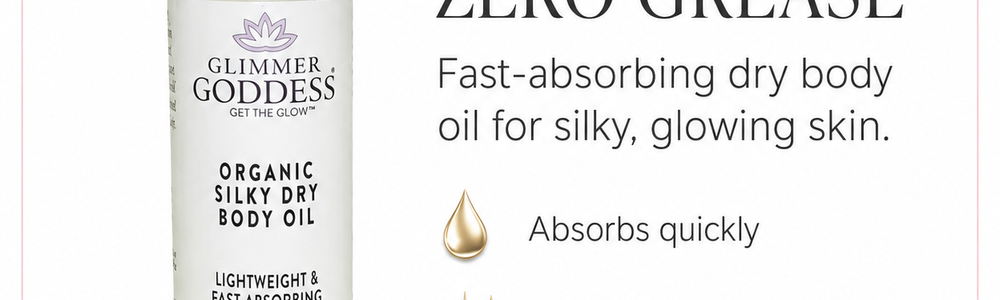
The active Organic Silky Dry Body Oil – Fast-Absorbing Formula is a current Glimmer Goddess® body-oil format. Its practical role is body-skin conditioning and softness; it should not be viewed as a medical treatment.
Natural and Organic Are Not Safety Shortcuts
The FDA notes that an ingredient’s source does not determine cosmetic safety. A plant-derived oil can still cause irritation, allergy or breakouts in an individual user.
For a broader label discussion, see Organic Skincare: What “Organic” Means—and What It Doesn’t, and for ingredient-selection basics see Natural Skincare Ingredients: Benefits, Limits & How to Choose.
Frequently Asked Questions
Can botanical oils replace moisturizer?
Sometimes an oil alone feels sufficient, but many dry-skin routines benefit more from water-based hydration plus an oil or richer moisturizer.
Do botanical oils stimulate collagen?
Do not assume so. Some oils contain antioxidants and bioactive compounds, but visible collagen remodeling requires stronger evidence than the presence of a plant oil alone.
Can I use body oil on my face?
Use a product on the areas indicated by its label. A body oil should not automatically be treated as a facial product.
The Bottom Line
Botanical oils are valuable primarily because they can soften and condition skin and help reduce moisture loss. Choose by formula, fatty-acid profile, texture and personal tolerance—not by “natural” hype.
Sources: Anti-Inflammatory and Skin Barrier Repair Effects of Topical Application of Some Plant Oils; The Enigma of Bioactivity and Toxicity of Botanical Oils for Skin Care; U.S. FDA: “Organic” Cosmetics.