


DHA-Free Self Tanner for Sensitive Skin: What to Know
If your skin is easily irritated, a DHA-free self tanner may be worth considering—but removing DHA does not make a formula universally hypoallergenic or safe for every sensitive-skin condition. The most useful approach is careful patch testing, gradual application and attention to the full ingredient list.
What Does DHA-Free Self Tanner Mean?
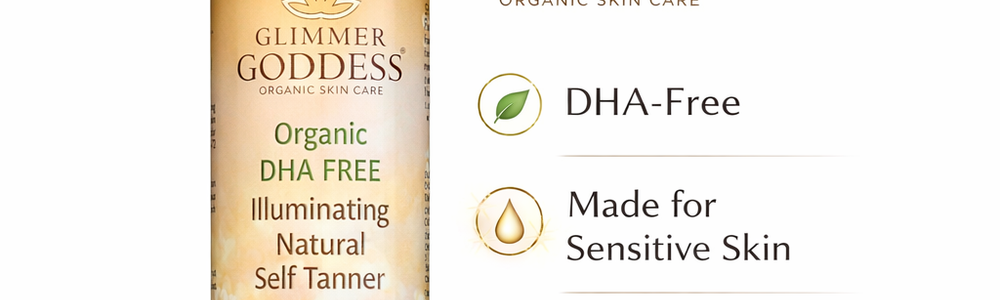
DHA, or dihydroxyacetone, is a common sunless tanning color additive. A DHA-free formula uses another cosmetic tanning system. Glimmer Goddess® DHA Free Self Tanner for Sensitive Skin – Glow is our current lotion option.
Is DHA-Free Better for Eczema, Rosacea or Psoriasis?
It is not appropriate to promise that a cosmetic self tanner is safe for, treats or improves eczema, rosacea, psoriasis or another diagnosed skin condition. Those conditions can make skin more reactive, and product tolerance varies. If you have an active flare, broken skin or a diagnosed condition, ask your dermatologist whether sunless tanning is appropriate for you.
Patch Test Before a Full Application
Apply a small amount to a discreet area and follow the product directions. Watch for persistent redness, itching, burning, swelling or other unexpected changes. If irritation occurs, stop using the product. FDA also advises consumers not to assume a product labeled natural, organic or hypoallergenic cannot cause a reaction.
Prepare Sensitive Skin Gently
Aggressive exfoliation can make reactive skin feel worse. If you exfoliate before tanning, use a gentle method and avoid scrubbing until the skin is pink or tender. Moisturize dry areas and wait until the skin feels calm before applying self tanner.
Build Color Gradually
Thin, even layers are easier to control than a heavy application. Blend carefully around knees, elbows, ankles and wrists, where dryness can make color appear uneven. The DHA-Free Self Tanner Bundle provides lotion and drops for shoppers who want more flexibility while still following the individual product directions.
A Sunless Tan Is Not SPF
Even when skin looks bronzed, it is not protected from UV radiation. FDA requires tanning products without sunscreen to warn consumers that they do not protect against sunburn. Use broad-spectrum sunscreen outdoors regardless of your self-tanner choice.
When to Stop
Stop using a cosmetic if you develop significant or persistent irritation. Seek medical guidance for swelling, blistering, trouble breathing or a severe reaction, and do not apply self tanner over damaged or inflamed skin.
The Bottom Line
DHA-free self tanner can be a useful alternative for people who prefer a non-DHA formula, including some shoppers with easily irritated skin. But the safer message is not “DHA-free means no irritation”—it is “patch test, go slowly, and let your own skin response guide you.”
Sources: FDA: Using Cosmetics Safely; FDA tanning-product warning guidance.