



Organic Skincare: What “Organic” Means—and What It Doesn’t
“Organic skincare” sounds simple, but the label is more nuanced than many shoppers realize. Organic can describe how qualifying agricultural ingredients are grown and certified; it does not mean a cosmetic is automatically safer, gentler, cleaner or more effective.
Who Defines “Organic” for Cosmetics?
The FDA does not define the term “organic” for cosmetics. The USDA National Organic Program oversees organic standards for qualifying agricultural ingredients and labeling categories. Cosmetics using organic claims still must comply with the laws and safety requirements that apply to cosmetics.
Does Organic Mean Safer?
No. FDA specifically notes that an ingredient’s source does not determine its safety. Plant-derived ingredients can be irritating or allergenic, while synthetic ingredients are not automatically harsh. Safety depends on the ingredient, concentration, formulation, intended use and individual response.
What Glimmer Goddess® Means by Organic Ingredient Language
For Glimmer Goddess®, our preferred wording is “Made with Certified Organic Ingredients” where appropriate. That is more precise than suggesting every finished formula is itself certified organic.
What Are the Practical Benefits of Choosing Organic Ingredients?
For many shoppers, the value is about sourcing preference and how agricultural ingredients are produced—not a guarantee of superior skin results. A well-made moisturizer, serum or cleanser still needs a balanced formula and must suit your skin.
How to Evaluate an Organic Skincare Product
- Read the full ingredient list. Do not judge a product by one highlighted botanical.
- Match the product to your skin type. Rich creams, light serums and exfoliants serve different needs.
- Look for realistic claims. Cosmetics can moisturize, smooth and improve appearance, but should not be sold as cures for skin disease.
- Patch test when appropriate. This is especially useful if your skin is reactive.
- Keep sunscreen separate from “clean beauty” marketing. Daytime UV protection still depends on a tested, labeled sunscreen product.
An Example of Formula-First Thinking
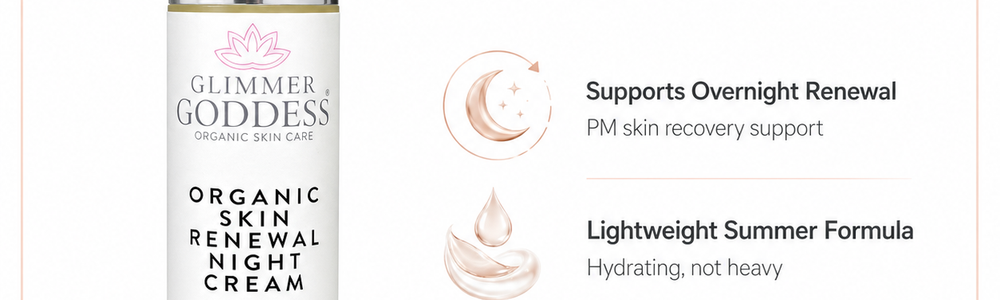
Instead of choosing a night moisturizer only because it contains organic ingredients, choose based on texture and purpose. Glimmer Goddess® Organic Skin Renewal Night Cream 2 oz. is a richer nighttime moisturizer; the important consumer question is whether that texture and formula fit your skin.
What About “Natural,” “Non-Toxic” and “Chemical-Free”?
These terms can create more confusion than clarity. Everything is made of chemicals, and “natural” does not automatically mean safe. FDA advises consumers not to assume natural or organic cosmetics are safer than products made from other ingredient sources.
The Bottom Line
Organic sourcing can be a meaningful personal preference, but it should not replace careful product evaluation. Choose skincare by complete formula, function, skin compatibility and truthful claims—and treat “organic” as sourcing information rather than a safety guarantee.
Source: FDA: “Organic” Cosmetics.