



Sun-Safe Skincare: Sunscreen, Shade & Self-Tanner Tips
A golden-looking glow and smart sun protection are not the same thing. The safest approach is to separate cosmetic color from UV protection: use sunscreen and other sun-protective habits to reduce exposure, and use self-tanner only when you want color without intentionally tanning in the sun.
Start With Broad-Spectrum Sunscreen
For routine outdoor exposure, the American Academy of Dermatology recommends a broad-spectrum, water-resistant sunscreen with SPF 30 or higher. Apply it to exposed skin before going outside and reapply according to the product directions, especially after swimming or sweating.
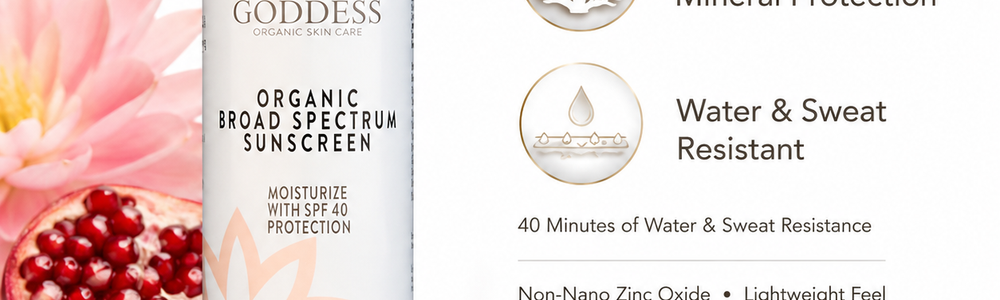
Glimmer Goddess® Organic Reef-Safe Sunscreen – Broad Spectrum SPF 40 is a current mineral sunscreen option. Follow the label directions for application and water-resistance timing.
Do Not Use Coconut Oil as Sunscreen
Coconut oil can be useful as an emollient in body-care formulas, but it should not replace a tested, labeled sunscreen. DIY oils do not provide the standardized broad-spectrum protection required of sunscreen products. The FDA advises consumers to use sunscreen products that are specifically formulated and labeled for sun protection.
Add Shade and Protective Clothing
Sunscreen works best as one part of a larger sun-protection strategy. Seek shade when practical and consider protective clothing, a wide-brimmed hat and UV-blocking sunglasses during extended outdoor time. These steps reduce how much uncovered skin must rely on sunscreen alone.
Self-Tanner Gives Color, Not Sun Protection
Sunless tanning products can create the appearance of a tan without intentionally exposing skin to UV radiation. However, a self-tanner does not protect skin from the sun unless the finished product is specifically labeled with sunscreen protection. The FDA requires a warning on tanning products without sunscreen so consumers do not mistake cosmetic color for UV protection.
If you want a sunless glow, Glimmer Goddess® DHA-Free Self Tanner offers cosmetic color without intentionally tanning in the sun. Continue using your normal sunscreen routine on top when you are outdoors.
Moisturizer Helps Comfort—Not UV Repair
After a day outdoors, moisturizer can help dry or tight-feeling skin feel more comfortable by reducing moisture loss. That is different from reversing UV damage. If skin is blistered, severely painful or accompanied by fever or other concerning symptoms, seek medical guidance rather than relying on a cosmetic moisturizer.
What About a “Base Tan”?
A base tan is not a safe substitute for sunscreen. A visible tan is a response to UV exposure, and additional exposure can continue to damage skin. If you like the look of bronzed skin, a sunless tanner is the better cosmetic route.
A Simple Sun-Safe Routine
- Apply your usual skincare and moisturizer.
- Finish with broad-spectrum SPF 30 or higher.
- Use shade, clothing, hats and sunglasses when exposure will be significant.
- Reapply sunscreen as directed.
- Use self-tanner separately for cosmetic color, not for UV protection.
The Bottom Line
You do not have to choose between glowing skin and responsible sun care. Keep sunscreen and protective habits at the center of your daytime routine, skip DIY oils as SPF substitutes, and treat self-tanner as cosmetic color only.
Sources: American Academy of Dermatology sunscreen guidance; FDA sunless tanning warning requirements.