



Facial Redness Triggers: Irritation, Heat, Sun & When to See a Dermatologist
Facial redness is not one single skin problem. It can be temporary flushing, irritation from a product, dryness, sun exposure, heat—or a sign of a condition such as rosacea, contact dermatitis or seborrheic dermatitis. The safest first step is to look for patterns rather than assuming every red face needs the same “calming” ingredient.
Common Reasons a Face Looks Red
Temporary redness can follow exercise, heat, spicy food, alcohol, cold wind or sun exposure. Skincare can also trigger redness when a product stings, burns, over-exfoliates or causes an allergic or irritant reaction.
Persistent or recurring redness may have a medical cause. The American Academy of Dermatology lists rosacea, contact dermatitis and seborrheic dermatitis among the conditions that can cause a red face. A cosmetic routine cannot diagnose or treat those conditions.
Redness After a New Product
If redness starts after introducing a cleanser, acid, scrub, essential oil, fragrance or another new product, stop the suspected trigger and simplify. Burning, stinging or peeling are signs to avoid adding more active ingredients while the skin is irritated.
Our related guide on over-exfoliated skin explains when it is better to stop and simplify rather than exfoliate again.
Redness From Heat, Sun or Weather
Heat and sun can trigger flushing, particularly in rosacea-prone skin. Cold and wind can also aggravate sensitive or dry skin. Use shade, protective clothing and sunscreen as directed. If your skin is easily irritated, look for formulas you tolerate rather than assuming “natural” automatically means gentle.
The current Triple Action Daily Moisturizer – Organic SPF 30 is one Glimmer Goddess® daytime SPF option. It is a cosmetic sunscreen/moisturizer, not a treatment for rosacea or other medical causes of redness.
How to Simplify a Red, Reactive Routine
- Use lukewarm rather than very hot water.
- Choose a gentle cleanser and avoid scrubbing.
- Pause nonessential exfoliating products if skin is stinging or peeling.
- Use a moisturizer that feels comfortable and does not burn.
- Protect exposed skin from UV and extreme weather.
- Introduce only one new product at a time once skin is comfortable again.
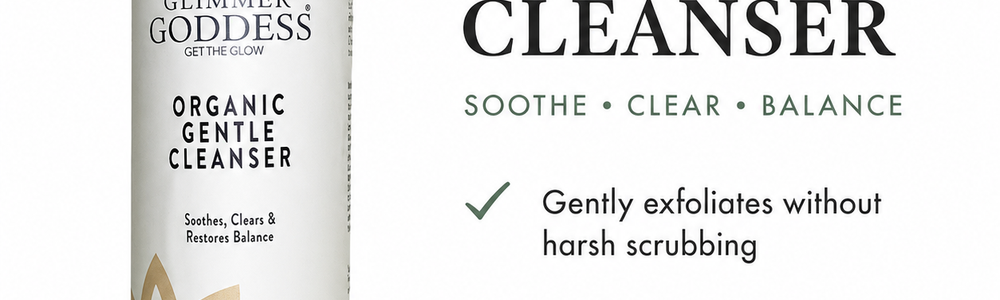
The current Organic Sensitive Skin Cleanser – Gentle AHA Face Wash is a current Glimmer Goddess® cleanser option. Because it contains an AHA, it should not be treated as automatically appropriate for actively irritated skin; follow the label and stop if it stings.
When Redness May Be Rosacea
Rosacea often involves recurring flushing or persistent central facial redness and may include visible blood vessels, bumps, burning or sensitivity. Triggers vary by person. If you suspect rosacea, a dermatologist can diagnose the condition and build a treatment plan; skincare alone is not a substitute.
For cold-weather-specific redness, see our guide to winter skin redness, dryness and irritation.
When to See a Dermatologist
Get professional care for redness that is persistent, painful, rapidly worsening, associated with swelling or trouble breathing, accompanied by eye symptoms, or repeatedly returns without a clear trigger. Also seek care if a rash is crusting, draining, bleeding or not improving after you stop suspected irritants.
Frequently Asked Questions
Can aloe vera or essential oils cure facial redness?
No single cosmetic ingredient can cure all causes of facial redness. Essential oils can irritate sensitive skin, and “natural” does not mean hypoallergenic.
Should I exfoliate red skin?
Not when the skin is burning, peeling or tender. Extra exfoliation can increase irritation.
Does moisturizer help redness?
Moisturizer can help dryness and barrier comfort, but it does not diagnose or treat medical causes such as rosacea or dermatitis.
The Bottom Line
Facial redness is a symptom, not a diagnosis. Look for triggers, simplify when skin is irritated, protect it from sun and weather, and get medical guidance when redness is persistent or unexplained.
Sources: American Academy of Dermatology: Reasons your face may be red; American Academy of Dermatology: Preventing rosacea flare-ups.