



Uneven Skin Texture: Roughness, Bumps, Pores & What Helps
Uneven skin texture describes how skin feels and reflects light—not its color. Roughness, flakes, small bumps, visible pores and scars can all create texture, but they do not have the same cause or the same solution.
1. Dry, Rough or Flaky Texture
If skin feels rough and tight, start with gentle cleansing and moisturizer before adding more exfoliation. Dryness can make normal surface lines and pores look more obvious.
2. Clogged Pores and Small Bumps
Comedones and clogged pores can create an uneven surface. Acne-prone skin often does better with gentle, consistent care than repeated scrubbing. If bumps persist, evidence-based acne treatment or dermatology guidance may be more useful than adding more physical exfoliants.
3. Visible Pores
Pores are normal structures and cannot be permanently “closed.” Keeping skin clean, adequately moisturized and avoiding irritation can help the surface look smoother, but pore size is influenced by genetics, oil production and age.
4. Post-Acne Scars
Indented or raised acne scars are structural changes in the skin. Topical cosmetics may improve surrounding dryness or discoloration, but they cannot fully rebuild deeper scar architecture. A dermatologist can discuss procedures when scars are the main concern.
Where AHAs Fit
Alpha hydroxy acids exfoliate the surface and can improve the appearance of rough texture. FDA cautions that AHAs can increase sun sensitivity, so follow label directions and use sun protection.
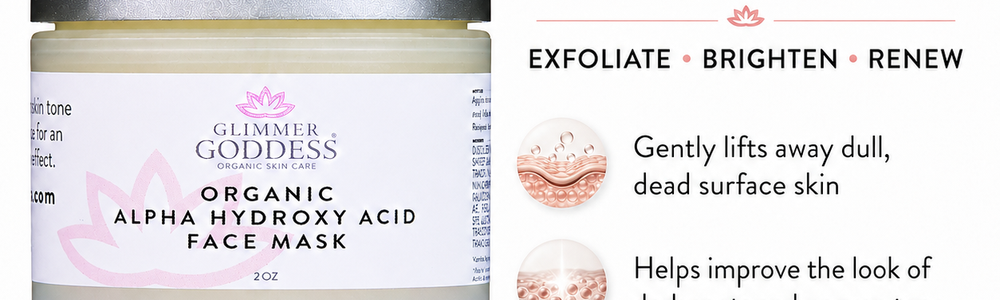
The current Organic AHA Face Mask – Renewing Treatment for Exfoliation & Glow is one exfoliating option for shoppers who already tolerate AHAs. It is not a treatment for acne scars or a substitute for dermatologic care.
What Not to Do
- Do not use baking soda or coarse kitchen scrubs on the face.
- Do not scrub irritated or peeling skin harder.
- Do not combine multiple exfoliating products just because texture is visible.
- Do not expect one cosmetic to erase deep acne scars.
A Simple Texture Routine
- Gentle cleanser.
- Moisturizer appropriate for your skin.
- Broad-spectrum sunscreen in the morning.
- Optional exfoliation according to product directions if your skin tolerates it.
For the difference between texture and discoloration, see Uneven Skin Tone vs. Texture: What’s the Difference?.
Frequently Asked Questions
Does drinking more water smooth skin texture?
Normal hydration supports overall health, but drinking extra water is not a proven treatment for clogged pores, scars or enlarged pores.
Can a moisturizer improve texture?
Yes, when roughness is primarily related to dryness. It will not remove structural scars.
How often should I exfoliate?
There is no universal schedule. Follow the specific product directions and reduce frequency if you develop stinging, redness or peeling.
The Bottom Line
Match the solution to the source of the texture. Dryness, clogged pores and scars are different concerns, and aggressive exfoliation is not the answer to all three.
Sources: FDA: Alpha Hydroxy Acids; American Academy of Dermatology: Acne skin-care tips.