




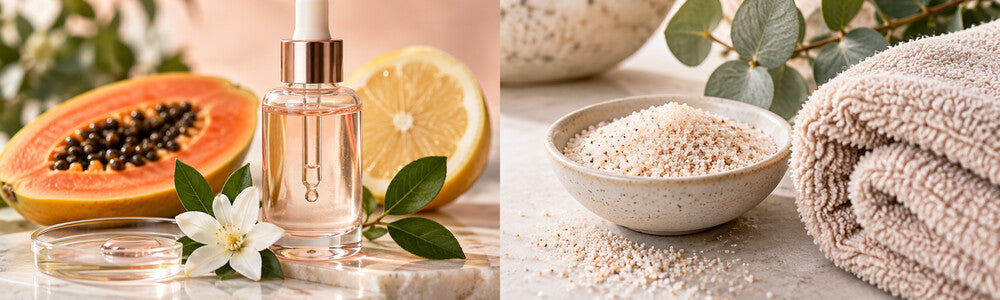
Chemical vs. Physical Exfoliation for Mature Skin
Neither chemical nor physical exfoliation is automatically best for mature skin. The right choice is the gentlest method that smooths dull surface buildup without leaving your skin tight, stinging, or visibly irritated. Because skin often becomes drier and more delicate with age, technique and frequency matter more than choosing a trendy format.
What is the difference?
Physical exfoliation loosens surface cells through friction. Examples include a soft washcloth or a finely textured scrub. Chemical exfoliation uses acids or enzymes to loosen bonds between surface cells. Alpha hydroxy acids such as lactic acid tend to suit dry-feeling skin, while salicylic acid is oil-soluble and may be more useful where clogged pores are the main concern.
The American Academy of Dermatology explains that both methods can work, but the product and pressure should match your skin type. Its guide to safe at-home exfoliation also advises extra care when using retinoids, retinol, or benzoyl peroxide because the combination can increase dryness and sensitivity.
When physical exfoliation may fit
A very soft cloth or fine, rounded scrub can provide immediate surface smoothness and lets you control the pressure. Use light circular motions for about 30 seconds and rinse with lukewarm water. Coarse particles, aggressive brushes, and hard scrubbing can create unnecessary irritation—especially on thin, dry, or reactive skin.
When chemical exfoliation may fit
A low-strength, well-formulated acid can exfoliate evenly without rubbing. Start with one application a week, follow the label, and increase only if your skin remains comfortable. Do not layer several exfoliating acids or introduce an acid on the same night as a strong vitamin A product until you know how your skin responds. Our guide to hyaluronic acid and vitamin A explains how to space supportive hydration around an active routine.
A gentle mature-skin routine
- Cleanse without hot water or harsh rubbing.
- Exfoliate only on intact, non-sunburned skin.
- Apply moisturizer immediately afterward.
- Use broad-spectrum sunscreen every morning.
- Pause if you notice persistent redness, burning, peeling, or tenderness.
More is not better. Some people do well once weekly; others need less. If your main goal is barrier comfort, begin with the basics in our ceramides and hyaluronic acid routine. For more technique tips, see Exfoliation: Reveal Brighter, Smoother Skin.
Bottom line
Choose physical exfoliation when you want a brief, controllable polishing step and can use an extremely light touch. Choose chemical exfoliation when you prefer an even, no-scrub approach and can introduce one active slowly. Either way, the best result is comfortable, smooth-looking skin—not redness that proves a product is “working.”