


Apple Stem Cell Skincare: What Plant Extracts Can Do
Apple stem cell skincare uses plant-cell-culture extracts or related plant-derived ingredients in cosmetic formulas. These products do not place living human stem cells into your skin, and they cannot replace your own skin cells. Their value depends on the specific ingredient, concentration, delivery system, and the rest of the formula.
What “apple stem cell” means in skincare
In cosmetics, the phrase usually refers to an extract made from cultured apple plant cells, not an intact stem cell that remains alive in the finished product. The extract may contain plant compounds that support an antioxidant-focused formula, but the phrase alone does not prove that a product rebuilds tissue, changes DNA, or reverses biological aging.
Research on plant-derived cosmetic materials is developing, but findings from one proprietary apple-derived material cannot automatically be applied to every product bearing an apple-stem-cell label. A 2025 study of a specific apple-derived extracellular-vesicle formula reported encouraging cosmetic findings, yet that evidence is formula-specific and should not be treated as proof for unrelated products. See the published study in PubMed.
How to evaluate the complete formula
Instead of judging a serum or moisturizer by one headline ingredient, consider the whole routine:
- Hydration: Humectants attract water, while emollients and occlusives help the skin feel softer and reduce the appearance of dryness.
- Antioxidant support: Plant extracts may complement established antioxidants, but packaging and formula stability matter.
- Barrier comfort: A well-formulated moisturizer can help skin feel more comfortable and supple.
- Tolerance: Botanical does not automatically mean irritation-free. Patch testing remains useful.
- Sun protection: Daily broad-spectrum sunscreen remains foundational for limiting UV-related visible aging.
Serum, moisturizer, or duo?
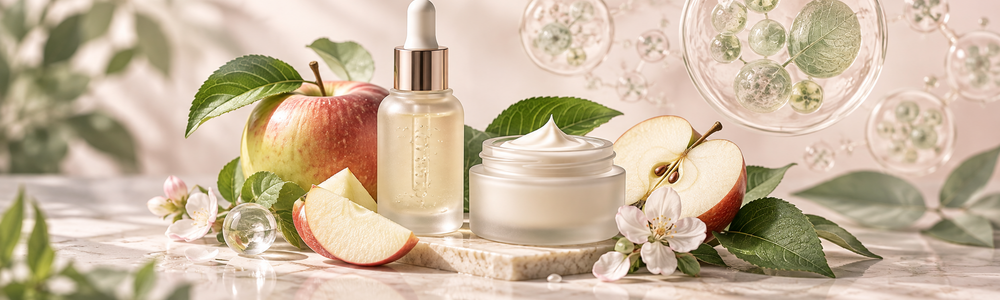
A serum is usually the lighter step and fits after cleansing. A moisturizer is the sealing step and helps reduce water loss. If you prefer a coordinated routine, the Cellular Renewal Duo – Apple Stem Cell Serum + Moisturizer combines both formats. The steps are also available individually as the Organic Apple Stem Cell Anti-Aging Serum and Organic Apple Stem Cell Moisturizer – Anti-Aging Treatment.
Product names describe cosmetic positioning; they are not a promise that plant extracts regenerate human tissue. Expect improvements related to hydration, softness, and the appearance of radiance from the complete formula rather than a single ingredient acting alone.
A simple way to use apple stem cell skincare
Morning
- Cleanse gently.
- Apply a thin layer of serum if desired.
- Follow with moisturizer.
- Finish with broad-spectrum sunscreen.
Evening
- Remove sunscreen and makeup with a gentle cleanser.
- Apply serum to dry skin.
- Seal with moisturizer.
Introduce one new product at a time. This makes it easier to identify whether a formula agrees with your skin.
Realistic expectations
Consistent hydration can make dry surface lines look less noticeable and help skin appear smoother and more luminous. Plant extracts may add antioxidant value, but no cosmetic can stop aging or duplicate a medical procedure. Give a routine enough time to judge comfort and appearance, and discontinue use if persistent burning, swelling, or rash develops.
For a broader ingredient perspective, read our guide to peptides, vitamin C, and plant extracts. You can also explore the focused apple stem cell serum guide.
Frequently asked questions
Are apple stem cells alive in a skincare bottle?
Generally, no. Cosmetic formulas use plant-cell-derived extracts or processed materials, not living cells that become part of human skin.
Can apple stem cell products replace Vitamin A or sunscreen?
No. They play a different cosmetic role. Sunscreen remains essential for UV protection, and Vitamin A products have their own evidence, tolerance considerations, and pregnancy restrictions.
Is plant-derived skincare automatically gentle?
No. Any formula can cause irritation or allergy. Patch test first if your skin is sensitive or reactive.