



Coconut Oil for Hair: Benefits, Limits, and How to Use It
Coconut oil can help protect the hair fiber and reduce protein loss when used before or after washing, but it has not been shown to make new hair grow. Its best-supported role is conditioning and breakage reduction, not treating the causes of thinning.
That distinction matters. Hair may look fuller when fewer strands break, yet improved retention is not the same biological process as changing growth at the follicle.
Why coconut oil behaves differently from some oils
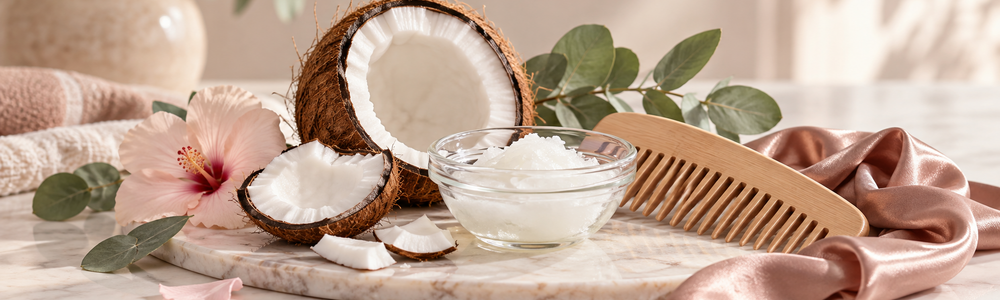
A published hair-fiber study compared coconut, sunflower, and mineral oil and found that coconut oil reduced protein loss in damaged and undamaged hair when used as a grooming treatment. The authors linked this to coconut oil’s lauric-acid-rich triglyceride structure and affinity for hair proteins.
This evidence supports a hair-shaft benefit. It does not establish coconut oil as a treatment for patterned hair loss, alopecia, hormonal change, nutrient deficiency, or another cause of shedding.
Who may like coconut oil?
- Dry, porous, curly, or chemically processed hair that benefits from a pre-wash buffer.
- Lengths and ends prone to friction, roughness, or breakage.
- People who prefer a simple oil treatment and tolerate the texture well.
Who may prefer less—or none?
- Fine or low-porosity hair that becomes coated or limp easily.
- An oily scalp where added oil feels uncomfortable.
- Anyone who develops itching, redness, bumps, or worsening flaking after use.
- People with sudden shedding or bald patches who need an evaluation rather than another oil.
Three practical ways to use coconut oil
Pre-wash
Warm a very small amount between the palms, apply mainly to lengths and ends, leave briefly, then shampoo thoroughly.
Post-wash ends
Use a trace amount on dry-looking ends. Too much can make hair appear heavy.
Occasional mask
Apply conservatively and wash out completely. Frequency depends on texture, porosity, and buildup.
What about the scalp?
A scalp is skin, and oil is not automatically soothing for every scalp concern. Avoid aggressive massage on an inflamed or tender area. If dandruff-like flaking, pain, sores, or itching persists, consult a qualified professional.
Shoppers who prefer a formulated scalp step can review the active Organic Caffeine Hair Growth Serum – Scalp Treatment. Its verified product name does not mean it addresses every reason for thinning, and it should not delay an evaluation of sudden or unexplained changes.
How to reduce breakage beyond oiling
- Detangle gently with enough slip, starting at the ends.
- Reduce repeated high heat and tight styles.
- Use a conditioner suited to your hair’s texture and processing history.
- Protect hair from rough towel friction and repeated mechanical stress.
- Trim split ends when needed; oils cannot fuse them permanently.
The guide to body and scalp serums explains how targeted formulas differ from simple oils. For label evaluation, see clean beauty and ingredient safety. If you are adding several new products, use the patch-testing guide.
Coconut oil for hair FAQ
Does coconut oil make hair grow faster?
There is not good evidence that it changes the follicle’s growth rate. Its better-supported role is helping protect the existing hair fiber.
Can I leave coconut oil on overnight?
Some people tolerate that, but longer is not always better. Begin with a short pre-wash treatment and a small amount.
Is coconut oil right for every hair type?
No. Fine or low-porosity hair may feel weighed down, while dry or porous hair may respond better.