




When Sunscreen Stings Eczema-Prone Skin: How to Choose SPF
If sunscreen stings eczema-prone skin, do not simply give up sun protection. First, stop using the product that caused the reaction. For the next choice, look for a fragrance-free, broad-spectrum SPF 30 or higher with zinc oxide and/or titanium dioxide, then test the complete formula on a small area. Shade and protective clothing can help while you work with a dermatologist to find a sunscreen you tolerate.
Why a sunscreen may sting
Eczema-prone skin may feel raw or reactive, especially during a flare. Fragrance, essential oils, certain UV filters, and other ingredients can bother some people. A mineral filter is a useful starting point, but the rest of the formula still matters; “mineral,” “natural,” and “organic” do not mean irritation-free or eczema-safe.
The American Academy of Dermatology's eczema-friendly product guidance recommends fragrance-free, broad-spectrum SPF 30+ sunscreen with zinc oxide and/or titanium dioxide for children with eczema. Adults with reactive skin may also use those features as a practical starting checklist, while seeking individual medical advice.
Read the label beyond the SPF number
- Broad spectrum: check for UVA and UVB protection and SPF 30 or higher.
- Fragrance-free: look at both the front label and full ingredients; an “unscented” product may still contain masking fragrance.
- Mineral UV filters: zinc oxide, titanium dioxide, or both may be easier for some sensitive skin to tolerate, but another ingredient in the formula may still cause a reaction.
- Water resistance: select it when swimming or sweating, and follow the product's stated reapplication directions.
The AAD's sunscreen-label guide explains these protection terms in more detail. A high SPF does not compensate for using too little product or failing to reapply.
Test before applying it widely
The AAD advises trying a new skincare product on a small test area for several days before broader use; see its step-by-step product-testing guidance. Stop if the area becomes itchy, red, swollen, or otherwise uncomfortable. At-home testing does not diagnose an allergy; a dermatologist may recommend formal patch testing when reactions recur.
If your skin is very dry, keep up the fragrance-free moisturizer your clinician recommends. Apply sunscreen according to its label over your regular routine, and avoid rubbing raw or broken areas. Ask your dermatologist how to protect skin during a painful flare or when even gentle formulas burn.
Protection is more than a bottle
Seek shade and wear comfortable sun-protective clothing and a hat where practical. Apply sunscreen to exposed skin before going outdoors, then reapply about every two hours while outside and after swimming or sweating, as directed. The AAD explains sunscreen application and reapplication.
A Glimmer Goddess SPF option without added essential oils
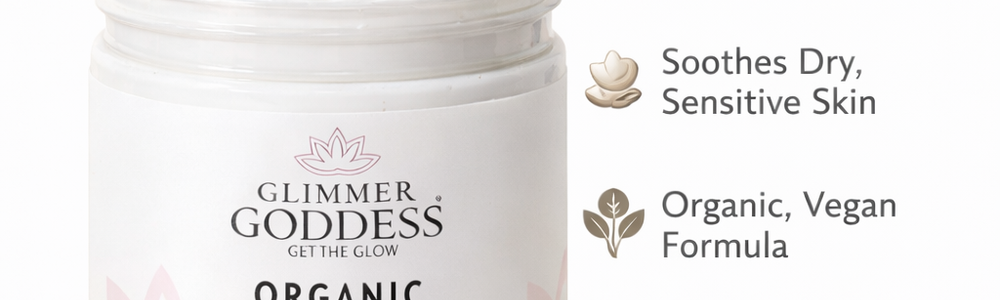
Glimmer Goddess® offers an Unscented airless-bottle option of Triple Action Daily Moisturizer – Organic SPF 30. Glimmer Goddess confirms that this specific Unscented variant is made without added essential oils; the lightly scented variant is different. It uses non-nano zinc oxide for mineral SPF 30. Select the Unscented option, check the label of the exact product you receive, and test it first if your skin is reactive. It is sun care and moisturizing skincare—not an eczema treatment or a guarantee against irritation.
When to get help
If multiple sunscreens cause burning, itching, or a recurring rash, a dermatologist can help identify possible contact allergy, an active eczema flare, or another source of irritation. Sunscreen selection is sun care; it is not treatment for eczema.
For a broader overview of ingredients and patch testing, see our eczema-prone sunscreen buying guide. For the rest of your routine, read gentle facial eczema skincare and building a gentler eczema-prone routine. Our skincare-by-concern guide can help organize cosmetic care around your skin's needs.
Frequently asked questions
Is every zinc oxide sunscreen suitable for eczema?
No. Mineral active ingredients may be a good place to begin, but the finished formula and your personal triggers determine whether it feels comfortable.
Does “unscented” mean fragrance-free?
Not necessarily. Look specifically for fragrance-free labeling and check the complete ingredient list, especially if fragrance is a known trigger.
What if every sunscreen stings during a flare?
Use shade and protective clothing as interim measures and ask a dermatologist for individualized advice. Do not keep applying a product that provokes a significant reaction.
The bottom line: Choose broad-spectrum SPF 30+ protection that your skin tolerates, start with a fragrance-free mineral formula, test carefully, and seek help when reactions keep happening.