
Eczema Flare-Up Causes: 9 Triggers & Practical Care
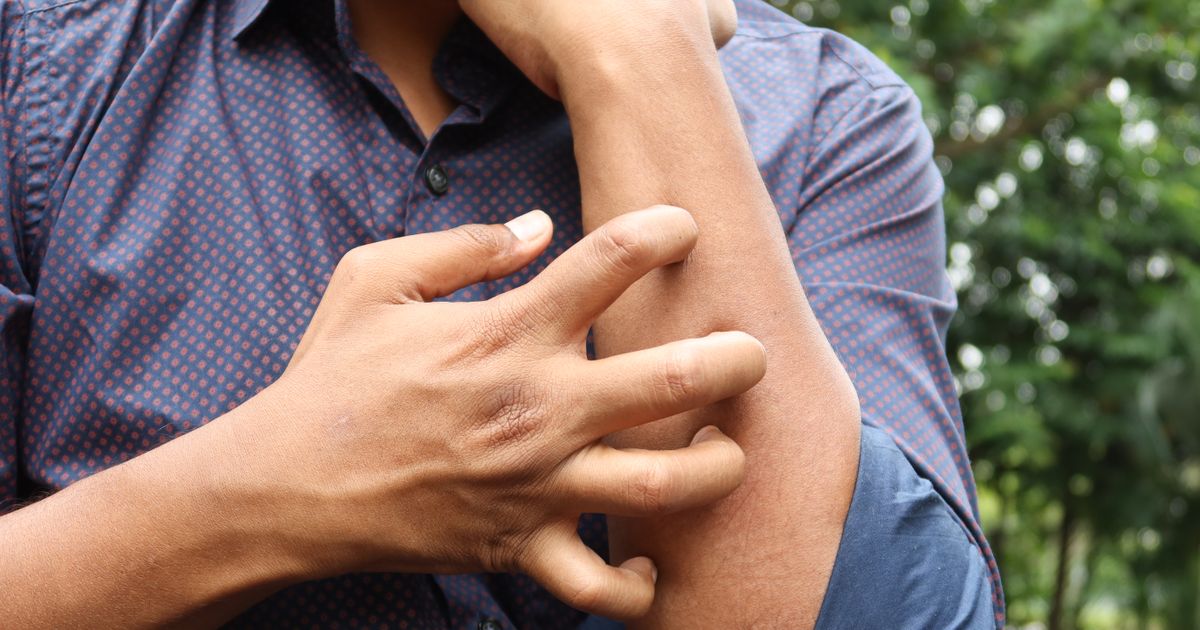
What causes an eczema flare-up? Common triggers include dry weather, fragranced skincare, stress, scratchy clothing, heat and sweat, cleaning products, certain environmental allergens, friction and scratching. Sometimes an apparent flare is complicated by a skin infection. The pattern is individual, and a person may experience a flare without an obvious trigger.
Eczema is a group of inflammatory skin conditions rather than a single cosmetic problem. Atopic dermatitis is the most familiar type, but contact dermatitis, dyshidrotic eczema and other conditions can look or behave differently. Triggers contribute to inflammation in someone susceptible to a particular type; they do not prove the cause of every rash. The American Academy of Dermatology (AAD) emphasizes that identifying and avoiding triggers can help, while some patients never find one consistent cause.
This guide reviews nine practical trigger categories, explains what you can reasonably change, and separates supportive skin care from treatment. Glimmer Goddess is a cosmetics brand; our products are not medications for eczema and we do not claim that our full product range is safe for every eczema-prone customer.
Quick overview: nine potential flare-up triggers
| Potential trigger | Practical consideration |
|---|---|
| 1. Dry air and cold weather | Moisturize and avoid harsh bathing |
| 2. Fragrance and irritating skincare | Prefer fragrance-free formulas; review essential oils |
| 3. Stress and itch | Track patterns; keep prescribed care consistent |
| 4. Rough clothing and friction | Choose soft, loose fabrics and remove irritating tags |
| 5. Heat, sweat and sudden changes | Cool down and change damp clothing |
| 6. Detergents and household chemicals | Protect hands and use mild, fragrance-free detergents |
| 7. Relevant environmental allergens | Avoid confirmed allergens, not every possible allergen |
| 8. Scratching and repeated rubbing | Reduce friction and discuss uncontrolled itch with a clinician |
| 9. Infection or secondary complications | Seek assessment for new pain, crusting, pus or fever |
1. Dry weather and low humidity
Cold outdoor air and indoor heating can leave skin feeling drier. Atopic dermatitis often involves skin-barrier changes that allow moisture to escape more easily, so dryness may make itching and discomfort worse. Some people notice more flares in winter; others are more affected by summer heat or sweat.
What to try: Take lukewarm showers, avoid long periods in hot water, and apply a comfortable fragrance-free cream or ointment while skin is still slightly damp. Humidification may be useful if indoor air is especially dry, but do not assume that a fixed 40–60% humidity range is right for every household; excess humidity can encourage mold or dust mites. Clean humidifiers according to instructions.
Consistent moisturizing year-round may be more useful than waiting until an active flare makes the skin uncomfortable. The AAD's eczema skincare recommendations explain why short bathing and prompt moisturizing can help.
2. Fragrance, essential oils and irritating skincare
Fragrances and certain cosmetic ingredients can trigger irritation or allergic contact dermatitis in susceptible people. The words “natural,” “clean,” “organic” and “botanical” do not establish a formula's suitability for eczema. Essential oils are fragrant plant extracts and may cause skin reactions even when a product contains no synthetic perfume.
What to try: Choose products specifically labeled fragrance-free, and read the complete ingredient list. “Unscented” is not necessarily the same as fragrance-free; masking fragrance can be present. Avoid testing exfoliating acids, retinoids, fruit-enzyme masks and new botanical blends on broken or actively inflamed patches unless a dermatologist has advised otherwise.
Glimmer Goddess offers some fragrance-free choices, but not every Glimmer Goddess product is fragrance-free. For example, our Niacinamide Serum 5% includes tangerine essential oil, and our Sensitive Skin Cleanser includes lemon essential oil. Neither should be presented as an automatically suitable eczema treatment. The right response to an ingredient allergy is avoiding that ingredient, not switching to a different natural scent.
3. Stress, sleep disruption and the itch cycle
Stress can worsen itching or make existing eczema harder to manage for some people, but it does not mean a rash is “all in your head.” Poor sleep can also make coping with persistent itching more difficult. Stress is one influence among many rather than an explanation for every flare.
What to try: Note whether your skin seems worse during periods of stress or disrupted sleep. Choose calming routines that suit your life, but do not rely on breathing exercises or relaxation as substitutes for prescribed eczema treatment. If itch repeatedly interrupts sleep, tell your dermatologist. Addressing inflammation appropriately may be necessary to interrupt the itch–scratch cycle.
4. Rough fabrics, seams and friction
Wool, rough seams, clothing tags and tight garments may irritate skin that is already inflamed or dry. Some synthetic fabrics also trap heat or contribute to rubbing; the problem depends on the specific material, garment and wearer.
What to try: Choose soft, loose clothing, and consider breathable cotton next to the skin. Wash new garments before wearing them and remove scratchy tags. Cotton towels and bedding may feel more comfortable for some people. Do not assume a “hypoallergenic” marketing label on clothing guarantees the absence of irritation.
5. Heat, sweat and temperature changes
Overheating and sweat can aggravate itchy skin. Rapid shifts from warm to cold conditions may also contribute to discomfort. Not everyone reacts to the same temperature or activity; maintaining physical activity can still be beneficial when adapted to personal tolerance.
What to try: Use breathable clothes, take breaks to cool down, gently rinse sweat when appropriate and change out of damp garments. Avoid very hot baths and aggressive rubbing with towels. Moisturize afterward if skin feels dry. The AAD's summer eczema advice discusses heat, sweat, gentle cleansing and the value of fragrance-free skin care.
6. Cleaning products, detergents and repeated handwashing
Household cleaners, laundry fragrance, repeated wet work and detergents can irritate skin. Irritant contact dermatitis on the hands can coexist with atopic dermatitis, making the routine more complicated than simply changing facial cleanser.
What to try: Select fragrance-free, dye-free laundry detergent if that suits your skin, and use protective gloves appropriate to the cleaning task. For prolonged wet work, gloves may need a breathable liner and periodic removal to limit sweating. Moisturize after handwashing. Household cleaning products can also cause respiratory or skin hazards; do not mix chemicals or assume vinegar is automatically safe for every cleaning surface or skin condition.
Face makeup, makeup removers and hair-care products can touch the eyelids or facial skin. If you notice a recurring rash in one area, document the specific products and discuss possible contact allergy with a professional rather than eliminating every cosmetic indiscriminately.
7. Relevant allergens, including dust mites and pollen
People with atopic dermatitis may also have allergic rhinitis or asthma. Certain environmental exposures—including dust mites, pollen, pet dander or mold—are relevant for some individuals, but their presence does not prove they are causing eczema flares. General allergy testing without a clear reason may yield results that are difficult to interpret.
What to try: Track exposure patterns and discuss persistent allergy symptoms with your clinician. Cleaning bedding and reducing confirmed allergens may be helpful. Avoid expensive changes to the home based on a guessed trigger, and do not assume that every person with eczema needs an air purifier or allergen-proof bedding.
8. Scratching, rubbing and damaged skin
Persistent itching can lead to scratching, which further injures the skin and may reinforce the itch–scratch cycle. Repeated rubbing with towels, exfoliating scrubs, rough facial tools or aggressive extraction can worsen that mechanical irritation.
What to try: Keep nails reasonably short, use gentle drying techniques and discuss itch that remains uncontrolled despite moisturizing with your clinician. Some people find cool compresses comforting, but they are not treatments for infection or severe inflammation. Follow your dermatologist's instructions about medicated creams, wet wraps or other interventions rather than improvising on raw skin.
9. Skin infection and other complications
Inflamed skin can be vulnerable to bacterial and viral complications. A sudden change in symptoms does not necessarily mean a routine eczema flare, especially if new pain, warmth, pus, yellow crusting, rapidly spreading redness or fever appears. Certain infections can require prompt treatment.
What to do: Contact a healthcare professional promptly for suspected infection. Seek urgent care for rapidly worsening symptoms, severe pain, fever or concerning blisters. The AAD discusses weeping eczema and secondary infection. Do not treat these signs by simply increasing body butter, using essential oils, or adding more exfoliation.
What about foods and eczema?
Food allergy can be relevant in selected patients—particularly some children with moderate-to-severe eczema—but it is not appropriate to assume that dairy, gluten, eggs, nuts or another food causes eczema in everyone. Skin flares and food allergy symptoms require individualized assessment.
Do not start broad elimination diets, especially for children, without guidance from a qualified medical professional. Restrictive diets can cause nutritional deficiencies or complicate allergy management. If there is a convincing history of immediate food reactions, discuss testing and a safe plan with an allergist rather than experimenting with unsupervised reintroduction.
How to identify your personal triggers
A short symptom diary can be helpful, but it is not a diagnostic test. Track the location and appearance of the rash, timing, new skincare and laundry products, work exposures, heat and sweat, weather changes and any previously diagnosed allergies. Photographs under similar lighting can help document patterns over time.
- Write down the flare. Note dates, body areas, itching, pain and visible changes rather than treating every dry patch as identical.
- Look for repeated patterns. One stressful day or one meal followed by a flare does not prove causation.
- Change one modifiable factor at a time. For example, try a fragrance-free laundry detergent if a scented product seems consistently irritating.
- Keep prescribed treatment consistent. Avoid changing medications or restricting foods solely because a diary suggests a connection.
- Bring notes to your clinician. A dermatologist may recommend appropriate patch testing for suspected contact allergy or other evaluation based on the presentation.
If a suspected trigger seems important, a clinician can help you plan how to avoid it without creating a burdensome list of unnecessary restrictions.
Build a simple eczema-conscious skincare routine
Cleanse only as much as needed
The AAD recommends gentle, fragrance-free cleansers and short lukewarm bathing. You do not need to wash your entire body with harsh soap twice daily. Target visibly dirty areas and use a cleanser suited to your circumstances.
Moisturize after washing
A fragrance-free cream or ointment may be a better choice than a light lotion for some eczema-prone skin because it can help reduce moisture loss. Apply while skin is still slightly damp, and use additional moisturizer as needed. If prescribed topical treatment is part of your plan, follow your clinician's directions for its order and timing.
Be cautious about new beauty treatments
Skip unnecessary exfoliants, strong acids, retinoids, scrubs and fragrant oils on actively inflamed or broken areas. When your skin is stable, evaluate any optional cosmetics based on their exact formula and your own tolerance. Fragrance-free does not mean zero allergy risk.
Keep cosmetics and eczema medicines separate
Glimmer Goddess products are cosmetics. Our Organic Whipped Body Butter for Extremely Dry Skin is intended for moisturizing dry-feeling skin, not treating eczema. Its scented and fragrance-free options should not be treated as equivalent; review the exact selected variant. Someone with active eczema may do better with a simple fragrance-free cream or ointment recommended by their clinician.
Do not stop a prescribed topical medication to substitute a beauty product. If a clinician recommends a particular moisturizer or has identified an allergy, that guidance should take priority over brand recommendations.
When to see a dermatologist
Professional care is important for persistent, recurrent or severe eczema; rash affecting sleep or quality of life; suspected contact allergy; uncertainty about the diagnosis; or symptoms suggesting infection. A dermatologist may distinguish eczema from fungal conditions, psoriasis or other rashes and can prescribe treatments when moisturizing alone is insufficient.
Different types of eczema need different approaches. Read our guide to seven types of eczema for an overview of how atopic, contact, dyshidrotic and other presentations differ. If a rash is ring-shaped or unusual, consult our eczema and fungal rash education guide, then seek diagnosis rather than assuming a cosmetic cream is enough.
Frequently asked questions
Can certain foods cause eczema flare-ups?
For some people with a diagnosed food allergy, food can be relevant. Most eczema does not require blanket food elimination. Ask a clinician about convincing reactions rather than removing foods at random.
How long does an eczema flare-up last?
There is no dependable universal number of days. Duration varies by type, severity, treatment and ongoing exposure. Seek medical advice when symptoms persist, worsen or interfere with sleep, rather than waiting for a promised three-to-five-day resolution.
Can cold winter weather trigger eczema?
Yes, low humidity and cold conditions can aggravate dryness and discomfort in some people. The condition itself involves multiple influences, and weather is not the only factor.
Is all Glimmer Goddess skincare fragrance-free?
No. We offer fragrance-free products and products containing essential oils. Review the specific product and variant before use. No Glimmer Goddess cosmetic is intended to diagnose or treat eczema.
Are natural ingredients better for eczema?
Not necessarily. Some botanical extracts and essential oils cause irritation or allergic reactions. Choose on the basis of the ingredient list, skin tolerance and medical advice rather than a natural label alone.
Can stress really make eczema worse?
Stress can contribute to itching or flares for some people. It is not a moral failing or proof that eczema is psychological. Appropriate skincare and medical treatment remain important.
What is the difference between a trigger and a cause?
A trigger is something that may worsen a pre-existing skin condition. The underlying biology of eczema involves factors such as inflammation, barrier function and individual susceptibility; not every flare can be traced to a single exposure.
Should I stop eczema medication if a moisturizer helps?
Not without discussing your treatment plan with your clinician. Moisturizers support care but do not replace all anti-inflammatory treatments.
Further reading and sources
For related skincare education, see seven eczema types explained, how eczema can be confused with infection and dry-weather skincare guidance.
- AAD: Atopic dermatitis skin-care tips
- AAD: Eczema diagnosis and treatment
- AAD: Weeping eczema and infection
Editorial disclosure: Glimmer Goddess® sells cosmetic skincare and publishes this educational article. It is not medical diagnosis or individualized treatment advice. Seek professional help for suspected infection, severe symptoms or uncertain rashes.