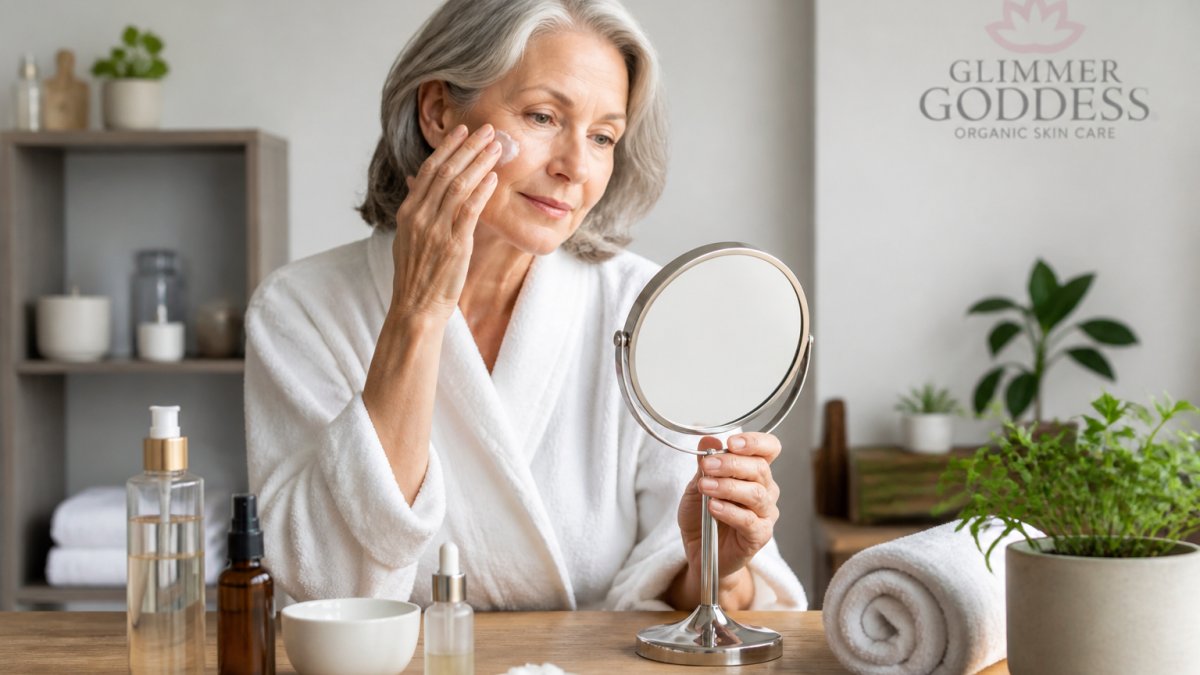





Best Face Moisturizer for Dark Spots: 6 Options Compared
Which face moisturizer is best for dark spots? Choose one that keeps skin comfortably hydrated, suits your skin type, and fits into a consistent daytime sun-protection routine. For a Glimmer Goddess option, our Organic Vitamin C Daily Moisturizer SPF 30 – Brightening Formula combines moisturizing care with labeled SPF 30. A separate targeted serum can complement a moisturizer, but it is not a substitute for one.
Uneven-looking tone can follow breakouts, irritation, sun exposure, or hormonal changes. A moisturizer cannot identify the cause of a spot or promise to erase it. What it can do is support skin comfort, reduce the dryness that makes a routine difficult to maintain, and—in an appropriately labeled sunscreen formula—provide an important part of daytime protection.
Below, we compare six familiar product options from the original guide, explain the difference between a serum and a moisturizer, and show how to build a practical routine without unnecessary steps. This is a Glimmer Goddess editorial buying guide, not a laboratory ranking or a claim that the products were independently tested against one another.
Why moisturizers matter when dark spots are a concern
Discoloration is not simply a moisture problem. Nevertheless, a comfortable skin barrier matters. Dry, irritated skin may be less tolerant of leave-on brightening ingredients, and irritation can contribute to new discoloration in some people. A gentle moisturizer helps keep the routine manageable while more targeted products address the appearance of uneven tone.
Consider three separate jobs: a cleanser removes daily buildup, a leave-on serum may deliver selected cosmetic brightening ingredients, and a moisturizer helps reduce moisture loss. In the morning, adequate sunscreen is essential. One formula may combine some of these jobs, but product names alone do not tell you how much protection or brightening benefit to expect.
Six face-care options to compare for dark spots
These products have different purposes. The table identifies their format and the shopper question each one raises, rather than assigning invented stars or declaring a universal winner. Formulas, availability, and directions can change, so read each product's current label before purchasing.
| Product | Format | What to consider |
|---|---|---|
| Glimmer Goddess Organic Vitamin C Daily Moisturizer SPF 30 | Day moisturizer with labeled SPF 30 | For shoppers who want daytime moisture and SPF in one routine step |
| SkinMedica Even & Correct | Dark-spot-focused product family | Check the exact cream or treatment variant and its current directions |
| La Roche-Posay Mela B3 | Dark-spot-focused product family, including serum options | Choose the correct format; a serum does not replace moisturizer or SPF |
| CeraVe AM Facial Moisturizing Lotion SPF 30 | Day moisturizer with labeled SPF 30 | Consider texture, skin comfort, and sunscreen application instructions |
| Eucerin Radiant Tone | Tone-focused skincare range | Check the exact product and whether it includes labeled sun protection |
| Neutrogena Rapid Tone Repair | Tone-focused skincare range | Check which active ingredients and product format suit your routine |
1. Glimmer Goddess Organic Vitamin C Daily Moisturizer SPF 30
Our Organic Vitamin C Daily Moisturizer SPF 30 – Brightening Formula is the natural starting point for someone seeking a Glimmer Goddess daytime moisturizer for uneven-looking tone. It brings moisturizing care and labeled SPF 30 into one step, with vitamin C as part of its brightening-focused skincare positioning.
Who may enjoy it: Someone who wants a streamlined morning routine rather than separate face cream and sunscreen steps. Apply the amount directed on the product label and reapply sun protection as needed. A small dab used like ordinary face cream may not provide the labeled sunscreen protection.
What to keep in mind: No SPF moisturizer guarantees that existing dark spots will fade, and the product is not a treatment for melasma or another medical condition. The formula and packaging may vary seasonally, so follow the current product directions.
2. SkinMedica Even & Correct
SkinMedica's Even & Correct line is an option to research when choosing a dedicated discoloration-focused step. The original article referred to a dark spot cream, but the precise product name and formulation should be checked before comparing it with a daily moisturizer. Different products within a range can serve different purposes.
Shopping question: Is the product a moisturizer, a spot treatment, or another leave-on formula? If it does not provide labeled SPF, plan for separate daytime sun protection. Do not assume that a higher price or more intensive positioning guarantees better results for your particular skin.
3. La Roche-Posay Mela B3
Mela B3 is a discoloration-focused skincare range. A serum within the range can be an additional step, but it should not be counted as a moisturizer simply because both are used on the face. Check the specific formula, ingredients, and usage instructions if you are comparing it with a moisturizer.
Shopping question: Would you prefer one simple daily moisturizer or a separate serum plus moisturizer? If your skin is easily irritated, adding one new product at a time is more useful than introducing several active formulas together.
4. CeraVe AM Facial Moisturizing Lotion SPF 30
A daily facial lotion with labeled SPF 30 offers a different approach: moisturizer and sun protection in one product. This can appeal to people who prioritize routine simplicity. Its role is not identical to that of a concentrated dark-spot serum, and SPF should not be confused with an immediate cosmetic brightening effect.
Shopping question: Do you enjoy the texture enough to apply the full sunscreen amount? Consistent application, reapplication, and other sun-safe habits matter more than an attractive product description.
5. Eucerin Radiant Tone
Products sold within the Radiant Tone range may appeal to shoppers focused on uneven-looking complexion. Because a range can include different formats, verify the exact bottle and label rather than assuming every item is a daily SPF moisturizer.
Shopping question: Does your chosen product offer the moisture, active ingredients, and labeled sun protection you need, or will it require a separate daytime sunscreen? If you have reactive skin, fragrance and other formula details may also influence comfort.
6. Neutrogena Rapid Tone Repair
Rapid Tone Repair products are another group to consider when comparing skincare for visible uneven tone. A product family's name does not establish its current ingredients, suitability for sensitive skin, or expected results. The exact formula is the important comparison.
Shopping question: Are you already using exfoliating acids or a vitamin A product? Avoid stacking multiple strong leave-on steps without considering irritation. A gentle moisturizer and consistent SPF remain useful even if you choose a separate tone-focused treatment.
Where Glimmer Goddess Dark Spot Serum fits
Our Organic Dark Spot Serum belongs in the serum category—not the moisturizer category. It is designed as a targeted cosmetic step for the appearance of discoloration and uneven tone. Apply it according to its product directions, then follow with a moisturizer. During the day, finish with appropriately applied sun protection.
This distinction matters when comparing products. A lightweight serum can feel elegant under a cream, but it does not necessarily deliver the same moisture-retaining benefits as a dedicated moisturizer. Nor does a brightening serum provide sunscreen protection unless its own label explicitly states that it does.
Key ingredients: what each one contributes
Vitamin C
Vitamin C is used in skincare for antioxidant and brightening-focused benefits. The effectiveness of a finished product depends on its form, concentration, stability, packaging, and how it is used. A moisturizer that contains vitamin C should not be assumed to work exactly like a dedicated vitamin C serum.
Niacinamide
Niacinamide, a form of vitamin B3, is used in products designed to support skin comfort and the appearance of a more even complexion. It can be a useful ingredient to look for, but more is not automatically better, particularly for skin prone to irritation.
Hyaluronic acid and moisture-supporting ingredients
Hyaluronic acid attracts water and helps skin feel hydrated. Emollients and occlusive ingredients serve complementary roles by softening the skin and reducing moisture loss. Hydration can make the complexion look smoother, but it should not be confused with directly removing pigment.
Botanical extracts
Plant-derived ingredients can contribute to a pleasant skincare experience and may provide antioxidant or cosmetic support. However, natural does not mean allergy-free. If you have sensitive skin, patch testing and paying attention to the entire ingredient list are more helpful than choosing solely by a botanical claim.
SPF and visible-light protection
The American Academy of Dermatology recommends broad-spectrum, water-resistant SPF 30 or higher and discusses tinted sunscreen with iron oxides for people managing dark spots affected by visible light. A standard untinted SPF moisturizer should not automatically be assumed to offer that additional visible-light protection.
How to use a dark-spot moisturizer in your routine
Morning
- Wash with a gentle cleanser and pat skin dry.
- If you use a leave-on serum, apply it according to its directions.
- Apply your daytime moisturizer. If it is an SPF moisturizer, use the amount directed for sun protection.
- Reapply sunscreen as directed, especially during prolonged outdoor exposure. Add shade, a hat, and protective clothing.
Evening
- Remove sunscreen and makeup with a gentle cleanser.
- Use a targeted serum only as directed and only if your skin tolerates it.
- Finish with a comfortable moisturizer to support hydration overnight.
There is no need to layer several brightening serums at once. If your skin becomes tight, flaky, or irritated, simplify the routine and allow it to settle. More frequent use is not necessarily more effective.
Choose by skin type, not by marketing promises
Dry skin: Look for a creamier moisturizer that leaves skin comfortable rather than tight. If a separate serum makes your skin feel dry, consider reducing frequency or reviewing the formula with a skincare professional.
Oily or combination skin: A lighter lotion may be more comfortable. Lightweight does not mean skipping moisturizer or sunscreen, and a serum alone may not be enough.
Sensitive skin: Introduce products gradually, patch test when appropriate, and avoid assuming that botanical formulas cannot irritate. Persistent burning or swelling is a reason to stop and seek professional advice.
Mature skin: Focus on a balance of moisture, comfortable texture, and daily sun protection. You do not need an elaborate anti-aging routine to care for uneven-looking tone.
What results are realistic?
Some discoloration fades gradually after the trigger is controlled; other marks can persist for months or longer. The cause, depth, skin response, and sun exposure all affect the timeline. Claims that everyone will see a dramatic difference in four to six weeks are not reliable. Consistency and gentle care are more sensible goals than aggressive exfoliation.
Take an occasional photograph in consistent lighting if you want to compare changes. Seek a dermatologist's assessment for a new, changing, bleeding, or otherwise unusual spot, or for persistent discoloration that concerns you. Cosmetics cannot diagnose the reason a mark appeared.
Frequently asked questions
Is a moisturizer or serum better for dark spots?
They do different jobs. A moisturizer supports hydration and comfort, while a targeted serum may include ingredients intended to improve the appearance of uneven tone. Many routines use both, plus daytime sunscreen.
Can vitamin C moisturizer replace sunscreen?
Only a moisturizer with an appropriate labeled SPF provides sunscreen protection, and only when used as directed. A vitamin C moisturizer without SPF is not a sunscreen. Even an SPF moisturizer needs proper application and reapplication.
Do I need a separate dark spot serum?
Not necessarily. Begin with gentle cleansing, moisturizing, and consistent sun protection. Add a targeted product if it suits your goals and your skin tolerates it.
How long before my dark spots look lighter?
There is no dependable universal timeline. Some marks improve over months, while others need professional evaluation or care. Avoid formulas that repeatedly sting or inflame the skin.
Is natural skincare always gentler?
No. Botanical extracts and essential oils can irritate some people. Choose products based on your own tolerance and the complete formula, not a single label claim.
Should I use SPF in winter or on cloudy days?
Yes, sun protection remains important year-round. Follow sunscreen directions and use shade or protective clothing when appropriate.
A more radiant routine starts with consistency. Explore our Skincare by Concern Guide to choose a gentle routine that fits your skin, and learn more in our guide to choosing a dark spot serum and guide to gentle face washes for dark spots.