


Natural Self-Tanners for Sensitive Skin: Formula Guide
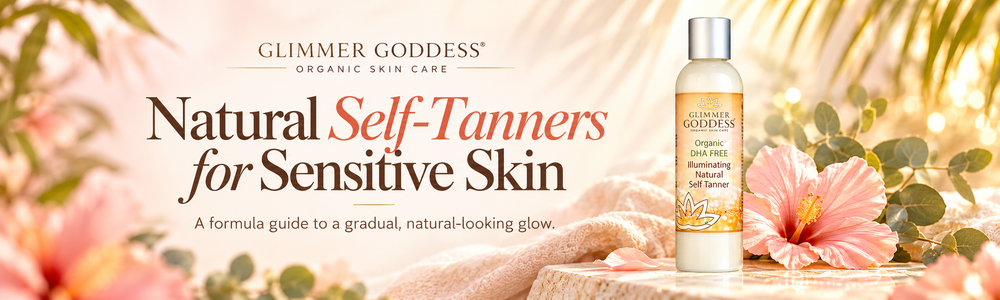
What is the best natural self-tanner for sensitive skin? The best choice is one with a clearly disclosed ingredient list, a texture your skin tolerates, and directions you can follow consistently. If you prefer a glow that develops gradually without DHA, our erythrulose-based lotion lets you build color over several days. If you want faster development, a DHA-containing formula may be appropriate when your skin tolerates it. Neither “natural” nor “DHA-free” guarantees that a product will be gentler.
Whether you love a softly sun-kissed glow or prefer a deeper bronze, finding a self-tanner that feels beautiful on your skin is just as important as the color itself. Explore three ways to glow, plus our favorite tips for smooth application, comfortable skin and a naturally radiant finish.
At a glance: Three ways to get a sunless glow
| Type | How it builds color | Best reason to consider it | Important limitation |
|---|---|---|---|
| DHA-free gradual lotion | Erythrulose-based color develops with repeated use over several days | Moisturizing body application with a slower, buildable result | DHA-free does not guarantee irritation-free; color takes patience |
| DHA-free lotion and drops | Lotion covers larger areas; drops can be mixed as directed for targeted control | Separate body and facial routines | Check each bottle’s specific directions and full ingredient list |
| Fast-developing self-tanner | DHA and erythrulose develop a quicker-looking sunless tan | Color needed on a shorter timetable | Not automatically more irritating, but a new active formula requires testing |
What “natural,” “organic” and “sensitive skin” really mean
“Natural” and “organic” describe particular ingredients or sourcing choices; they are not universal guarantees of hypoallergenic formulas. An essential oil is natural, for example, but it can still cause a skin reaction. A water-containing botanical lotion also needs an appropriate preservation system. When evaluating products, look beyond front-label language and read the complete ingredient list, including fragrance, botanical extracts and preservatives.
“Sensitive skin” is a useful shopping description, not a diagnosis. A person may be sensitive because of fragrance allergy, a compromised skin barrier, a history of contact dermatitis or another condition. Give your skin a little extra care by avoiding ingredients that have bothered you before and introducing new products one at a time. If you have ongoing eczema or frequent unexplained rashes, a dermatologist can help determine what is happening before you apply a self-tanner to affected areas.
Color ingredients also matter. Dihydroxyacetone (DHA) is a common sunless tanning colorant. It interacts with components of the outer skin surface to create a darker appearance without UV exposure. Erythrulose is another ingredient used for gradual color development. The best choice comes down to how quickly you want your glow to develop and which formula feels comfortable on your skin.
Which Glimmer Goddess self-tanner fits your routine?
1. DHA Free Self Tanner for Sensitive Skin – Glow: Gradual body color
Our DHA Free Self Tanner for Sensitive Skin – Glow is an erythrulose-based gradual lotion designed to produce buildable, natural-looking color over approximately three to five days. Enriched with aloe vera and shea butter, this creamy lotion pampers your skin with nourishing moisture as your sun-kissed glow gradually develops. Choose the size and glow level that feel right for your routine.
Why you'll love it: The color builds beautifully over several days, so you can start with a soft hint of warmth and deepen your glow at your own pace. As with any new skincare product, patch-test before your first full application.
A thoughtful touch: If your skin is sensitive to scent, choose our fragrance-free option rather than the version lightly scented with essential oils. Always patch-test first, and remember that your ideal glow will build at its own pace.
2. DHA-Free Self Tanner Bundle: Separate body lotion and facial drops
The DHA-Free Self Tanner Bundle – Lotion + Drops pairs the gradual body lotion with tanning drops for a customizable routine. The lotion makes it easy to sweep a little warmth over your body, while the drops let you personalize your facial glow. For the prettiest, most even result, follow the directions for each product.
Why you'll love it: A beautiful glow, tailored to you. Enjoy the ease of a moisturizing body lotion and the flexibility of drops that fit into your everyday skincare routine.
Good to know: Our Organic Self Tan Drops – Fast Glow are a different formula made for faster color development and contain DHA. If you're looking for a gradual DHA-free routine, be sure to select the DHA-free lotion-and-drops bundle.
3. Organic Self Tanner – Fast Bronze Glow: Faster color development
For a gorgeous glow on a shorter timeline, discover our Organic Self Tanner – Fast Bronze Glow. Blending DHA and erythrulose with aloe vera, coconut oil and shea butter, this moisturizing lotion creates a golden-bronze look that begins developing within hours.
Why choose it? Faster color development may be convenient before an event, provided you have already tested the formula and know what shade it produces for you.
Good to know: Faster color doesn't mean a better fit for every skin type. Give your skin a small-area test before use, and wait until any irritated or damaged areas have settled before applying.
How to choose based on your skin’s needs
If fragrance tends to bother your skin
If fragrance tends to bother your skin, look for a truly fragrance-free formula rather than relying on the word “unscented” alone. Essential oils can supply fragrance even when no artificial perfume is used. Keep a record of ingredients in products that have previously caused reactions. An allergy to one ingredient does not prove an allergy to every self-tanner.
If your face is more reactive than your body
Our Self Tan Drops are designed for both your face and body, making it easy to create a beautifully coordinated glow. Because facial skin may be more sensitive, begin with a small patch test and a lighter mix with moisturizer. Blend carefully around your hairline and eyebrows, and avoid the eyes, lips and other sensitive areas.
If you have eczema-prone or very dry patches
Do not apply self-tanner over an active flare, open skin or a freshly irritated area. Color may catch unevenly on rough patches and additional ingredients can make symptoms worse. Focus first on the treatment plan your clinician has recommended and routine barrier care. Once skin is calm, discuss product choices with your dermatologist if flares are frequent or severe. Cosmetics should never be positioned as eczema treatment.
If you need color soon
A faster-developing formula can be more convenient, but plan a trial well ahead of an important event. A new self-tanner can look different depending on skin prep, application thickness, individual skin chemistry and undertone. There is no reliable guarantee that a product will never look orange or streaky on every person.
How to patch-test a self-tanner before full application
The American Academy of Dermatology’s at-home skincare-testing guidance recommends applying a product to a small spot twice daily for seven to ten days when appropriate for that product. This is more cautious than assuming a single 24-hour check rules out delayed irritation. Follow a self-tanner’s labeled frequency rather than intentionally overapplying it merely to test.
- Choose a small, discreet area. The underside of your arm or bend of your elbow is convenient. Do not test on broken or actively inflamed skin.
- Use the product the way you intend to use it. For a lotion, apply an ordinary thin layer. For drops, prepare them exactly as the label directs, using a moisturizer your skin already tolerates if mixing is specified.
- Monitor both immediate and delayed reactions. Redness, swelling, hives, itching, stinging and persistent burning are reasons to stop.
- Check the resulting color. Skin tolerance and aesthetic results are separate questions. A patch can be comfortable but darker or warmer than expected.
- Allow enough time before a special occasion. A successful first-day test is not a guarantee against delayed irritation.
If a reaction occurs, wash the product off gently and discontinue use. A cool compress may help mild irritation. Seek medical care for significant or persistent symptoms, and urgent care for difficulty breathing, extensive swelling or another severe reaction. A dermatologist can investigate possible contact allergies.
How to apply self-tanner without streaks
Preparation: Make the surface even
A day before tanning, gently address rough, flaky areas using an approach your skin already tolerates. Do not vigorously exfoliate sensitive skin. A washcloth or mild routine may be enough; strong acids or scrubs immediately before tanning can cause discomfort. On application day, follow the product directions regarding cleansing, drying and moisturizing. Elbows, ankles, knees and knuckles often need extra care because dryness can make color catch unevenly.
Application: Start with a light layer
Work in sections and use a modest amount, blending thoroughly instead of repeatedly rubbing the same spot. Try to maintain similar coverage from one area to the next. Use less product over particularly dry areas and feather edges around wrists, ankles and the hairline. Wash hands carefully afterward unless the product’s instructions say otherwise. Allow the lotion to dry before dressing to help reduce transfer.
Development: Follow the specific label
There is no universal six-hour waiting rule. Development and water-exposure instructions vary between products, so refer to the actual package. With a DHA-free gradual product, more than one application may be needed to reach the desired look. Resist the temptation to apply a thick coat to rush a slower formula. With fast-development products, plan enough time before wearing light clothing or attending an event.
Maintenance: Moisturize and reassess
Continue using a moisturizer you tolerate. As the outer skin surface naturally sheds, artificial color will fade. Gentle, consistent care helps avoid the patchy appearance that can follow aggressive scrubbing or repeated heavy application. If skin becomes dry, itchy or red, stop tanning until you understand the cause.
What about sunscreen and the sun?
Sunless tanning is a cosmetic color change; it does not mean your skin is protected against ultraviolet radiation. The FDA warns that tanning preparations without sunscreen do not protect against sunburn. Use a broad-spectrum sunscreen as directed and take normal sun-protective precautions even when your skin looks bronzed.
If you use DHA-containing products, the FDA also advises keeping DHA out of the eyes, nose, mouth and other mucous-membrane areas and avoiding inhalation or ingestion. Always follow product instructions; do not improvise spray applications or apply tanning colorants where they are not intended.
Frequently asked questions
Is DHA-free self-tanner automatically better for sensitive skin?
No. A DHA-free product may suit someone who prefers that ingredient profile, but reactions depend on the entire formula and individual skin. Erythrulose, plant extracts, preservatives and fragrance ingredients can also cause problems for some users.
Is there an ideal self-tanner for eczema-prone skin?
There is no universally suitable cosmetic tanner for eczema. Avoid application during active flares or on damaged skin. Speak with your clinician if you have frequent reactions or ongoing dermatitis. Self-tanner is not an eczema treatment.
Can I use tanning drops on my face?
Absolutely! Our Glimmer Goddess Self Tan Drops are made for both face and body, so you can customize your sun-kissed glow from head to toe. Blend the drops with your favorite moisturizer following the directions for your chosen formula, and adjust the amount to suit the glow you want. Our DHA-free drops develop color gradually, while our Fast Glow drops provide a quicker bronze. Start with a small patch test and keep the mixture away from your eyes and lips.
Why does some self-tanner appear orange or patchy?
The visible shade depends on formula, amount applied, skin undertone, dryness, application technique and the way color develops and fades. No ingredient combination guarantees a perfect result for every person. A small-area trial helps you judge your own outcome.
How long does a gradual DHA-free tan take to build?
Our DHA-free lotion is made for a glow that blossoms gradually over three to five days. Apply as directed, enjoy the color as it develops, and build toward the shade you love.
Does self-tanner replace SPF?
No. Unless a product is separately labeled and tested as a sunscreen, a self-tanner provides cosmetic color only. Use sun protection as usual.
Finding your best routine
A beautiful sun-kissed glow begins with a routine that feels good on your skin. Whether you choose our gradual DHA-free lotion, a customizable lotion-and-drops ritual or our faster-developing bronze formula, start with a patch test, blend with care and give your color time to develop. Your glow should feel just as lovely as it looks.
Explore the DHA-free tanning guide, the ingredient education guide, and the gentle routine guide. You can also browse our self-tanning collection.
References & Further Reading
For a little extra guidance on caring for sensitive skin and enjoying a sunless glow safely, these trusted resources are worth bookmarking.
- American Academy of Dermatology — How to Test Skin Care Products — practical steps for introducing new skincare and spotting irritation.
- U.S. Food & Drug Administration — Sunless Tanners & Bronzers — how DHA-based color works, where it should not be applied, and why a sunless tan does not replace sunscreen.
- U.S. Food & Drug Administration — Tanning Products Without Sunscreen — guidance on the sun-protection warning required for tanning products without SPF.
A note from Glimmer Goddess: We share these tips to help you feel confident choosing your glow. Everyone's skin is different, so always follow the instructions and ingredient list on your product. For persistent skin conditions or reactions, seek advice from a qualified healthcare professional.