




Face Masks for Sensitive Skin: Gentle Use & Patch Testing
A face mask can add hydration, absorb temporary surface oil, or provide mild exfoliation, but it is optional—not a requirement for even-looking skin. Sensitive skin usually does best with short contact time, one new product at a time, and careful patch testing.
What “sensitive skin” means in practice
Sensitive skin is a broad description rather than a single diagnosis. It may feel tight, sting easily, flush, or react to fragrance, exfoliants, weather, or too many new products. Persistent symptoms can also be associated with eczema, rosacea, or contact dermatitis, which should be evaluated by a clinician.
Choose a mask by function
Hydrating or creamy masks
These are intended to leave skin feeling softer and less tight. A simple cream texture may be a better starting point than a strong acid or highly fragranced formula.
Clay and mud masks
Clay can absorb surface oil temporarily, but a full-face application may feel drying. Consider using it only on oilier areas, shorten the contact time, and moisturize afterward.
Enzyme or acid masks
These exfoliate and can be too intense during a sensitive-skin flare. Do not combine them casually with scrubs, Vitamin A, or another exfoliating product on the same evening.
A gentle Glimmer Goddess option
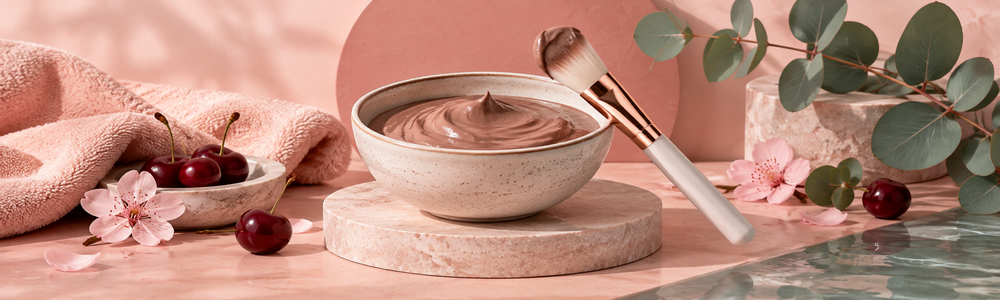
The active Organic Chocolate Cherry Face Mask contains no added essential oils. Its cosmetic purpose is to refresh dull-looking skin and support a smoother, more radiant appearance; it does not treat redness or skin disease. You can also review the face-mask collection, checking each ingredient list because formulas and scent profiles differ.
How to patch test a face mask
- Apply a small amount to a discreet area.
- Use the shortest recommended contact time.
- Rinse thoroughly and observe the area over the next day.
- If comfortable, use it on a small facial area before a full application.
Patch testing cannot predict every reaction, but it reduces the risk of applying an unsuitable product across the entire face.
Build a low-stress masking routine
Cleanse gently, apply the mask to intact skin, rinse as directed, and finish with a familiar moisturizer. Once weekly—or less—may be enough. Avoid masking right before an important event if the product is new.
The American Academy of Dermatology recommends choosing masks for your skin type and avoiding ingredients that aggravate your skin. Our simple sensitive-skin routine keeps optional treatments secondary to the basics.
When not to use a mask
Skip masks on broken, sunburned, infected, or actively inflamed skin. Seek medical guidance for persistent rash, swelling, painful cracking, or symptoms around the eyes or mouth.
Sensitive-skin mask FAQ
Can a mask permanently even skin tone?
No. A mask may temporarily improve hydration or radiance, but persistent discoloration needs daily sun protection and, when appropriate, professional evaluation.
Should a clay mask dry completely?
Follow the label. Leaving a drying mask on longer than directed can increase tightness.
Is tingling proof a mask is working?
No. Strong or persistent tingling can signal irritation. Rinse promptly if it becomes uncomfortable.