



Choosing Airless Pump Packaging for Serums: A Practical Guide
Last Updated: November 24, 2026
Quick Summary
Airless pump packaging is a sealed dispensing system that pushes serum out without letting air into the bottle, which limits oxygen exposure each time you use it. For serums, choose the bottle size you can realistically finish, and test the formula's viscosity, seal, and dispensing before committing.
- A piston rises beneath the product, and a one-way valve at the nozzle opens only under pressure.
- Unlike standard pumps, airless systems avoid pulling air back into the bottle on every use.
- Airless pumps are rated by output per stroke, and many serums need two or three pumps per application.
- New airless pumps must be primed, and a pump that delivers nothing often has an unprimed chamber or clogged outlet.
- Pick a smaller bottle for a first-time serum, and test compatibility with filled samples before committing.
Table of Contents
- How Airless Pump Packaging Protects Serums
- How Airless Pump Bottles Work
- Airless Pump vs Dropper Bottles for Skincare
- Choosing Serum Bottle Size and Testing Compatibility Before You Commit
- Frequently Asked Questions
How Airless Pump Packaging Protects Serums
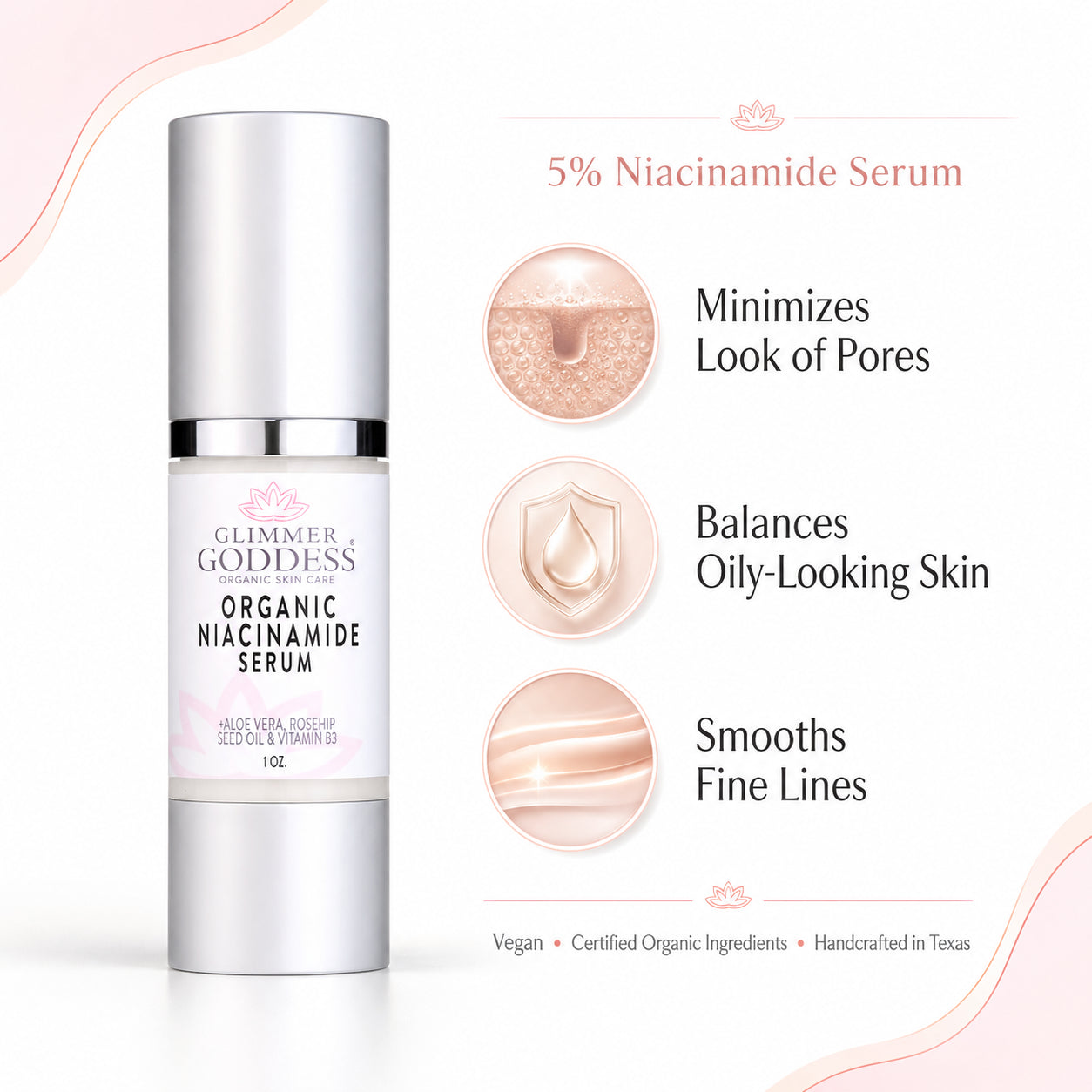
Airless pump packaging is a dispensing system that pushes serum out without letting air into the bottle. Air exposure can change how some formulas perform over time. The Organic Niacinamide Serum 5% is one Glimmer Goddess serum to explore if you want a closer look at serum formats.

A closed system limits how much product touches air each time you use it, which is the general principle behind this packaging style.
Read more about how airless pump packaging keeps products fresh.
How Airless Pump Bottles Work
An airless pump bottle is a sealed system with no dip tube and no air return path. A piston or follower plate sits beneath the product and rises as the pump is actuated, while a one-way valve at the nozzle opens only under pressure.
Here is the actual sequence each time you press the pump:
That last point separates airless pumps from standard pump bottles. A standard pump pulls product up a dip tube and lets air back in to equalize pressure, exposing the formula to oxygen on every use. An airless system keeps the chamber full of product, not air, until the bottle is nearly empty.
Why the mechanism matters for serums specifically
Serums are usually low-viscosity and water- or glycerin-based, making them easy to oxidize and contaminate if air and fingers reach the product. The airless mechanism addresses both: the sealed chamber limits oxygen contact, and the pump delivers a fixed dose without dipping anything into the bottle.
Viscosity still governs whether an airless pump works well. Thin, watery serums dispense cleanly from pumps with a fine nozzle, while thicker gels and creams need a wider outlet and stronger piston.
Dose per stroke and priming
Airless pumps are rated by output per stroke, often in milliliters per actuation. A serum pump might deliver a small fraction of a milliliter per press, which is why many airless serums are dosed in two or three pumps per application.
New airless pumps also need priming. Because there is no dip tube, the chamber and outlet must fill before the first dose flows. If a pump delivers nothing after several presses, the cause is usually an unprimed chamber, a clogged outlet valve, or a piston that has lost its seal, not an empty bottle.
Read more about how airless pump packaging keeps products fresh.
Airless Pump vs Dropper Bottles for Skincare
Airless pumps and dropper bottles both protect serums, but differently. A dropper lets air in each time you open it and draw up liquid; an airless pump stays sealed, limiting air contact.

Here is how they compare:
| Feature | Airless Pump | Dropper Bottle |
|---|---|---|
| Air exposure | Limited | Higher |
| Dose control | Consistent pumps | Varies by hand |
| Product waste | Less residual product | More left inside |
| Best for | Active serums | Thin, simple formulas |
Dropper bottles work well for some formulas. Airless pumps may suit serums with delicate ingredients.
Choosing Serum Bottle Size and Testing Compatibility Before You Commit
Bottle size and formula compatibility are two separate decisions. Size is about how much serum you will realistically use before it degrades; compatibility is about whether a specific formula behaves well in a specific airless package. Once size and formula compatibility are settled, the same balance between protection and material choice can inform sustainable luxury skincare packaging.
Start with size, then test the formula
A smaller bottle suits a serum you are trying for the first time or one built around an active that loses potency over months. A larger bottle is more economical only if you know the formula suits your skin and you will finish it within its usable window.
A repeatable compatibility-testing protocol
Before committing to a package for a serum formula, run filled-sample testing rather than relying on general packaging claims:
- Viscosity check. Fill sample bottles with the actual formula and measure flow at room temperature. Note whether it drips from the nozzle, hesitates at the outlet, or dispenses in a clean stroke.
- Ingredient compatibility. Confirm the formula's solvents, acids, and oils do not attack the piston, valve, or bottle material.
- Seal and leakage test. Invert and shake filled samples, then store them on their side and upright to check for weeping at the actuator and bottle seam.
- Pump priming. Count actuations to a full first dose and confirm the dose is consistent from first press to last.
- Dispensing across the fill. Use samples down to the last portion and record whether output per stroke stays steady or falls off near the end.
- Residual product. Estimate how much serum remains when the pump stops delivering.
Run the same samples through a short stability window, checking for oxidation, color change, evaporation, and leakage at intervals. A formula that passes the first-day dispensing test can still fail after weeks in the package.
Filling, priming, and end-user troubleshooting
On the production side, airless bottles are filled from the bottom and the piston is seated after filling, so fill volume and headspace matter. Prime each unit before shipping.
For the end user, a pump that stops dispensing usually means a clogged outlet, an unprimed chamber, or a spent bottle. A warm-water rinse of the actuator and a few firm presses resolve most clogs; if the piston has reached the top, the bottle is empty even if product remains visible.
Accessibility and real-world use
Airless pumps are generally easier to use one-handed than droppers, which matters for eye serums and anyone with limited grip strength. They also travel better because the sealed chamber does not leak under pressure changes. The trade-off is that a stiff piston can be hard to press, so test actuation force on filled samples rather than an empty bottle.
Glimmer Goddess offers several anti-aging eye serums and a Vitamin C serum in airless packaging. Compare sizes and ingredients to find the best fit for your routine. For more on formula stability, see how to choose skincare with stable ingredients and how skincare shelf life affects your choice.
Frequently Asked Questions
Does vitamin C need to be in an airless pump?
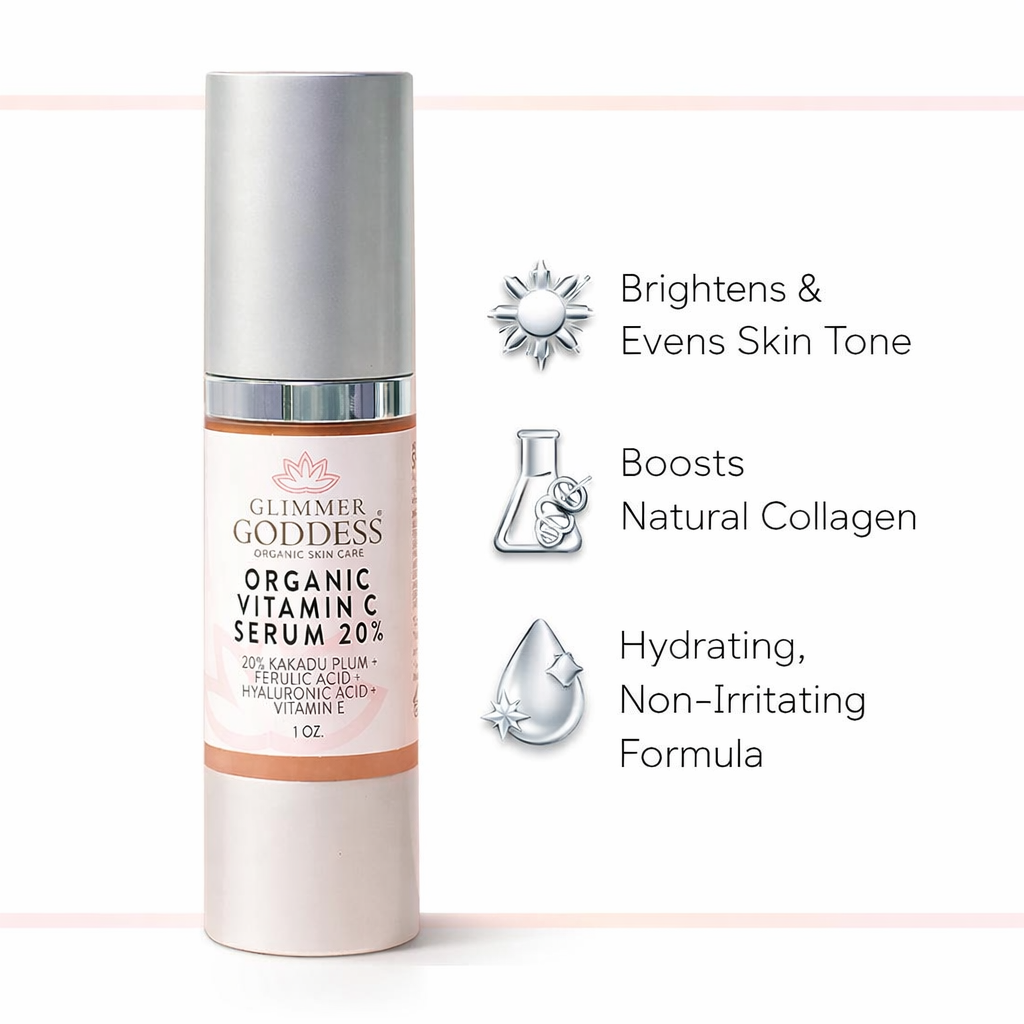
Vitamin C serums are sensitive to air, so packaging that limits oxygen exposure can help keep the formula fresh. Glimmer Goddess's Organic Vitamin C Serum 20% is made with five plant-based vitamin C sources and is formulated to stay stable, but the listing does not say which container it uses. Check the product page for packaging details. Keep any serum tightly closed, store it away from heat and direct sunlight, and watch for changes in color or smell as a sign it may be past its best.
Are airless pumps better than droppers for skincare serums?
Airless pumps keep air out of the formula, which many people prefer for active ingredients. Droppers are simpler and often less expensive, but they let air in each time the bottle opens. Neither is better for every serum. A pump is useful for controlled dosing and a thicker texture, while a dropper may suit a thin, fast-absorbing formula. Choose the format that matches how you use the product and how quickly you expect to finish it.
How do you choose the right airless bottle size for a serum?
Match the bottle size to how quickly you will use the serum. A smaller bottle keeps the formula fresh if you use it slowly, while a larger bottle can be more economical for daily use. Glimmer Goddess's Organic Niacinamide Serum 5% sells for $34.95 and the Organic Hyaluronic Acid Serum for $24.95, so compare the size listed on each product page. Consider whether you will finish the bottle within a few months of opening.