

Water-Free Skincare: What It Means, Benefits & Limitations
Water-free skincare can be useful, but it is not automatically more effective, more concentrated, or better for every skin type. The main difference is formulation: instead of using water as a base, these products rely on oils, butters, waxes, powders, or other anhydrous ingredients.
Water-free formats can be appealing for rich moisture, travel, and simplified formulas, but performance still depends on the ingredients, product design, packaging, and how well the formula suits your skin.
What does “water-free skincare” actually mean?
A truly water-free or anhydrous cosmetic does not contain water as an ingredient. If the ingredient list includes water or aqua, the formula is not fully water-free—even if water appears lower on the list.
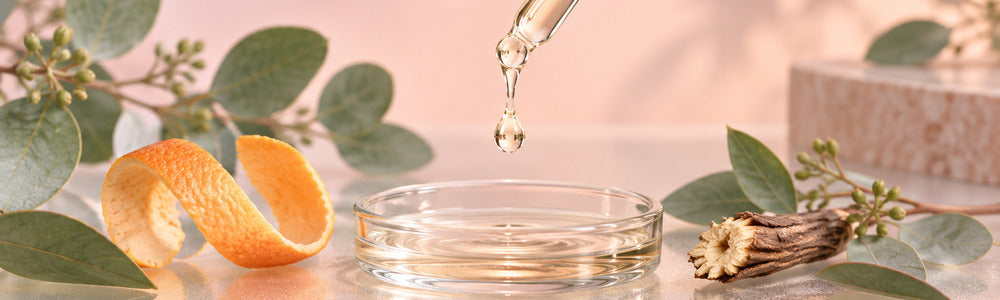
Common water-free formats include facial oils, cleansing balms, body butters, ointments, solid balms, and some powder products.
Is water-free skincare more concentrated?
Sometimes, but not automatically. Removing water changes the formula, yet that does not prove the product has a higher level of useful active ingredients or will work faster.
A well-formulated water-based moisturizer can be highly effective, and a poorly designed anhydrous balm can still feel heavy or unsuitable for a particular skin type. Judge the finished product rather than assuming “water-free” equals stronger.
Does water-free skincare need preservatives?
Water activity plays an important role in microbial growth, so fully anhydrous products may have different preservation needs than water-based emulsions. That does not mean water-free cosmetics are automatically contamination-proof or shelf-stable forever.
The FDA notes that cosmetic safety depends on formulation, preservation, packaging, manufacturing conditions, storage, and consumer use. Companies remain responsible for ensuring products are protected against harmful microbial contamination. See FDA guidance on microbiological safety.
Verified Glimmer Goddess water-free-style options
Organic Facial Massage Oil
The Organic Facial Massage Oil – Anti-Aging Treatment is an active Glimmer Goddess face oil formulated with sweet almond oil, apricot kernel oil, rosehip seed oil, and squalane.
Its best role is as a lightweight facial oil for massage, gua sha, and added emollience. It should not be described as a cleanser or as replacing a water-based hydrating serum when your skin needs humectant hydration.
Organic Whipped Body Butter
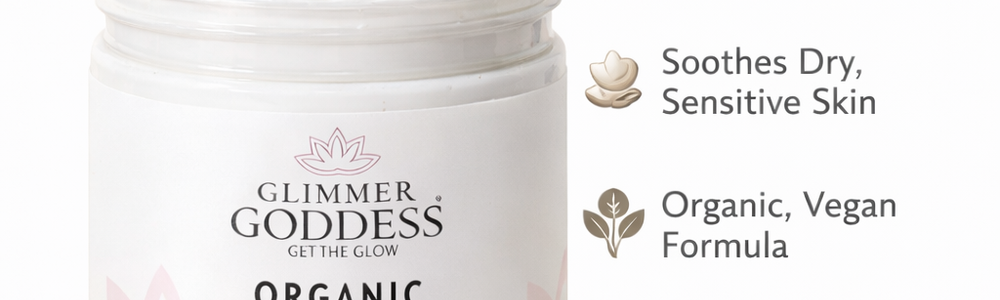
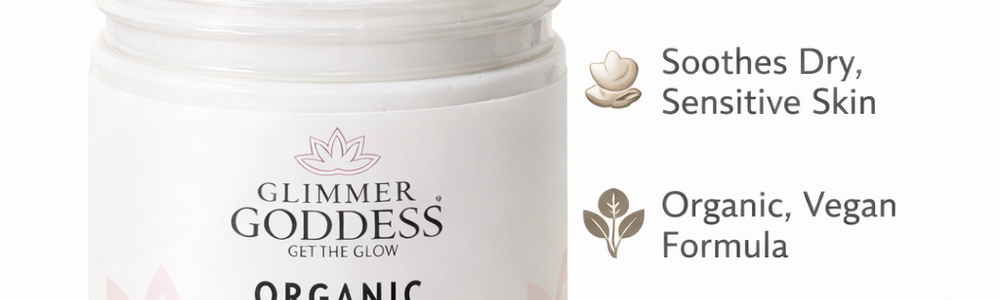
The Organic Whipped Body Butter for Extremely Dry Skin 8 oz. is another verified rich, oil-and-butter-based option for very dry body skin, hands, elbows, knees, and heels.
It is best positioned as an intensive moisturizing body product—not as a facial treatment or proof that water-free products outperform lotions.
Water-free vs water-based: which is better?
Neither category is universally better. Each format solves different problems.
| Format | Often useful for | Considerations |
|---|---|---|
| Facial oil | Emollience, massage, dry-feeling skin | Does not replace water-binding humectants for everyone |
| Body butter/balm | Very dry body skin and rough areas | Can feel too rich for oily or acne-prone facial skin |
| Water-based lotion/cream | Balanced hydration with humectants, emollients, and occlusives | Requires appropriate preservation and stable formulation |
Who may like water-free skincare?
Water-free textures may appeal to people who:
- prefer facial oils or richer balm textures;
- have very dry body skin;
- want compact travel-friendly formats;
- prefer minimalist ingredient systems;
- want an emollient layer over hydrating products.
Who may prefer water-based skincare?
Water-based serums, lotions, and creams may be a better fit if you:
- want a lightweight texture;
- prefer humectants such as glycerin or hyaluronic acid;
- have oily or combination skin that feels congested by heavy balms;
- want easy layering under sunscreen or makeup.
Does water-free mean more hydrating?
No. Oils and butters primarily add emollience and help reduce water loss. They do not supply water to the skin in the same way a water-based humectant formula can support hydration.
For very dry skin, a useful strategy can be to apply a hydrating serum or lotion first and then use an oil or butter over it if you want additional richness.
Can water-free products cause breakouts?
Any product can trigger breakouts or irritation depending on the full formula and the individual user. There is no normal “purging period” simply because a product is water-free.
If a new oil or balm causes persistent congestion, redness, or itching, discontinue it rather than assuming the reaction proves the product is working.
Do water-free products last longer?
Not necessarily. Shelf life depends on oxidation, ingredient stability, packaging, storage conditions, contamination risk, and the finished formulation.
The FDA notes that cosmetic shelf life is affected by storage and consumer handling, and manufacturers are responsible for product safety. See FDA shelf-life guidance.
What to avoid when shopping for water-free skincare
- Claims that water-free formulas always work faster.
- Claims that they never need preservatives or safety testing.
- Products that call themselves water-free while listing water or aqua.
- Blanket claims that oils are non-comedogenic for everyone.
- Using a heavy facial balm simply because the format is trendy.
- Assuming “natural,” “clean,” or “waterless” automatically means safer.
Frequently asked questions
Is water-free skincare better for sensitive skin?
Not automatically. Some people prefer simpler oil-based formulas, while others react to essential oils, botanical extracts, or richer textures. The full ingredient list matters more than the absence of water.
Can I use facial oil instead of moisturizer?
Sometimes, depending on your skin and climate. Oils mainly provide emollience and help reduce water loss. If your skin is dehydrated, you may still benefit from a water-based humectant serum or moisturizer underneath.
Are solid skincare bars always water-free?
No. Check the ingredient list. A solid format can still contain water or water-containing components.
Does water-free mean preservative-free?
No. Preservation needs depend on the formula, packaging, manufacturing process, and foreseeable consumer use. “Water-free” alone does not guarantee microbial safety.
Can I use water-free skincare with vitamin C or retinoids?
Yes, depending on the individual formulas. Follow product directions rather than assuming an anhydrous base automatically makes an active stronger or more stable.
Related Glimmer Goddess guides
- What Is Body Butter? How to Use It for Dry Skin
- Body Butter vs Lotion vs Body Oil: Which Texture Fits Your Skin?
- Hyaluronic Acid for Skin: Benefits, Layering & How to Choose
- Explore Skincare by Skin Concern
This article is for general skincare education and is not a diagnosis or substitute for medical care.