



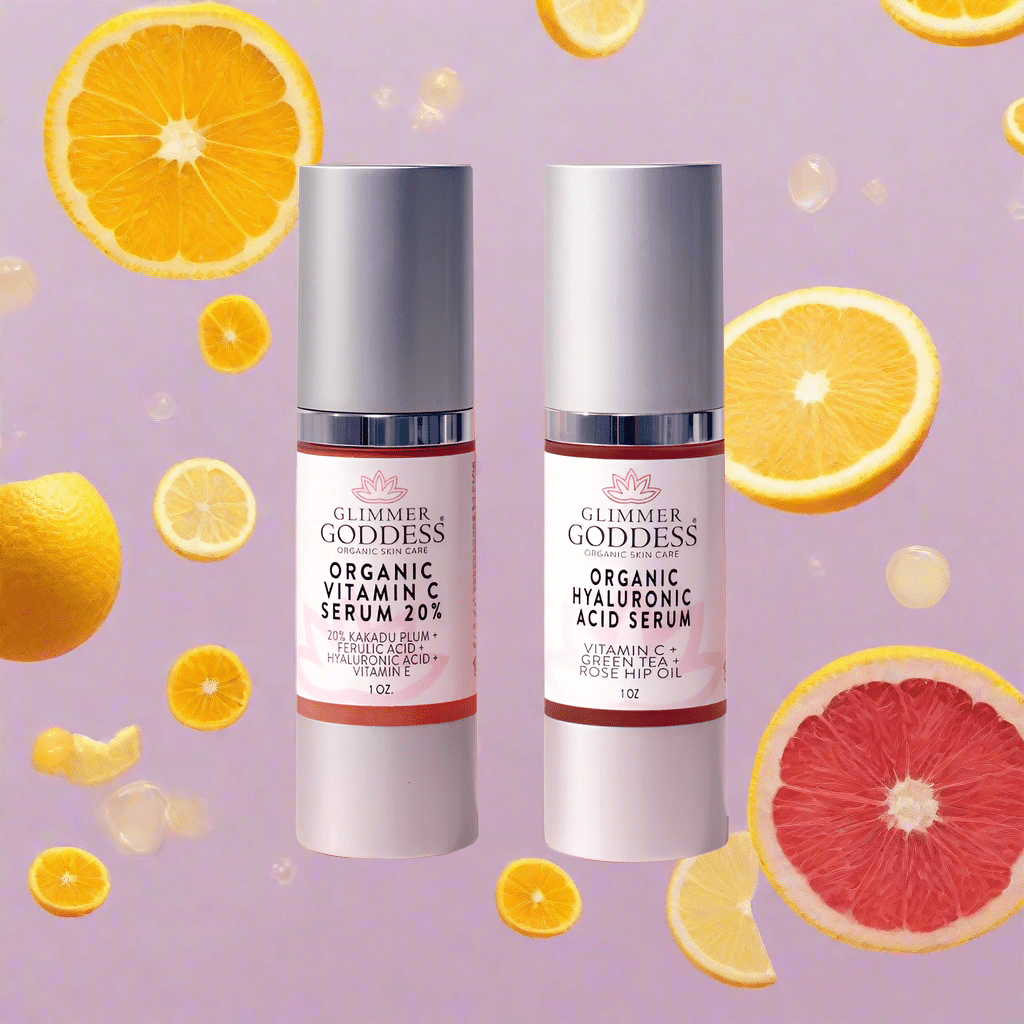
Radiance + Hydration Duo: Vitamin C 20% & Hyaluronic Acid Serum Bundle
Radiance + Hydration Duo: Vitamin C 20% & Hyaluronic Acid Serum Bundle
Glow, firmness, and deep hydration—without the guesswork. This guide explains how vitamin C 20% and hyaluronic acid (HA) work together, how to layer them, who should use them, and answers the most-searched questions shoppers ask. If you want bright, plump, healthy-looking skin with a simple routine, this duo is a powerful place to start.
What does a Vitamin C serum do?
Vitamin C helps visibly brighten dullness, even skin tone, and defend against environmental stressors. Many formulas (especially those with ferulic acid and vitamin E) also support collagen for a smoother, firmer look over time.

Can I buy vitamin C serums at major retailers?
Yes—vitamin C serums are common at pharmacies and beauty retailers, and widely available online. When comparing, look at concentration, supporting antioxidants (ferulic acid, vitamin E), and protective packaging (airless or dark glass) to minimize oxidation.
How does this duo compare to high-end options?
Prestige formulas often feature pure L-ascorbic acid with ferulic acid and vitamin E for synergistic antioxidant support. Clean, organic alternatives can deliver comparable brightness and defensive benefits while emphasizing gentler textures and transparent ingredient sourcing.
Can you layer Vitamin C serum with Hyaluronic Acid? What’s the proper order?
Yes—vitamin C and hyaluronic acid are a dream team. For most routines:
- Cleanse
- Tone (optional)
- Vitamin C serum (AM is ideal for daily antioxidant defense)
- Hyaluronic acid serum on slightly damp skin
- Moisturizer
- Broad-spectrum sunscreen (AM)
HA pulls water into the skin for bounce and cushion, helping temper potential dryness from potent actives.

Who should use Vitamin C + Hyaluronic Acid?
Most skin types benefit—from dullness and uneven tone to fine lines and dehydration. Sensitive skin can start with fewer days per week or choose gentler vitamin C sources (e.g., botanical or lower concentrations) and gradually build up. Patch test if you’re reactive or using strong actives elsewhere in your routine.
How should I store vitamin C serum and how long does it last?
Keep it away from light and air exposure. Look for airless pumps or dark glass and use within the label’s period-after-opening (commonly 6–12 months). Ferulic acid and vitamin E can help improve stability.
Why consider a paired bundle (Vitamin C + Hyaluronic Acid)?
It’s convenient, value-driven, and designed for compatibility—pH, texture, and packaging are coordinated for consistent results. If you want a clean, organic pairing from a brand that’s handcrafted in Texas, explore the duo below.

Quick tips for best results
- Use vitamin C in the morning for daily antioxidant support under SPF.
- Apply hyaluronic acid on slightly damp skin, then seal with moisturizer.
- Introduce actives gradually and patch test if sensitive.
- Consistency wins—expect visible improvements over weeks to months.
FAQ — People Also Ask
Is it okay to use vitamin C serum and hyaluronic acid together?
Absolutely. Vitamin C targets brightness and environmental defense while HA delivers water-binding hydration, making them complementary when layered as vitamin C first, HA second.
What vitamin C serum does Kim Kardashian use?
Celebrity routines change often and aren’t one-size-fits-all. Rather than chasing a name, focus on what’s inside: an effective concentration, stabilizing antioxidants (like ferulic acid), and smart packaging. Choose the texture and strength your skin tolerates best.
Is 20% vitamin C serum too high?
It depends on your skin. Many tolerate 15–20% well; sensitive types may prefer lower strengths or botanical sources and build up slowly. If tingling or dryness appears, reduce frequency, buffer with moisturizer, or switch to a gentler option.
What should I never mix with hyaluronic acid?
HA is famously mix-friendly. It layers well with vitamin C, niacinamide, peptides, and retinoids. The key is how you layer: apply watery serums first, then HA, then moisturizer. If you’re using strong acids or tretinoin, listen to your skin and adjust frequency for comfort.
References
- Cleveland Clinic — “Vitamin C for Skin: Benefits and How to Use”
- Journal of Clinical and Aesthetic Dermatology — Stability and efficacy of topical L-ascorbic acid with ferulic acid and vitamin E
- International Journal of Biological Macromolecules — Hyaluronic acid as a dermal humectant and its role in skin hydration
References
- Cleveland Clinic — “Vitamin C Serum: Benefits, How to Apply”
- Journal of Investigative Dermatology — Ferulic acid stabilizes vitamins C & E and enhances photoprotection
- Journal of the American Academy of Dermatology — Stability of L-ascorbic acid + α-tocopherol improved by ferulic acid
- MDPI (Gels) — “Hyaluronic Acid and Skin: Its Role in Aging and Wound-Healing”