




What Are “Active Ingredients” in Skincare? Cosmetic vs. Drug Claims Explained
“Active ingredient” is one of the most confusing phrases in skincare because shoppers and marketers often use it differently from U.S. regulators. In everyday beauty language, an “active” may mean an ingredient chosen for a specific cosmetic benefit. On an over-the-counter drug label, however, active ingredient has a formal regulatory meaning.
What Does “Active Ingredient” Mean on a Drug Label?
In the United States, products intended to treat or prevent disease or affect the structure or function of the body can be regulated as drugs. Acne treatments and sunscreens are familiar skincare examples. Their Drug Facts labeling identifies the drug active ingredient or ingredients.
The FDA explains that some products are cosmetics, some are drugs, and some are both. The distinction depends largely on intended use and the claims being made.
What Does “Active” Mean in Cosmetic Marketing?
Beauty brands and consumers often use “active” informally for ingredients such as Vitamin C, hyaluronic acid, niacinamide, peptides or exfoliating acids. That language can be useful conversationally, but it does not automatically mean the ingredient is an FDA-recognized drug active ingredient.
For a cosmetic, the most important questions are what the finished product is intended to do, what claims are made, how it is formulated and whether those claims are supported.
Examples of Popular Cosmetic Treatment Ingredients
Vitamin C
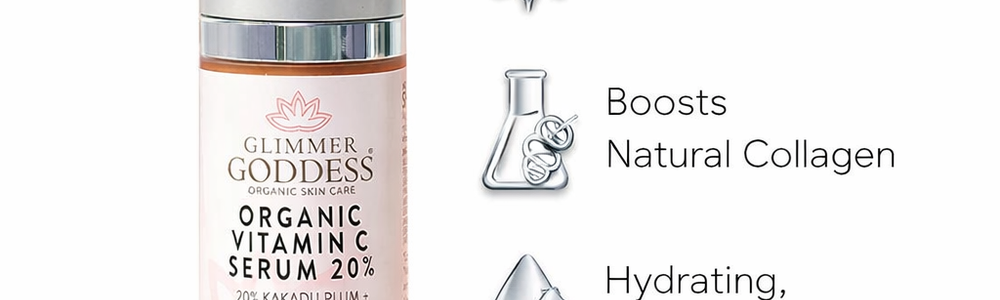
Topical Vitamin C is widely used in cosmetic serums for antioxidant support and brighter-looking skin. The current Organic Vitamin C Serum 20% – Brightening Treatment with Hyaluronic & Ferulic Acid is a Glimmer Goddess® example.
Hyaluronic Acid
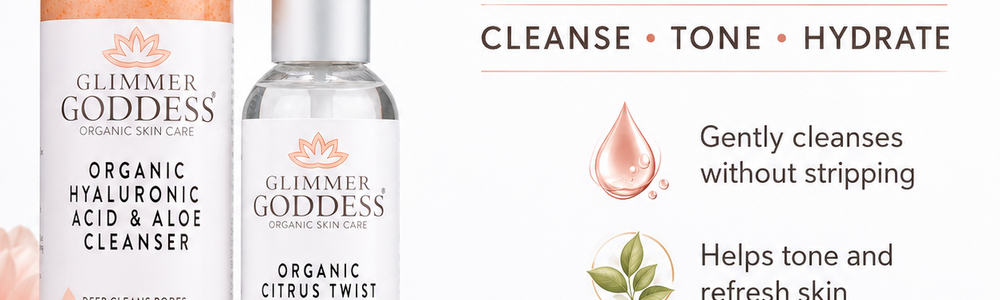
Hyaluronic acid is commonly used as a humectant to help increase surface hydration and give skin a temporarily plumper appearance. See the current Organic Hyaluronic Acid Serum – Plumping Hydration 1 oz..
Peptides
Peptides are a broad class. Their cosmetic evidence varies by peptide, concentration, delivery system and finished formula, so “contains peptides” is not enough to predict results.
Vitamin A Derivatives
Vitamin A derivatives are used in both prescription and cosmetic contexts depending on the ingredient and product. Their evidence and irritation potential vary, so follow the directions for the specific product rather than treating every Vitamin A formula as interchangeable.
Are “Inactive Ingredients” Unimportant?
No. In a drug product, “inactive” is a regulatory labeling category—not a synonym for useless. Base ingredients can affect texture, stability, preservation, spreadability, delivery and skin feel. In cosmetics, the full formula determines the user experience.
Do Active Ingredients Need to Penetrate Deeply to Work?
Not necessarily. Different ingredients work at different levels and by different mechanisms. A moisturizer can improve the feel and appearance of dry skin largely through effects at the outer skin barrier. Deeper penetration is not automatically better, and “penetrates deep” should not be used as a generic quality claim.
Can You Combine Multiple Treatment Ingredients?
Often, but tolerance matters. The common advice to layer every serum from “most active” to “least active” is too simplistic. Apply products according to their directions, introduce potentially irritating treatments gradually, and simplify if your skin becomes uncomfortable.
For routine order, see How to Layer Skincare Products: The Right Order for AM & PM.
How to Read Skincare Claims More Critically
- “Brightens” is a cosmetic appearance claim.
- “Hydrates” describes moisture support.
- “Treats acne” is a drug-type claim in the U.S.
- “SPF 30” belongs to sunscreen drug labeling.
- “Regenerates cells” or “rebuilds collagen” can move into structure/function territory and deserves careful regulatory scrutiny.
Frequently Asked Questions
Is hyaluronic acid an FDA drug active ingredient?
Not simply because it appears in a cosmetic serum. It is commonly used as a cosmetic moisturizing ingredient.
Are stronger concentrations always better?
No. Higher concentration can increase irritation and does not guarantee better performance.
Does “clinically proven ingredient” mean the finished product is clinically proven?
No. Evidence on an ingredient does not automatically prove that every finished formula containing it performs the same way.
The Bottom Line
When skincare marketing says “active ingredient,” ask whether it is using the term casually for a functional cosmetic ingredient or formally on a regulated drug label. Then judge the finished formula and its claims—not just the ingredient headline.
Sources: FDA: How can I tell if my product is a cosmetic, a drug, or both?; FDA: Is It a Cosmetic, a Drug, or Both?.