



Apple Stem Cell Serum: How to Use It, Layer It & Set Realistic Expectations
An apple stem cell serum fits into a skincare routine much like other facial serums: apply it after cleansing and before moisturizer, then finish with sunscreen in the morning. The “stem cell” name can sound more dramatic than the product actually is. In cosmetics, it refers to plant cell-culture extracts—not living human stem cells and not a regenerative medical treatment.
Where Apple Stem Cell Serum Goes in Your Routine
Keep the sequence simple. Products with lighter, water-based textures generally go before creams and oils.
Morning
- Gentle cleanser
- Apple stem cell serum
- Moisturizer, if needed
- Sunscreen
- Makeup
Evening
- Cleanser
- Apple stem cell serum
- Moisturizer
Our skincare layering guide explains the broader AM and PM order.
How Much Serum Should You Use?
Follow the product directions rather than assuming more gives better results. A thin, even layer is usually enough for a facial serum. Overapplying can create stickiness or pilling without improving performance.
What “Apple Stem Cell” Actually Means
Plant stem cell ingredients used in cosmetics are produced through plant cell-culture technology and incorporated as extracts or derived ingredients. They are not living apple cells that take up residence in your skin, and they do not become human skin cells.
That terminology matters because claims such as “reprograms your skin,” “activates human stem cells” or “reverses aging at the cellular level” go beyond what a cosmetic serum can responsibly promise.
For the science and terminology in more detail, see Plant Stem Cells in Skincare: What “Apple Stem Cell” Really Means.
What Results Are Realistic?
Judge an apple stem cell serum as a complete cosmetic formula, not on the headline ingredient alone. Hydration, emollients, antioxidants and other supporting ingredients may help skin look smoother, softer or more radiant. The evidence for plant stem-cell-derived cosmetic ingredients is still developing, and visible results depend on the full formulation, concentration, consistency of use and your skin.
A recent review of stem-cell cosmetics noted that marketing claims often lack strong clinical validation. Earlier reviews likewise emphasize that plant stem cell skincare research remains limited compared with better-established cosmetic actives.
Where the Current Glimmer Goddess® Serum Fits
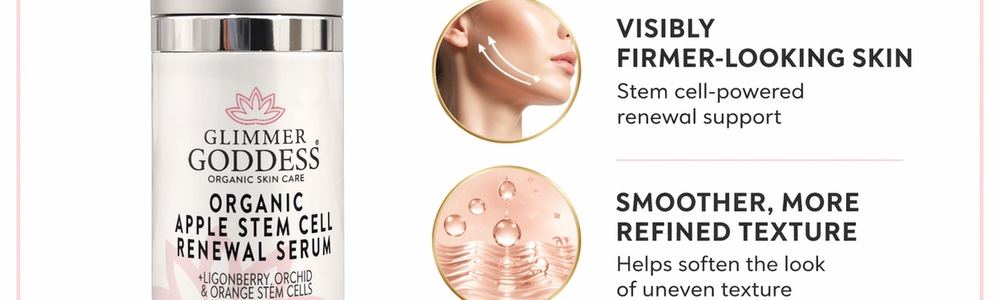
The current Organic Apple Stem Cell Anti-Aging Serum is an active Glimmer Goddess® facial serum. Use it as a cosmetic serum for appearance-focused skincare—not as a medical or regenerative treatment.
If you prefer a matched cream step, the current Organic Apple Stem Cell Moisturizer – Anti-Aging Treatment can follow the serum.
Can You Use It With Other Serums?
Often yes, but there is no prize for using the most actives. If you already use vitamin C, niacinamide, peptides or another treatment serum, introduce combinations gradually and watch for pilling or irritation. Sensitive skin often does better with fewer layers.
Patch Testing and Sensitivity
“Plant-derived” does not mean allergy-proof. If you are reactive, patch test first and introduce one new product at a time. Stop if you develop persistent burning, swelling, itching or rash.
Frequently Asked Questions
Should I use apple stem cell serum morning or night?
Either can work if the product directions allow it. Consistency and tolerance matter more than a specific time of day.
Does apple stem cell serum replace moisturizer?
Not necessarily. A serum is usually lighter and may not provide enough moisture on its own for dry skin.
How long until I see results?
There is no universal clinically established timeline for all apple stem cell serums. Evaluate gradual changes over consistent use rather than expecting a guaranteed result in a fixed number of weeks.
The Bottom Line
Use apple stem cell serum like any well-formulated facial serum: apply it in the right order, use a sensible amount, keep expectations cosmetic and let the total formula—not the buzzword—determine whether it earns a place in your routine.
Sources: Plant Stem Cells in Cosmetic Industry; Plant stem cells in cosmetics: current trends and future directions.