



Vitamin C Serum Storage & Oxidation: How to Keep It Fresh
Vitamin C is one of skincare’s most studied antioxidants, but some forms—especially water-soluble ascorbic acid—are also difficult to keep stable. Good formulation and packaging matter, and what you do after opening the bottle matters too.
Why Is Vitamin C Stability a Challenge?
Research reviews note that topical vitamin C has formulation challenges related to stability. Exposure to air, light, heat, pH and the rest of the formula can influence how quickly certain forms degrade.
That is one reason a finished vitamin C serum should be stored and used as its manufacturer directs rather than transferred, diluted or mixed into a homemade batch.
1. Keep the Container Closed
Do not leave a serum uncapped while you complete the rest of your routine. Close it promptly after dispensing what you need. Repeated exposure to air can be especially relevant for oxidation-prone formulas.
2. Keep It Away From Direct Light
A sunny bathroom windowsill is not ideal storage for a light-sensitive formula. Store the product in its intended packaging and away from direct sunlight unless the label says otherwise.
3. Avoid Unnecessary Heat
Do not store facial serum next to a radiator, in a hot car or anywhere that experiences repeated high heat. Follow the product label for any specific temperature instructions.
4. Do Not Add Water or Moisturizer to the Bottle
Diluting a finished serum inside its container changes the formula, concentration and preservation system. If you want to layer moisturizer with vitamin C, apply the products separately rather than reformulating the bottle at home.
5. Leave It in Its Original Packaging
Transferring serum into a decorative clear bottle may increase light exposure and can introduce contamination. The original container is part of the finished product system.
How Can You Tell Whether a Serum Has Changed?
Pay attention to a noticeable change in color, odor, texture or performance compared with how the product normally appears. A specific color threshold should not be invented for every formula because different vitamin C derivatives and supporting ingredients can look different.
If the product has changed substantially or is past its stated shelf-life guidance, contact the manufacturer rather than trying to “restore” it.
Current Glimmer Goddess® Vitamin C Serum
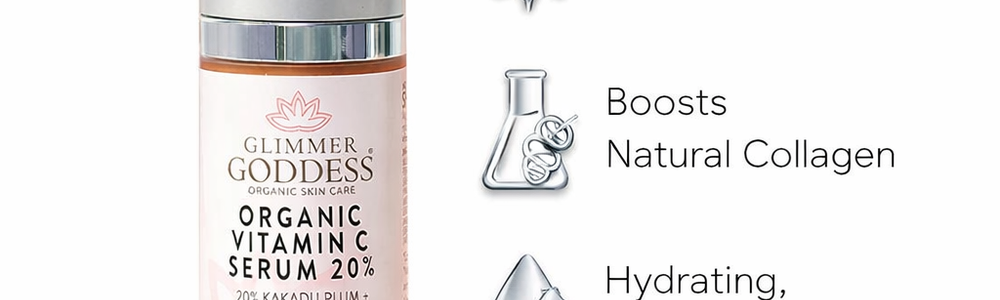
The current Organic Vitamin C Serum 20% – Brightening Treatment with Hyaluronic & Ferulic Acid is our active vitamin C serum. Use it according to the product directions and keep the container clean and closed.
For application order and realistic results rather than storage, see our Vitamin C Serum Routine guide.
Vitamin C Storage Myths
“Refrigeration is always required.”
Not universally. Different formulas have different storage requirements. Follow the specific product label or manufacturer guidance.
“If it warms up, let it reach room temperature before applying.”
There is no general skin-care rule that a serum must reach room temperature before touching your skin. The important issue is storing it within the range intended for that product.
“Mixing it with water makes a strong serum gentler.”
Adding water directly to a finished cosmetic is not a controlled way to adjust strength and can affect preservation and stability.
“A darker bottle makes vitamin C impossible to oxidize.”
No packaging can make an unstable ingredient immune to degradation. Protective packaging helps, but storage and formulation still matter.
Frequently Asked Questions
Does vitamin C expire faster after opening?
Opening begins repeated exposure to the environment, so follow any period-after-opening or shelf-life instructions on the product.
Can I keep vitamin C in the bathroom?
You can if the storage conditions match the label, but avoid direct sunlight, excessive heat and repeated moisture contamination around the dispenser.
Can I pour two vitamin C serums together?
No. Combining finished formulas can alter pH, concentration, stability and preservation.
Does oxidation make vitamin C dangerous?
A visible change does not automatically tell you whether a product is dangerous, but a substantially altered cosmetic should not be “fixed” at home. Follow manufacturer guidance or replace it when appropriate.
The Bottom Line
Keeping vitamin C serum fresh is mostly about protecting the finished formula: close it promptly, avoid direct light and excess heat, keep it in its original packaging and never dilute the bottle yourself.
Sources: PubMed: Topical vitamin C and skin; PubMed: Topical vitamin C clinical review.