


Dead Sea Mud Mask: What It Does, How to Use It & Who Should Be Careful
A Dead Sea mud mask can be a useful occasional clay treatment for absorbing surface oil and refreshing the feel of skin. Clay ingredients such as bentonite can help with oiliness, but a mud mask does not medically treat acne, permanently shrink pores, “detox” the body or replace a daily skincare routine.
What a Dead Sea Mud Mask Can Do
Clay-based masks can absorb oil from the skin surface and temporarily improve the feel of oily or congested-looking areas. The American Academy of Dermatology includes clay such as kaolin or bentonite among mask ingredients that may help absorb oil.
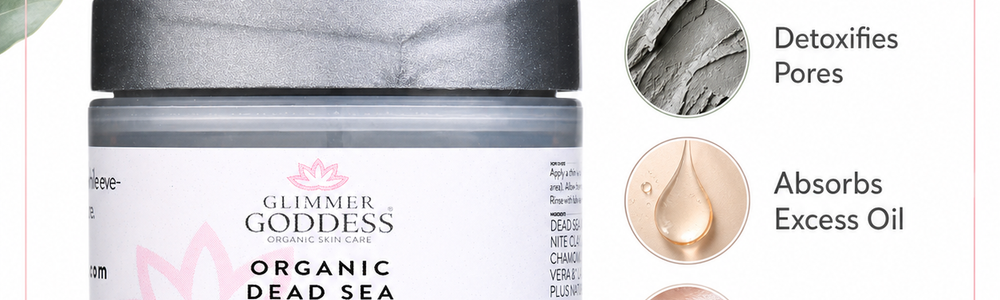
The active Organic Dead Sea Mud Mask – Exfoliate & Rejuvenate is the current Glimmer Goddess® mud-mask option.
What It Cannot Do
A clay mask cannot:
- cure acne;
- remove “toxins” from your body;
- permanently tighten pores;
- rebuild lost collagen in a single use;
- replace prescription treatment for a skin disease.
If acne is persistent, painful or scarring, a dermatologist can help determine an evidence-based treatment plan.
Who May Like a Clay Mask?
Clay masks often make the most sense for people who notice excess surface oil, especially through the T-zone. Combination skin may prefer using the mask only where oiliness occurs rather than over the entire face.
For a broader mask-selection guide, see How to Choose a Face Mask for Your Skin Type & Concerns.
Who Should Be More Cautious?
Very dry, sensitized or already-irritated skin may find a clay mask too drying. Caution also makes sense if you are currently using several exfoliating acids or other products that are causing peeling or sensitivity.
Do not use the mask over broken, sunburned or actively inflamed skin unless your healthcare professional specifically advises it.
How to Use a Mud Mask Without Overdoing It
- Cleanse gently.
- Apply a thin, even layer according to the product label.
- Avoid the eye and lip areas unless the label specifically permits use there.
- Leave it on only for the directed contact time.
- Rinse with lukewarm water.
- Apply moisturizer afterward.
Leaving a clay mask on longer is not automatically more effective. Over-drying the skin can simply create tightness and irritation.
Should a Clay Mask Dry Until It Cracks?
No. A dramatically cracked mask is not proof that it “pulled out toxins.” Follow the labeled contact time rather than waiting for maximum dryness.
Can You Use a Dead Sea Mud Mask With Other Masks?
Yes, but rotate rather than stack strong treatments. If you use a clay mask today, you may not need an AHA or enzyme mask in the same session.
See Can You Use More Than One Face Mask? How to Rotate Masks Safely for a practical schedule.
Clay Mask vs. Exfoliating Mask
Clay primarily addresses surface oil. AHA and enzyme masks focus more directly on exfoliation. If your goal is rough texture rather than oiliness, another mask type may fit better.
Our Face Mask Ingredients Explained: Clay, AHA, Hyaluronic Acid & More breaks down the differences.
Frequently Asked Questions
How often should I use a Dead Sea mud mask?
There is no universal frequency. Follow the product label and reduce use if skin becomes dry, tight or irritated.
Is a mud mask good for sensitive skin?
Some sensitive skin can tolerate clay, but others find it drying. Patch test and choose frequency cautiously.
Does a mud mask remove blackheads?
It may reduce surface oil temporarily, but blackheads are clogged follicles and often require a broader acne-safe routine.
The Bottom Line
Think of a Dead Sea mud mask as an optional oil-absorbing skincare step—not an acne treatment or detox therapy. Keep expectations cosmetic, follow the label and moisturize after use.
Source: American Academy of Dermatology: facial masks and skincare.