



Winter Skin Redness: Dryness, Irritation & When to See a Dermatologist
Red skin in winter is not always “just dryness.” Cold wind, low humidity and indoor heat can irritate a weakened skin barrier, but persistent facial redness can also occur with conditions such as rosacea, eczema or contact dermatitis. Skincare can reduce avoidable irritation; it cannot diagnose the cause.
Why Can Winter Make Skin Look Red?
Cold, dry weather can increase moisture loss and leave skin feeling tight, rough or stingy. Wind can add physical irritation, and moving repeatedly between cold outdoor air and heated indoor spaces can make sensitive skin feel more reactive.
If redness appears mainly with dryness and improves as the skin barrier recovers, a simple winter routine may be enough. If it persists, burns, forms a rash or repeatedly flares in the center of the face, get a professional diagnosis rather than guessing.
Start With Barrier-First Skin Care
For irritated winter skin, simplify before adding more actives:
- Use a mild cleanser and lukewarm water.
- Pat dry gently—do not scrub with a washcloth.
- Apply a moisturizer that your skin already tolerates.
- Use broad-spectrum SPF 30 or higher during the day.
- Pause nonessential exfoliation if the skin stings, peels or looks inflamed.
AAD recommends moisturizing rather than exfoliating dry, peeling winter skin.
When Redness Might Be Rosacea
Rosacea often affects the central face and can cause persistent redness, flushing, visible blood vessels, burning or stinging. Cold and wind can trigger flares in some people. AAD recommends gentle cleansing, moisturizer, fragrance-free products and daily sun protection for rosacea-prone skin.
Do not self-diagnose rosacea based on redness alone. It can resemble acne, eczema, sunburn or other skin reactions.
What Ingredients Should You Avoid When Skin Is Irritated?
If your face is burning or visibly inflamed, this is not the moment for an aggressive routine. Temporarily reduce products that sting, and avoid scrubs or strong exfoliation.
AAD specifically advises rosacea-prone patients to avoid common irritants such as fragrance, glycolic acid, lactic acid, menthol and astringents. That list is not a universal ban for everyone; it illustrates why highly reactive skin often benefits from a simpler routine.
Can Hyaluronic Acid Help?
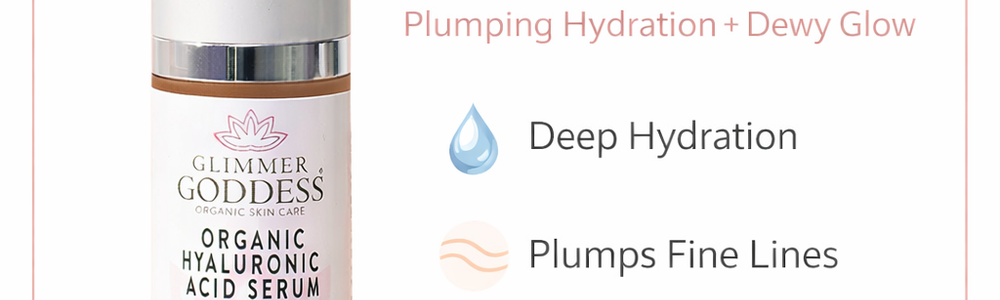
Hyaluronic acid is a humectant used to support hydration, but it is not a treatment for rosacea, eczema or inflammation. If your skin tolerates it, the current Glimmer Goddess® Organic Hyaluronic Acid Serum can be used as a hydration step beneath moisturizer.
What About Sunscreen in Winter?
Sun protection still matters. For people with rosacea, AAD identifies sunlight as a common trigger and recommends broad-spectrum SPF 30 or higher year-round.
The current Glimmer Goddess® Triple Action Daily Moisturizer – Organic SPF 30 is an active daily moisturizer/SPF option, but any product that stings persistently should be discontinued and discussed with a dermatologist.
When Should You See a Dermatologist?
Make an appointment if redness is persistent, recurrent, painful, accompanied by significant burning or stinging, involves acne-like bumps or visible vessels, or does not improve with a gentle routine. AAD also recommends medical evaluation when very dry skin becomes painful, cracked, bleeding or increasingly irritating.
Seek prompt care for facial swelling, trouble breathing, signs of infection, or eye pain/redness associated with a facial rash.
Frequently Asked Questions
Does winter redness always mean rosacea?
No. Dryness, irritation, contact dermatitis, eczema and other conditions can also cause redness. Persistent or recurrent facial redness deserves proper evaluation.
Should I exfoliate red flaky skin?
Not when it is irritated. Focus on gentle cleansing and moisturizer until the barrier feels comfortable again.
Is fragrance-free better than unscented?
For highly reactive or rosacea-prone skin, AAD specifically recommends fragrance-free products because “unscented” formulas can still contain masking fragrance.
Can cold wind trigger rosacea?
Yes, cold and wind are recognized triggers for some people with rosacea. Covering the face with a soft scarf and protecting skin with appropriate moisturizer and sunscreen can help.
The Bottom Line
Winter redness deserves a calm approach, not a stronger routine. Protect the barrier, pause irritating exfoliation, moisturize and use sunscreen. If redness persists or repeatedly flares, a dermatologist can determine whether you are dealing with ordinary winter irritation or a condition that needs treatment.
Sources: American Academy of Dermatology: Dry skin care; AAD: Rosacea skin care tips; AAD: Preventing rosacea flare-ups.