

Dandruff vs. Dry Scalp: Where Tea Tree & Coconut Oil Fit—and Where They Don’t
Flakes do not automatically mean “dry scalp.” Dandruff is commonly associated with seborrheic dermatitis, while simple dryness can come from weather, harsh cleansing or irritation. Tea tree oil and coconut oil may have cosmetic uses, but neither should be treated as a universal cure for flaking, itch or hair loss.
Dandruff and Dry Scalp Are Not the Same Thing
A dry scalp may feel tight and produce small, dry flakes. Dandruff often involves more persistent flaking and can occur with oiliness, itch or redness. Seborrheic dermatitis is a medical condition that can affect the scalp and other oil-rich areas of the body.
If your scalp is repeatedly red, very itchy, painful, crusted or not improving with basic care, a dermatologist can help determine what is actually causing the symptoms.
Where Tea Tree Oil May Fit
Tea tree oil has antimicrobial activity in laboratory research, and some dandruff shampoos use tea tree oil as an ingredient. That does not mean pure tea tree essential oil should be applied directly to the scalp or that it is proven to treat every cause of dandruff.
Essential oils can irritate skin, especially when undiluted. If you use a tea-tree-containing cosmetic product, follow the product directions and stop if you develop burning, swelling or worsening redness.
For a broader discussion of scalp use, see Tea Tree Oil & Coconut Oil for Scalp Care: What to Know and Tea Tree Oil for Hair & Scalp: What the Evidence Really Shows.
Where Coconut Oil May Fit
Coconut oil has stronger evidence for reducing protein loss from the hair fiber than for treating dandruff. It can be useful as a pre-shampoo conditioner on dry lengths, helping hair feel smoother and reducing grooming friction.
Putting heavy oils on a flaky scalp is not always helpful. Some people find scalp oiling uncomfortable or greasy, and oil can make it harder to evaluate persistent scaling that may need a medicated dandruff treatment.
Do Tea Tree or Coconut Oil Make Hair Grow?
There is not strong clinical evidence that either oil reliably stimulates new hair growth. Hair oils can improve the look and feel of strands, but cosmetic conditioning is different from treating hair loss.
Our evidence-focused guide Tea Tree & Coconut Oil for Hair Growth: What Evidence Shows goes deeper into this distinction.
What to Try for Simple Dryness
- Use lukewarm rather than very hot water.
- Avoid aggressive scratching and harsh scalp scrubs.
- Reduce over-washing if it leaves the scalp tight or irritated.
- Keep heavier oils mainly on the hair lengths if the scalp feels greasy or reactive.
- Stop new products that clearly worsen burning, itch or redness.
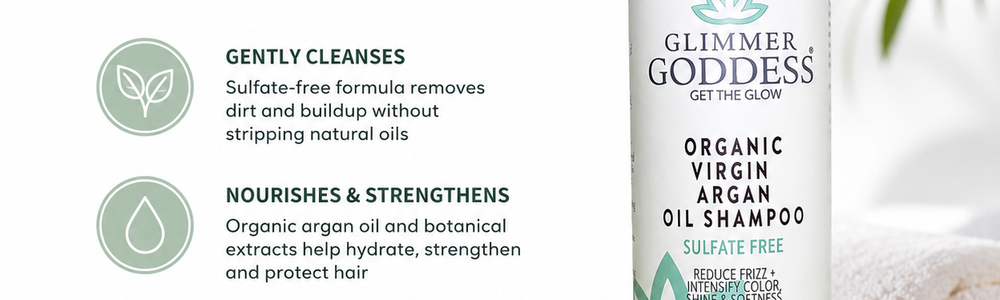
If you want a current Glimmer Goddess® shampoo for regular cosmetic cleansing—not dandruff treatment—the Organic Sulfate-Free Shampoo with Argan Oil for Healthy Hair is an active option. It should not be presented as a treatment for seborrheic dermatitis or another medical scalp condition.
When Dandruff Needs More Than Oil
Persistent dandruff may respond better to products containing proven OTC dandruff ingredients than to cosmetic oils alone. A dermatologist can recommend the right approach if flakes are severe, recurrent or associated with inflammation.
When to See a Dermatologist
Seek care for significant redness, sores, drainage, thick scaling, patchy hair loss, scalp pain or symptoms that keep returning. Sudden or unexplained shedding also deserves evaluation rather than being managed only with oils.
Frequently Asked Questions
Can tea tree oil cure dandruff?
No. Tea tree oil may be included in some cosmetic or dandruff products, but it is not a universal cure and can irritate skin.
Can coconut oil make dandruff worse?
It can feel too heavy for some scalps and may not address the actual cause of flaking. If symptoms worsen, stop and reassess.
Should I put essential oils directly on my scalp?
No. Undiluted essential oils can irritate skin. Use properly formulated products and follow directions.
The Bottom Line
Use tea tree and coconut oil for realistic cosmetic purposes, not as blanket treatments for dandruff or hair loss. First decide whether you are dealing with simple dryness, irritation or a persistent scalp condition that needs medical evaluation.
Sources: American Academy of Dermatology: Dandruff care; Coconut oil and hair protein loss study.