


Apple Stem Cell Serum: 5 Things to Look For Before You Buy
The best way to compare apple stem cell serums is not to count how many “anti-aging” promises appear on the label. Instead, look at the actual plant cell-culture ingredient, the supporting formula, packaging, claim quality and how the serum fits your existing routine.
1. Look for the Real Plant Cell-Culture Ingredient
“Apple stem cell” is consumer-friendly shorthand. In cosmetics, you are usually buying an extract or derivative made from cultured plant cells—not living cells that can regenerate human skin.
If the front label sounds dramatic, check the INCI list and product information for the specific extract rather than assuming the headline tells the whole story.
For the science behind the terminology, read Plant Stem Cells in Skincare: What “Apple Stem Cell” Really Means.
2. Check the Ingredients Around It
A serum’s visible feel and performance often depend heavily on the ingredients surrounding the featured botanical. Look for supporting ingredients that match your goals, such as humectants for hydration or antioxidants for broader cosmetic support.
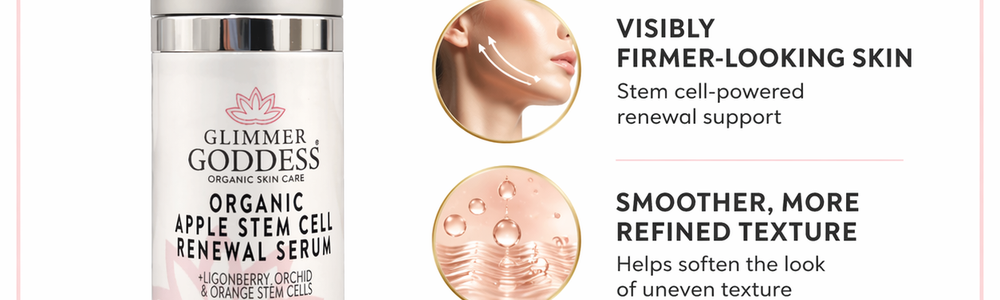
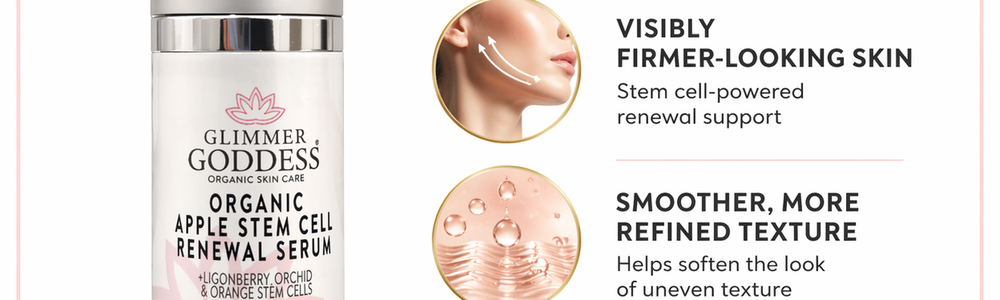
The current Organic Apple Stem Cell Anti-Aging Serum is the active Glimmer Goddess® serum in this category.
3. Pay Attention to Packaging and Directions
Packaging should protect the formula from unnecessary contamination and exposure, and the directions should be clear about amount and frequency. Follow the product label rather than assuming more serum will produce faster results.
Introduce a new serum gradually if your routine already contains multiple treatment products.
4. Read the Claims With a Skeptical Eye
Reasonable cosmetic claims focus on appearance and skin feel: hydration, softness, smoother-looking texture or a more radiant appearance. Claims that a plant extract literally replaces damaged human cells, reverses aging or works like regenerative medicine deserve much more scrutiny.
For a direct evidence comparison, see Apple Stem Cell Skincare vs. Vitamin A, Vitamin C & Peptides.
5. Make Sure It Fits Your Routine
A good serum is one you can use consistently without overloading your routine. If you already use Vitamin C, Vitamin A, acids, peptides or several other serums, adding another layer may not be necessary every day.
For placement and layering, see Apple Stem Cell Serum: How to Use It, Layer It & Set Realistic Expectations.
What Results Are Reasonable to Expect?
Expectations should come from the finished formula. Hydrating ingredients can make the skin look temporarily plumper and smoother. Emollient or antioxidant ingredients can support a well-rounded routine. What you should not expect is literal tissue regeneration or permanent reversal of skin aging.
Serum or Moisturizer?
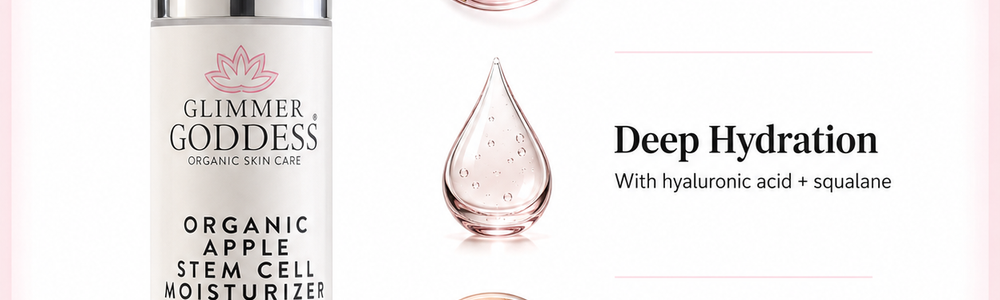
If you mainly want a lightweight treatment layer, a serum may be the better format. If dryness and barrier comfort are your biggest concerns, the Organic Apple Stem Cell Moisturizer – Anti-Aging Treatment may be the more useful step—or you can use both if your skin benefits from the extra layer.
Frequently Asked Questions
Is a more expensive apple stem cell serum automatically better?
No. Price does not prove ingredient concentration, stability or clinical performance.
Should I use apple stem cell serum morning or night?
Either can work if the product directions allow it. Routine consistency and skin tolerance matter more than a rigid clock time.
Can I use it with other serums?
Often yes, but avoid adding so many layers that you increase irritation or make the routine difficult to follow.
The Bottom Line
Before buying an apple stem cell serum, judge the actual ingredient, full formula, packaging, claim quality and routine fit. Those details tell you more than “stem cell” on the front label.
Sources: Plant stem cells in cosmetics: current trends and future directions; Stem Cells in Cosmetic Applications: Advancements, Challenges, and Future Directions.