
Caffeine Shampoo for Thinning Hair: What the Evidence Shows
Caffeine has become a popular ingredient in shampoos marketed for thinning hair, but the science needs careful interpretation. Early studies of topical caffeine are encouraging enough to justify continued research, yet they do not prove that every caffeine shampoo will regrow hair or reverse hair loss.
Why Caffeine Is Studied for Hair
Researchers have investigated topical caffeine because laboratory and clinical studies suggest it may interact with hair follicles. A 2025 systematic review found generally positive signals across the available literature, while also noting limitations in study quality, methods and consistency. That means the evidence is promising—not definitive.
Shampoo Is a Rinse-Off Product
This distinction matters. A shampoo is primarily designed to cleanse the scalp and hair, and contact time is brief compared with a leave-on topical treatment. Research on topical caffeine as a category should not be translated into a guarantee that a caffeine shampoo alone will produce clinically meaningful hair growth.
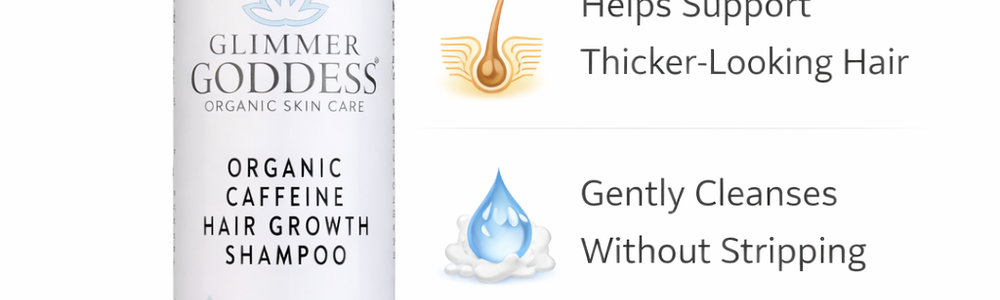
Glimmer Goddess® Organic Caffeine Shampoo can be used as the cleansing step in a caffeine-focused hair-care routine. Despite legacy “hair growth” wording in the product name, results vary and the product should not be treated as a drug therapy for hair loss.
What a Good Shampoo Can Do
- Cleanse excess oil, sweat and styling buildup from the scalp.
- Help hair look fuller temporarily by reducing heaviness and residue.
- Support a comfortable scalp-care routine when the formula is well tolerated.
- Prepare the scalp for leave-on products used afterward.
What About DHT Claims?
It is too strong to say a cosmetic caffeine shampoo “blocks DHT” or reverses androgenetic hair loss. Hormonal hair loss is a medical condition with established treatment options. If that is your concern, a dermatologist can help distinguish androgenetic alopecia from other causes of shedding.
Biotin Is Not a Universal Hair-Growth Fix
Biotin deficiency can contribute to hair changes, but deficiency is uncommon in otherwise healthy people. More biotin does not automatically mean more hair growth, and high-dose supplements can interfere with certain laboratory tests. Do not assume a supplement is necessary without a reason.
When to Get Hair Loss Evaluated
Hair thinning can result from genetics, hormonal changes, illness, medications, nutritional deficiencies, traction, autoimmune disease and other causes. The American Academy of Dermatology recommends professional evaluation when hair loss is concerning, because treatment depends on the cause.
Seek prompt evaluation for sudden shedding, smooth bald patches, scalp pain, scarring, significant inflammation or rapidly progressing loss.
Where a Caffeine Routine Fits
If you enjoy caffeine hair care, think of it as supportive cosmetic scalp care rather than a guaranteed treatment. A coordinated routine may include the Glimmer Goddess® Organic Caffeine Hair System, but expectations should remain realistic and persistent hair loss deserves a diagnosis.
The Bottom Line
Topical caffeine is an interesting area of hair research, but current evidence does not justify promising regrowth from shampoo. Use caffeine shampoo for cleansing and scalp care, watch how your hair responds, and seek medical guidance for ongoing or unexplained thinning.
Sources: 2025 systematic review of topical caffeine and hair loss; American Academy of Dermatology hair-loss guidance.