




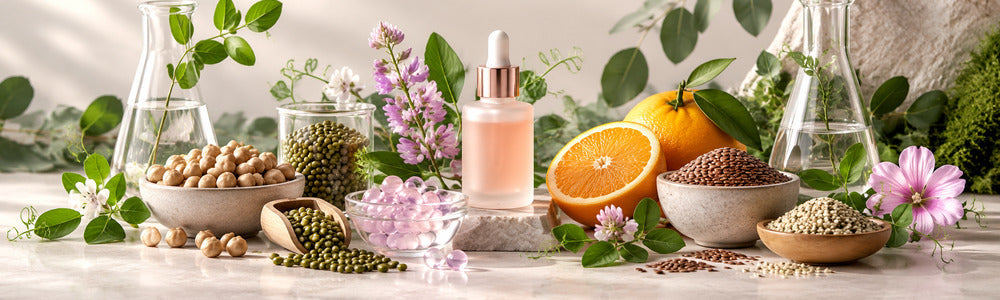
What Does Vegan Collagen Mean in Skin Care?
Plants do not contain animal collagen. In beauty marketing, “vegan collagen” may refer to fermentation-made collagen-like materials, amino-acid blends, or plant-derived ingredients positioned to support the skin’s appearance. The ingredient list should explain which meaning applies.
Collagen is an animal structural protein
Traditional collagen comes from animal tissues. A plant extract cannot literally be botanical collagen. Some newer biotechnology ingredients use microorganisms to produce collagen or collagen-like proteins without animal inputs, while many products use “vegan collagen support” more loosely.
Look past the front label and identify the actual ingredient. A clear product should distinguish a protein, peptide, amino-acid blend, moisturizer, or antioxidant extract.
Nutrition supports normal collagen formation
The body builds its own collagen from amino acids and requires Vitamin C for normal collagen biosynthesis. A varied eating pattern with adequate protein and Vitamin C supports normal physiology, but no smoothie or single ingredient directs nutrients only to facial skin.
Plant foods can supply protein-building amino acids and Vitamin C. Beans, lentils, soy foods, nuts, seeds, citrus, berries, peppers, and broccoli can all fit a varied plant-forward diet.
What topical products can realistically do
Topical serums and moisturizers can hydrate, smooth the surface, and improve the appearance of fine dehydration lines. Peptides and antioxidants are researched for age-supportive cosmetic care, but formula quality and consistent use matter. A topical cosmetic does not replace the skin’s deeper structural protein.
Organic Resveratrol Serum – Instant Firming is a current antioxidant-focused cosmetic option. Any immediate tautness should be understood as a temporary surface effect.
How to evaluate a vegan claim
- Read the full ingredient list.
- Ask whether “collagen” means recombinant protein, amino acids, or marketing shorthand.
- Look for specific cosmetic benefits rather than sweeping wellness promises.
- Keep hydration and daily sunscreen at the center of age-supportive care.
For realistic topical expectations, read what a firming serum can do. For peptide-specific guidance, see how to choose and use a peptide serum.
Frequently Asked Questions
Is there collagen in fruits or vegetables?
No. Plants provide nutrients the body uses in normal protein synthesis, but they do not contain animal collagen.
Are vegan collagen products always plant extracts?
No. Some may use fermentation-derived proteins or amino-acid blends. Check the ingredient list and brand explanation.
Can a moisturizer replace lost collagen?
No. It can improve hydration and surface smoothness, which may soften the look of fine dryness lines.