



7 Winter Skincare Mistakes That Make Oily Skin Feel Worse
Oily skin does not become simple just because the temperature drops. You can have visible shine and still experience tightness, irritation or surface dryness. The goal is not to strip away every trace of oil—it is to keep cleansing, hydration and acne care balanced enough that your routine remains comfortable.
Mistake 1: Cleansing Harder Because You See Shine
The American Academy of Dermatology advises people with oily skin to resist scrubbing and to use a mild cleanser. A harsh “squeaky-clean” finish can irritate skin rather than improving it.
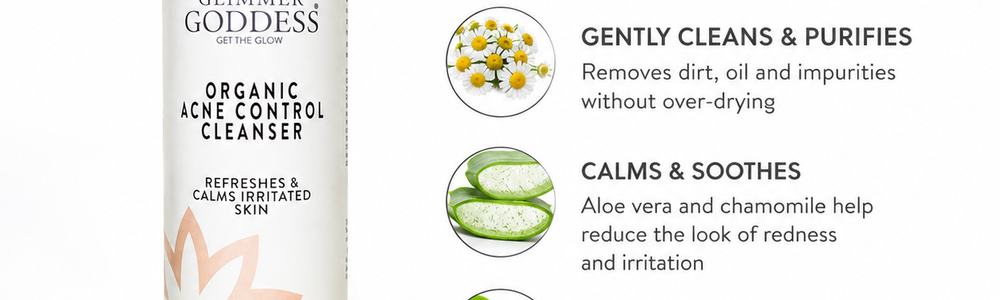
The current Glimmer Goddess® Organic Acne Cleanser – Gentle Face & Body Wash is one cleansing option. Use it according to the product directions and reduce frequency if your skin becomes irritated.
Mistake 2: Assuming Shine Means Your Skin Is Well Hydrated
Surface oil and water content are not the same thing. Oily skin can still feel tight after cleansing or uncomfortable in dry indoor air. Judge hydration by comfort, flaking and tightness—not shine alone.
Mistake 3: Skipping Moisturizer Automatically
AAD notes that oily skin may still benefit from moisturizer. The best texture varies by person; lighter gels or lotions may feel better than richer creams for some oily complexions.
If you want a lightweight hydration step, the current Organic Hyaluronic Acid Serum can be layered beneath a moisturizer your skin tolerates. A serum does not automatically replace moisturizer.
Mistake 4: Scrubbing Flakes to “Unclog” Skin
Visible flakes can tempt you to exfoliate more aggressively. If skin is already stinging, peeling or red, more friction may make it feel worse. Let irritation settle before adding nonessential exfoliation.
Mistake 5: Changing Several Acne Products at Once
If your skin becomes drier in winter, introducing multiple acids, spot treatments or new cleansers simultaneously makes it difficult to know what caused the irritation. Change one variable at a time.
Mistake 6: Treating a Clay Mask Like Acne Treatment
Clay can absorb surface oil, but a cosmetic mask is not a substitute for evidence-based acne treatment. If blackheads, inflammatory breakouts or persistent acne are a concern, follow established acne guidance or speak with a dermatologist.
Mistake 7: Choosing Products by “Oil-Free” Alone
Labels can be useful, but your skin’s response still matters. AAD recommends looking for products labeled noncomedogenic for acne-prone skin, while also reducing products that irritate you. Texture, fragrance tolerance and the rest of your routine matter too.
What Oily Winter Skin Actually Needs
- Gentle cleansing without scrubbing.
- A lightweight moisturizer or hydration step if skin feels tight.
- Broad-spectrum sunscreen in the morning.
- Established acne treatment used as directed—not a constantly changing lineup.
- Less exfoliation when skin is already irritated.
For the broader routine, see Oily Skin in Winter: How to Moisturize Without Feeling Greasy.
Frequently Asked Questions
Does winter make skin produce extra oil to “compensate” for dryness?
That simplified explanation is often repeated, but oily skin behavior is more complex. It is more useful to address visible oil, dryness and irritation as separate observations rather than assuming one directly causes the other.
Can oily skin use richer cream in winter?
Yes, if that is what keeps your skin comfortable without causing unwanted heaviness. There is no rule that oily skin must always use the lightest possible product.
Should I exfoliate oily skin every week?
There is no universal schedule. Follow the product directions and reduce or stop if skin becomes irritated.
Is tingling a sign an acne product is working?
No. Persistent burning or stinging is a reason to reassess the product or frequency.
The Bottom Line
Winter oily-skin care is not about drying skin until shine disappears. Cleanse gently, moisturize according to comfort, keep acne treatment consistent and avoid chasing flakes or oil with increasingly aggressive products.
Sources: American Academy of Dermatology: How to control oily skin; AAD: How to pick the right moisturizer.