



How to Exfoliate Your Body Safely
Body exfoliation can make rough, flaky areas feel smoother, but harder scrubbing is not better. The goal is to loosen surface buildup without creating redness, stinging, or tiny abrasions that disrupt the skin barrier.
Choose the right exfoliation method
Physical exfoliation uses a scrub, cloth, brush, or sponge. Chemical exfoliation uses ingredients such as alpha or beta hydroxy acids. Your skin type, current products, and the area you are treating should guide the choice.
The American Academy of Dermatology notes that aggressive exfoliation can worsen dryness, irritation, breakouts, and—in some people—post-inflammatory dark marks. If your skin is sensitive, dry, acne-prone, or already irritated, start with the gentlest option.
How to use a body scrub
- Wet skin with lukewarm water.
- Use a small amount of scrub.
- Massage with light, circular motions for about 30 seconds per area.
- Rinse completely.
- Pat dry and apply moisturizer immediately.
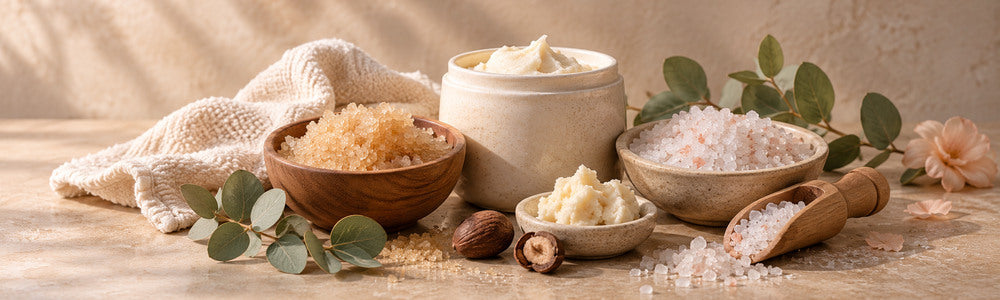
Organic Pumpkin Shea Sugar Body Scrub offers a scented sugar-based option. For a softer whipped texture, try Organic Whipped Sugar Body Scrub. Treat both as rinse-off cosmetic exfoliants, not remedies for medical skin conditions.
How often should you exfoliate?
There is no universal schedule. Begin once weekly and observe your skin. A fine, gentle product may be comfortable more often for some people, while a coarse texture should be used less frequently. Stop or reduce frequency if skin becomes tight, shiny, sore, red, or persistently itchy.
Avoid stacking a scrub with retinoids, strong acids, or hair-removal methods on the same area unless a professional has advised you. Do not exfoliate sunburned skin, open cuts, active rashes, or freshly shaved skin that is already stinging.
Aftercare makes the difference
Exfoliation removes some surface cells and can increase water loss temporarily. Follow with a fragrance level and texture your skin tolerates. For richer moisture, see how to apply body butter. Protect exposed areas with sunscreen because irritated skin can be more vulnerable to visible discoloration.
If bumps, scaling, or itch do not improve with gentle care, ask a dermatologist. Conditions such as eczema, psoriasis, keratosis pilaris, and folliculitis may need a different approach.
Frequently Asked Questions
Can a scrub remove dark spots?
Scrubbing harder can irritate skin and make discoloration more noticeable. Address the cause and use gentle, consistent care.
Should I scrub before shaving?
If your skin tolerates it, gentle exfoliation on a different day may reduce surface buildup. Avoid aggressive scrubbing immediately before or after shaving.
Can I use a body scrub on my face?
Not unless it is specifically formulated and labeled for facial use. Body scrubs may be too abrasive for facial skin.