


Is DHA Self Tanner Safe? FDA Guidance on Lotions, Drops & Spray Tans
DHA self-tanner is not accurately described as “toxic” or cancer-causing simply because it contains dihydroxyacetone. The U.S. FDA permits DHA as a color additive for externally applied cosmetics. The important distinction is how it is used: FDA guidance raises specific concerns about exposure to the eyes, lips, mucous membranes and inhalation during spray tanning.
What Is DHA?
Dihydroxyacetone, or DHA, is a color additive used in many sunless tanning products. It reacts with amino acids in the outermost dead-cell layer of the skin to create temporary brown color.
That surface reaction is why a self-tan gradually fades as the outer skin cells shed.
What the FDA Actually Says About DHA
The FDA permits DHA for use in externally applied cosmetics. FDA guidance does not support telling consumers that normal external use of a DHA lotion is inherently dangerous or that avoiding DHA is medically required.
Where the FDA is more cautious is spray application. DHA is not approved for exposure to the eye area, lips, mucous membranes or any area covered by mucous membrane, and consumers should avoid inhaling or ingesting spray mist.
Lotions and Drops Are Different From Spray Booths
A lotion or drop formula applied by hand to external skin does not create the same inhalation pathway as an aerosolized spray booth. With any self-tanner, avoid eyes and lips, wash hands after application unless using a mitt, and follow the product label.
Does DHA Cause DNA Damage or Cancer?
Laboratory studies are sometimes cited online to suggest broad cancer risk, but those findings cannot simply be translated into a claim that FDA-permitted external-use self-tanning lotions cause cancer in consumers. That would overstate the evidence.
If your reason for avoiding DHA is personal preference, scent, development style or skin tolerance, a DHA-free formula is a legitimate alternative. It does not need to be framed as the only “safe” choice.
What Does DHA-Free Self Tanner Use Instead?
DHA-free sunless tanners may use another sugar-derived tanning ingredient such as erythrulose. Erythrulose develops color more gradually, which can appeal to shoppers who prefer slower buildable results.
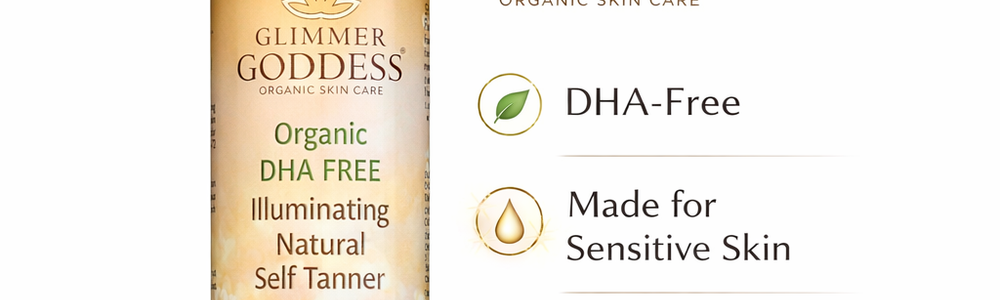
The current DHA Free Self Tanner for Sensitive Skin – Glow and Organic DHA-Free Tanning Drops – Gradual, No-Odor Glow are active Glimmer Goddess® DHA-free options.
For a direct format comparison, see DHA vs. DHA-Free Self Tanner: Lotion, Drops & How to Choose.
DHA-Free Does Not Mean Reaction-Free
Any cosmetic formula can irritate an individual user because of preservatives, botanical ingredients, fragrance components or other ingredients. Patch test if your skin is reactive, and stop if you develop persistent burning, swelling, itching or rash.
Self-Tanner Is Not Sunscreen
A cosmetic tan does not protect you from ultraviolet radiation unless the product is specifically labeled with sunscreen protection. A darker-looking skin tone from self-tanner is not a substitute for sunscreen, shade or protective clothing.
Application Still Matters
For smoother color, prepare dry areas carefully and avoid excessive exfoliation. Our How to Apply Self Tanner Evenly guide covers prep, application and aftercare.
Frequently Asked Questions
Is DHA banned by the FDA?
No. DHA is permitted as a color additive for externally applied cosmetics. The FDA’s spray-tan concern is unwanted exposure to areas for which DHA is not approved, including inhalation and mucous membranes.
Is DHA-free automatically safer?
No. DHA-free is a formulation preference, not a blanket safety guarantee. Any product can irritate sensitive skin.
Can I skip sunscreen if I use self-tanner?
No. A sunless tan does not provide meaningful UV protection unless the product is specifically labeled as a sunscreen.
The Bottom Line
DHA and DHA-free self-tanners offer different development styles. FDA guidance supports external cosmetic use of DHA while emphasizing careful avoidance of inhalation and mucous-membrane exposure in spray settings. Choose the format you prefer, follow the label, and continue using sun protection.
Source: U.S. Food & Drug Administration: tanning products and sunless tanners.