



Best Serum for Dark Spots: What to Look For
The best serum for dark spots is one you can use consistently alongside daily sun protection. Look for a well-formulated product with ingredients such as vitamin C or niacinamide, introduce it gradually, and avoid formulas that sting or inflame your skin. A serum may help improve the appearance of uneven tone, but no single product is best for every cause of discoloration.
Dark spots are areas where the skin produces or retains more pigment than the surrounding skin. They may appear after a blemish or irritation, with cumulative sun exposure, during hormonal changes, or for other reasons. “Brightening” in this guide means helping skin look more even and radiant—it does not mean changing your natural skin color.
The most useful first step is understanding what may be triggering the discoloration. The American Academy of Dermatology (AAD) notes that addressing the cause can help prevent new marks and that irritation itself can contribute to dark spots. A gentle, focused routine usually makes more sense than layering several strong products at once.
What to look for in a dark spot serum
A good serum should fit three criteria: relevant ingredients, a texture that works with the rest of your routine, and a level of intensity your skin can tolerate. More actives and higher concentrations are not automatically better.
Vitamin C
Vitamin C is an antioxidant used in topical skincare to support a brighter, more even-looking complexion. The AAD includes vitamin C among over-the-counter ingredients that may help fade existing dark spots. A 2023 systematic review indexed by the National Library of Medicine found encouraging evidence for topical vitamin C in skin appearance, while also noting that more research is needed to establish optimal formulations and use.
Niacinamide
Niacinamide, a form of vitamin B3, is often chosen when someone wants tone support in a gentle-feeling routine. Research has also examined its role in barrier function and pigmentation. In a randomized, double-blind, vehicle-controlled trial, a moisturizer containing niacinamide and N-acetyl glucosamine improved the appearance of facial hyperpigmentation compared with the vehicle. That result supports the ingredient combination studied; it is not a guarantee for every niacinamide product.
Alpha arbutin and complementary botanicals
Alpha arbutin is commonly used in cosmetic brightening formulas. Because finished products vary in concentration, stability, supporting ingredients, and packaging, evaluate the complete formula rather than choosing on one ingredient name alone. Botanical extracts can complement a formula, but “natural” does not automatically mean irritation-free or more effective.
A useful rule: choose one primary serum, patch test it, and give your skin time to show whether the formula feels comfortable. Stop using a product that causes persistent burning, swelling, blistering, or a worsening rash.
A verified Glimmer Goddess option
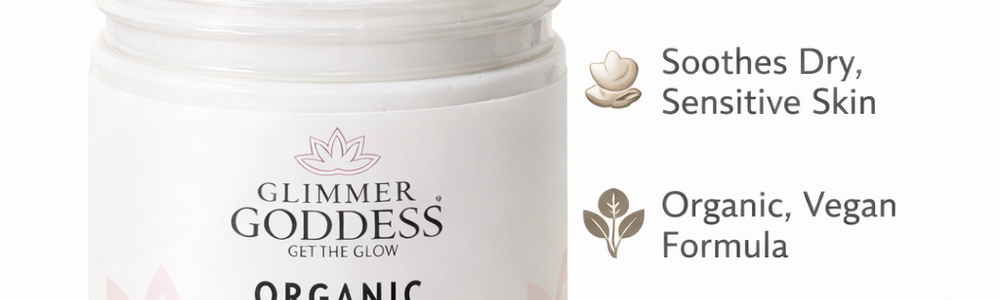
The Organic Dark Spot Serum – Fade Hyperpigmentation & Even Skin Tone is a hydroquinone-free option formulated with alpha arbutin, plant-based vitamin C, niacinamide, and botanical brighteners. It is designed to help improve the appearance of visible discoloration and uneven tone. This is a cosmetic product, not a treatment for melasma, acne, or another medical condition, and individual results vary.
If you prefer to compare formats before choosing, our guide to dark spot creams versus serums explains how richer creams and lighter serums fit different routines. You can also explore the best ingredients for uneven skin tone for a broader ingredient overview.
How to use a serum without overwhelming your skin
Introduce one new active product at a time. If your routine already includes exfoliating acids, retinoids, or other potent actives, alternating them may be more comfortable than layering everything in one application. Sensitive skin can benefit from starting less frequently and increasing only when the skin remains calm.
Why sunscreen is part of a dark spot routine
Sun protection is foundational because ultraviolet and visible-light exposure can make discoloration more noticeable. For dark spots, the AAD recommends a broad-spectrum, water-resistant sunscreen with SPF 30 or higher and specifically discusses tinted formulas with iron oxide for visible-light protection. Follow your sunscreen label and reapply as directed; the U.S. Food and Drug Administration also advises combining sunscreen with shade, protective clothing, and other sun-safe habits.
For a streamlined Glimmer Goddess daytime option, the Organic Vitamin C Daily Moisturizer SPF 30 – Brightening Formula combines moisturizer with labeled SPF 30. Apply it according to its Drug Facts or product directions; no moisturizer-sunscreen should be treated as “set it and forget it” protection.
How long does a dark spot serum take to work?
There is no universal timeline. The cause and depth of discoloration, the finished formula, irritation, sun exposure, and consistency can all affect what you see. The AAD explains that some spots may fade over months after the trigger is controlled, while deeper discoloration can take much longer. Fixed promises such as “spots fade in four weeks” are not reliable across products or people.
Take photos in the same lighting about once a month if you want a more objective way to track appearance. Daily mirror checks can make gradual changes difficult to notice.
When to ask a dermatologist
Skincare cannot tell you why a spot appeared. See a board-certified dermatologist if a mark is new or changing, looks unlike your other spots, bleeds, crusts, itches persistently, or does not respond as expected. Professional guidance is also helpful for widespread, recurring, pregnancy-related, or medication-associated pigmentation. Do not stop a prescribed medication without speaking with the prescriber.
Frequently asked questions
Can a serum permanently remove dark spots?
No cosmetic serum can promise permanent removal. A well-chosen formula may improve the appearance of uneven tone, but new discoloration can develop if the trigger continues or returns.
Can I use vitamin C and niacinamide together?
Many finished products combine them, and some people also layer separate formulas. Compatibility depends on the complete products and your skin. If you are prone to sensitivity, simplify: use one serum first, then add another only if there is a clear reason.
Should I apply serum only to individual spots?
Follow the product directions. Some formulas are designed for targeted application, while others are meant for the full face. Keep serums away from the eyes unless the label specifically says the eye area is appropriate.
Is a natural dark spot serum always gentler?
No. Plant-derived ingredients can still irritate or trigger an allergy. Patch testing, gradual introduction, and attention to how your skin responds matter more than a “natural” label alone.
Build a calm, complete routine. Use our natural and organic skincare by concern guide to match cleanser, serum, moisturizer, and daytime protection without unnecessary product stacking.