




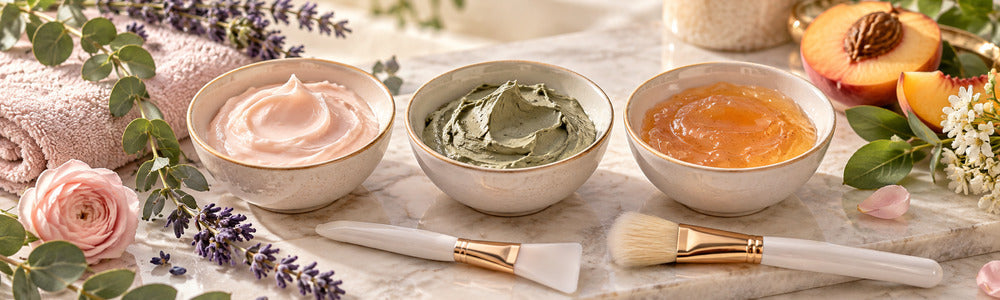
How to Choose a Face Mask for Your Skin Goals
Face masks are optional targeted treatments, not essential steps for everyone. The right mask can temporarily improve hydration, absorb surface oil, or exfoliate dull texture, but the wrong formula—or using several masks together—can leave skin dry and irritated. Choose by skin goal, follow the label, and keep expectations cosmetic.
Key takeaways
- Hydrating masks support softness; clay masks absorb oil; enzyme and AHA masks exfoliate.
- One mask per session is usually enough.
- Patch test unfamiliar formulas and stop if skin burns, swells, or stays red.
- Masks do not permanently correct pigmentation or replace acne or eczema care.
Hydrating masks for dry or tight-feeling skin
Hydrating masks typically use humectants, emollients, and soothing textures to make the surface feel softer and more comfortable. They can be helpful after travel or dry weather, but a daily moisturizer remains more important than an occasional mask.
Clay and mud masks for surface oil
Clay can absorb oil and leave pores looking temporarily less noticeable. It does not pull toxins from the body or permanently shrink pores. Apply only for the labeled time and moisturize afterward if skin feels tight. Organic Dead Sea Mud Mask – Exfoliate & Rejuvenate is a verified active option for a clay-focused session.
Enzyme masks for gentle-looking radiance
Fruit-enzyme masks help loosen surface buildup for a smoother appearance. “Natural” does not mean irritation-free, so follow timing carefully. Organic Papaya Pineapple Enzyme Face Mask – Gentle Exfoliating Treatment is a verified option.
AHA masks for more deliberate exfoliation
Alpha hydroxy acids exfoliate the surface and can improve the look of dull texture over time. They may increase stinging or sun sensitivity. Organic AHA Face Mask – Renewing Treatment for Exfoliation & Glow should be used according to its label—not combined with another exfoliating mask in the same session.
How to use a face mask safely
- Cleanse gently and pat dry.
- Apply a thin, even layer, avoiding eyes, lips, and broken skin.
- Follow the label’s timing; longer is not automatically better.
- Rinse with lukewarm water without scrubbing.
- Apply moisturizer and use sunscreen the next day.
Skip exfoliating masks when skin is sunburned, raw, or irritated. Review your other products: retinoids, benzoyl peroxide, acids, and prescriptions may already make skin more sensitive. The at-home spa guide shows how to build a calm ritual around one treatment, and the skin barrier support guide explains when to simplify.
What results are realistic?
A mask may make skin look temporarily smoother, brighter, or less oily. It cannot permanently erase dark spots, change pore anatomy, or correct an underlying skin condition. For persistent pigmentation, acne, rash, or sensitivity, consult a dermatologist.
Frequently asked questions
How often should I use a face mask?
Follow the label and your tolerance. Hydrating masks may be used more often than strong exfoliating masks.
Can I use two masks in one night?
Using different masks on separate facial areas may be reasonable, but stacking exfoliating treatments increases irritation risk.
Should a mask tingle?
A slight brief sensation can occur with some formulas, but burning, swelling, or persistent redness means you should rinse and stop.
Are homemade masks safer?
No. Food ingredients are not automatically formulated for facial use, and homemade mixtures raise concentration, allergy, and contamination concerns.