



How to Choose a Body Oil for Your Skin and Preferred Finish
A good body oil should match your skin, climate, sensory preferences, and daily schedule. The best formula is not necessarily the one with the longest botanical list—it is the one that spreads well, feels comfortable, and helps you moisturize consistently.
Body oils are emollient and occlusive: they smooth the surface and help slow moisture loss. They work especially well on damp skin or layered over lotion because oils do not add water on their own.
Start with the finish you want
- Dry-touch oil: light slip, faster sink-in, minimal residue.
- Classic botanical oil: balanced glide for everyday moisture and massage.
- Rich oil: longer cushion for very dry areas or an evening ritual.
- Shimmer oil: moisturization plus a light-reflecting cosmetic finish.
For a lightweight option, explore the Organic Silky Dry Body Oil. For a richer botanical blend, compare it with the Organic Luxury Firming Body Oil. “Firming” in cosmetic body care should be understood as support for a smoother, more supple appearance—not permanent tightening.
Read the carrier-oil blend
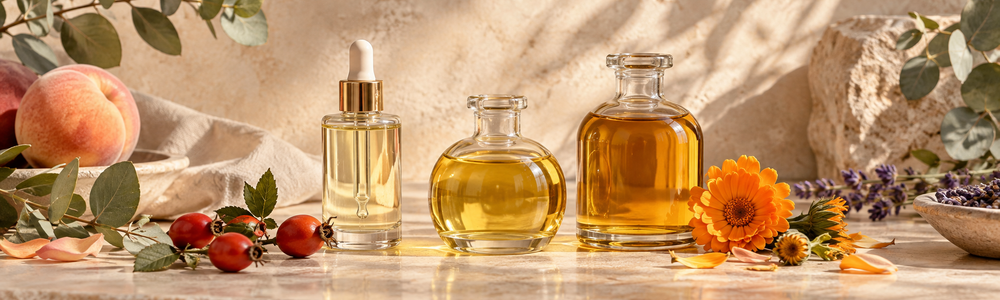
Carrier oils make up most of a body oil formula. Jojoba offers elegant slip; sunflower oil can feel lightweight; olive oil is richer; rosehip and evening primrose add a distinctive botanical profile. A blend can balance spread, absorption, and after-feel.
Do not judge an oil by a single trendy ingredient. The complete blend, packaging, freshness, and your tolerance matter more than a “hero” botanical used at an unknown percentage.
Consider fragrance and essential oils
Aromatic oils can make application feel luxurious, but they may not suit fragrance-sensitive skin. Patch test, avoid broken skin, and stop if persistent itching, burning, or a rash appears. “Natural fragrance” is still fragrance from the skin’s perspective.
Clean and organic claims: what to check
“Clean” is not a single regulated formula standard. Look for a complete ingredient list, realistic directions, and claims tied to cosmetic appearance. The FDA explains the limits on cosmetic claims and the USDA explains organic labeling categories. These are separate issues: a product can use certified organic ingredients without every marketing term meaning the same thing.
How to apply body oil
- Shower with comfortably warm—not very hot—water.
- Pat skin lightly, leaving it damp.
- Apply a small amount from ankles upward.
- Massage with broad, gentle strokes.
- Layer over lotion when you want more moisture support.
The American Academy of Dermatology recommends applying moisturizer soon after bathing to help trap water in the skin.
Match oil to your routine
Choose dry-touch oil for mornings or humid weather, a richer blend for nighttime massage, and shimmer only when you want visible radiance. If you are deciding between formats, read body oils versus lotions and how to use body oil daily.
Frequently asked questions
Can body oil replace lotion?
Sometimes, especially on damp skin. Very dry skin may prefer lotion first and oil second.
Is body oil suitable for acne-prone areas?
It depends on the formula and the individual. Use sparingly on areas that clog easily and stop if breakouts increase.
How much should I use?
Begin with a few drops per limb. A thin, even layer is usually more comfortable than saturating the skin.
Bottom line: choose body oil by finish, complete ingredient blend, fragrance tolerance, and how you plan to use it. Apply to damp skin, keep claims realistic, and let comfort guide the final choice.