



Manuka Oil in Skincare: Benefits, Limits, and How to Use It
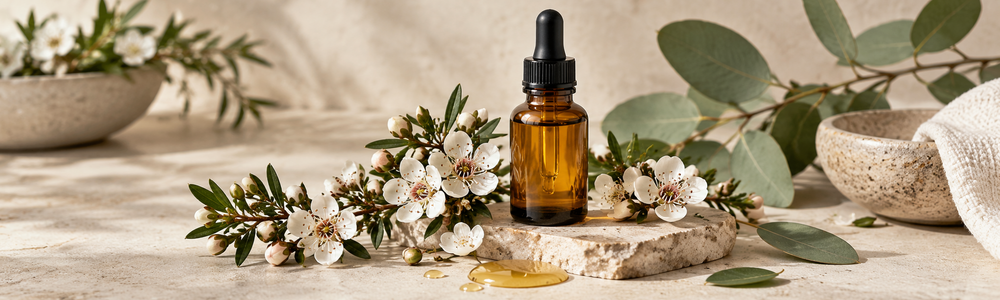
Manuka oil is an aromatic botanical oil distilled from Leptospermum scoparium, a shrub native to New Zealand. It is not the same ingredient as manuka honey, and it should not be treated as a medicine in an everyday cosmetic routine.
In body care, manuka oil is best understood as one component of a finished formula: it can contribute aroma and botanical character while carrier oils and emollients do most of the work of softening skin.
What research actually tells us
Laboratory researchers have identified beta-triketones and related compounds in manuka oil and studied their antimicrobial activity. For example, this PubMed-indexed chemistry study describes antimicrobial compounds isolated from manuka. That does not prove that a retail skincare product treats an infection, acne, eczema, or another condition.
Formulation, concentration, contact time, stability, and real-world human use all affect performance. Cosmetic guidance should therefore stay focused on sensory qualities and visible skin feel rather than translating laboratory results into treatment promises.
Why formulators pair manuka oil with carrier oils
Essential oils are concentrated and can irritate skin when used undiluted. In a finished body oil, a small amount may be blended into oils such as jojoba, rosehip, sunflower, or olive. These carrier oils provide slip and emollience, helping rough skin feel smoother.
The Organic Luxury Firming Body Oil combines manuka with a broader botanical-oil blend. Its appropriate cosmetic role is moisturization, massage slip, and support for softer, more radiant-looking skin—not treatment of a medical condition.
How to use a manuka-containing body oil
- Patch test the finished product on a small area.
- After bathing, leave skin slightly damp.
- Warm a few drops between your palms.
- Press and glide over arms, legs, or other dry areas.
- Use less than you think; add more only where needed.
For massage, add enough oil to prevent tugging. For everyday moisturizing, a thin layer is usually sufficient. Our daily body-oil guide offers a simple ritual.
Who should be cautious?
People with fragrance allergies, very reactive skin, or a history of contact dermatitis should be cautious with essential oils. Do not apply to broken skin, and avoid the eye area. Stop use if you develop persistent redness, itching, swelling, or burning.
If you prefer a simpler formula without a strongly aromatic botanical profile, compare the texture with the Organic Silky Dry Body Oil. You can also review body oils versus lotions to choose the format that suits your routine.
Frequently asked questions
Is manuka oil the same as tea tree oil?
No. They come from different plants and have different chemical profiles, even though both are aromatic botanical oils.
Can I put pure manuka oil directly on my skin?
Undiluted essential oils can irritate skin. Use a professionally formulated finished product and follow its directions.
Does manuka oil replace moisturizer?
An oil can reduce moisture loss and improve softness, but it does not add water. Apply it to damp skin or layer it over a lotion if your skin needs more hydration.
Bottom line: manuka oil can be a beautiful part of a botanical body-care formula, but its benefits should be described realistically. Choose a diluted finished product, patch test, and use it for moisturization and sensory enjoyment.